
Wind Cave National Park sits near Hot Springs in the southern Black Hills, and the park is free to enter. Park rangers lead every cave tour, and each cave tour needs its own ticket. Those tours often sell out from March through October. The Park Service counts 167 miles of known cave as of 2024. The Park Service also says Wind Cave holds more boxwork than all other caves on Earth put together. If you’re choosing between Wind Cave and Jewel Cave, Wind Cave is the one for boxwork and Jewel Cave is known for its calcite crystals. Our guide to Black Hills cave tours compares Wind Cave, Jewel Cave, Black Hills Caverns and Rushmore Cave.
Nestled in the Black Hills of South Dakota lies a national treasure that is as mysterious as it is breathtaking—Wind Cave National Park. Known for its intricate underground maze of passages and its serene prairie landscape above ground, this park is a hidden gem waiting to be discovered. It’s a place where science meets storytelling, where Lakota legends mingle with fascinating geological phenomena. Wind Cave is truly a destination like no other.
If you’re a first-time visitor or a seasoned explorer, this guide will help give you everything you need to know about Wind Cave National Park. From its rich cultural history to its unique wildlife and ecosystems, you’ll discover why this landmark is one of South Dakota’s most captivating destinations.
The Geological Wonder of Wind Cave
Wind Cave isn’t just any cave—it’s one of the longest and most complex caves in the world. The Park Service counts 167 miles of known cave as of 2024, and the cave is renowned for its intricate boxwork formations. The Park Service says it holds more boxwork than all other caves on Earth put together, and boxwork is a rare calcite structure that resembles honeycombs or delicate lace.
The cave was formed millions of years ago when water seeped through limestone, dissolving it and creating vast underground passages. Over time, minerals deposited within the cave walls gave rise to its unique formations. Wind Cave’s maze-like structure makes it a challenge to explore, but also a marvel to behold.
One of the cave’s most fascinating features is its namesake wind. The wind at the natural entrance changes with the pressure difference between the cave and the surface. Early explorers were amazed by this phenomenon, and it remains one of the cave’s most memorable characteristics.

The Lakota Connection and Cultural Significance
For the Lakota people, Wind Cave holds profound spiritual significance. It is said that Wind Cave is where their ancestors emerged onto the Earth. This sacred site is deeply woven into the Lakota creation story, symbolizing life, renewal, and connection to the land.
The Lakota name for the cave, Maka Oniye (Earth Breathing), reflects the wind phenomenon that early explorers also found so striking. The Lakota believe the cave’s breath is the Earth speaking to its people, a reminder of the interconnectedness of all living things.
Today, the park works closely with local Native American tribes to honor Wind Cave. Visitors can learn more about the Lakota connection through interpretive programs and exhibits at the visitor center.
The Discovery and Early Exploration of Wind Cave National Park
The first non-Native discovery of Wind Cave is credited to the Bingham brothers in 1881. As the story goes, Tom Bingham heard a strange whistling sound while walking through the prairie. He followed the noise to a small hole in the ground—the cave’s natural entrance—where he felt the wind rushing out with surprising force.
In the following years, explorers began mapping the cave’s passages, although early expeditions were far from easy. With only lanterns and ropes, these pioneers braved tight squeezes, sheer drops, and total darkness to uncover the cave’s secrets. Their discoveries eventually led to the establishment of Wind Cave National Park1 in 1903, making it the first cave in the world to be designated as a national park.
The Wildlife and Ecosystems Above Ground
While Wind Cave’s underground marvels are its main draw, the park’s surface is equally remarkable. Spanning over 33,000 acres, the park is home to one of the last remaining mixed-grass prairies in North America. This rare ecosystem supports a diverse range of plant and animal life. This ecosystem is in stark contrast to the Central Black Hills with its towering Ponderosa Pines and steep winding roads like Needles Highway.
Bison are perhaps the park’s most iconic residents, often seen grazing on the open prairie. These majestic creatures share the landscape with prairie dogs, elk, pronghorn antelope, and coyotes. Bird enthusiasts will also find plenty to admire, as the park hosts species like meadowlarks, red-tailed hawks, and wild turkeys. If you’re lucky, you might spot one of around 40-60 black-footed ferrets!
The prairie isn’t just a habitat—it’s a living history of the Great Plains. Visitors can walk through fields of native grasses and wildflowers, experiencing a landscape that has remained largely unchanged for centuries.

Exploring Wind Cave: Tours and Activities
Wind Cave National Park offers a variety of activities to help visitors explore both above and below ground. Whether you’re interested in spelunking, hiking, or wildlife spotting, there’s something for everyone.
Cave Tours
Rangers lead every tour, and you need a ticket to go into the cave. Tours often sell out from March through October, so our Black Hills cave tours guide covers tickets and the spring schedule. The park offers several guided tours, each tailored to different levels of adventure and fitness:
Garden of Eden Tour: The park calls this its least strenuous tour, at 1 hour and 150 stairs, and it highlights the cave’s unique formations.
Natural Entrance Tour: This tour includes a visit to the cave’s natural entrance, and it runs 1 hour 15 minutes over two-thirds of a mile with 300 stairs.
Fairgrounds Tour: The park calls this its most strenuous walking tour, at 1 hour 30 minutes and 450 stairs, and it explores a variety of formations and large rooms.
Candlelight Tour: For a more immersive experience, visitors can explore the cave by candlelight, just as early explorers did. It runs in summer only, the minimum age is 8, and you reserve it by phone up to one month ahead.
Wild Cave Tour: This summer-only tour leaves the developed trails, and most of it is spent crawling on your hands and knees in an undeveloped part of the cave. The park rates it very strenuous, the minimum age is 16, and you reserve it by phone up to one month ahead. After your wild cave exploration, consider taking a hike along the hiking trails in Black Hills, where you can enjoy breathtaking views and diverse wildlife. Whether you prefer a challenging ascent or a leisurely stroll, the trails cater to all skill levels. These scenic routes offer a perfect way to unwind and reconnect with nature after your cave adventure.
Hiking Trails
Above ground, Wind Cave National Park features 30 miles of hiking trails. Popular options include:
Rankin Ridge Trail: A 1-mile loop with panoramic views of the Black Hills.
Lookout Point Trail: A 5-mile loop that takes you through prairie and forest landscapes and even more panoramic views. Lookout Point is a great experience and highly recommended. Like most trails and experiences, we recommend beginning your adventure on Lookout Point Trail early in the day.
Elk Mountain Trail: A peaceful trail perfect for spotting wildlife.
Wildlife Viewing
The park’s open prairies and rolling hills make it easy to spot wildlife. Early morning and late afternoon are the best times to see bison, prairie dogs, and other animals in action. On foot, stay at least 100 yards from any wild animal, or stay in your vehicle.

Protecting and Preserving Wind Cave
Wind Cave National Park is not just a destination—it’s a vital conservation area. The park plays a key role in preserving both its underground formations and its surface ecosystems. Efforts to reintroduce bison and protect native prairie species have made the park a leader in conservation.
Visitors are encouraged to follow Leave No Trace principles, respecting the delicate balance of life within the park. This includes staying on designated trails, refraining from touching cave formations and minimizing waste.
Best Times to Visit
Wind Cave National Park is open year-round, but the experience varies with the seasons:
| Spring | Summer | Fall | Winter |
|---|---|---|---|
| Wildflowers bloom across the prairie, and wildlife is especially active. | The park’s busiest season offers full access to tours and programs, though crowds can be larger. | Cooler temperatures and golden grasses make autumn a peaceful time to visit. | The underground cave remains a constant 54°F, providing a cozy escape from the cold. |
Practical Information for Visitors
Here’s what you need to know before visiting Wind Cave:
| Location | Fees | Hours | Accessibility |
|---|---|---|---|
| The park is located near Hot Springs, South Dakota, just a short drive from the Black Hills and Custer State Park. | Entrance to the park is free, but cave tours require a ticket. | The visitor center is open daily, although hours may vary by season. | The 30-minute Accessibility Tour has no stairs and goes in and out by elevator, so call the visitor center at 605-745-4600 the same day or up to three days ahead. The visitor center is accessible to wheelchairs too. |
Why Wind Cave Is a Must-See Landmark
Wind Cave National Park offers a rare combination of underground wonder and natural beauty above ground. It’s a place where you can marvel at geological formations found nowhere else on Earth, learn about the spiritual traditions of the Lakota people, and connect with the vast, open landscape of the Great Plains.
Wind Cave is conveniently located directly next to Custer State Park and Black Hills National Forest, and it’s a drive north to Mount Rushmore.
For anyone traveling through South Dakota, Wind Cave is a destination that simply can’t be missed. It’s more than a landmark—it’s an experience that leaves a lasting impression.
Wind Cave National Park and Its Proximity to South Dakota’s Iconic Destinations
Wind Cave National Park isn’t just a landmark on its own—it’s a hub for exploring some of the most remarkable attractions in South Dakota. Its location in the southern Black Hills makes it an ideal starting point or centerpiece for a journey through the region’s natural and cultural wonders.
Just a short drive north of Wind Cave, you’ll find Custer State Park, renowned for its Wildlife Loop, where visitors can see a variety of animals, including the park’s famous bison herd. This scenic route offers beautiful views of the rolling prairie grasslands, with ample opportunities to spot park wildlife like pronghorn antelope and wild turkeys.

The nearby Highway 87 connects Wind Cave to the jaw-dropping Needles Highway, a winding route through granite spires and tunnels carved into the landscape. From here, you can also access the famous Iron Mountain Road, which combines thrilling curves with panoramic vistas, including framed views of Mount Rushmore. This scenic road is one of the Black Hills’ treasures and should be on every traveler’s itinerary.
Heading west, you’ll reach Jewel Cave National Monument, another subterranean marvel. While Wind Cave is known for its boxwork formations, Jewel Cave boasts dazzling calcite crystals. Together, these two caves form a unique underground experience that showcases the region’s rich geological diversity. If you’re a cave enthusiast, visiting both offers a chance to compare their formations and learn about their distinct histories.
The town of Hot Springs, located just south of Wind Cave, is another must-visit destination. Known for its warm mineral waters and historic sandstone architecture, Hot Springs offers relaxation after a day of exploring. The nearby Mammoth Site, also in Hot Springs, is a fascinating glimpse into prehistory. This active paleontological dig features the fossilized remains of Columbian mammoths and provides visitors with a deeper understanding of the area’s ancient past. Combining a visit to Wind Cave with stops at the Mammoth Site and Hot Springs creates a well-rounded day of discovery.
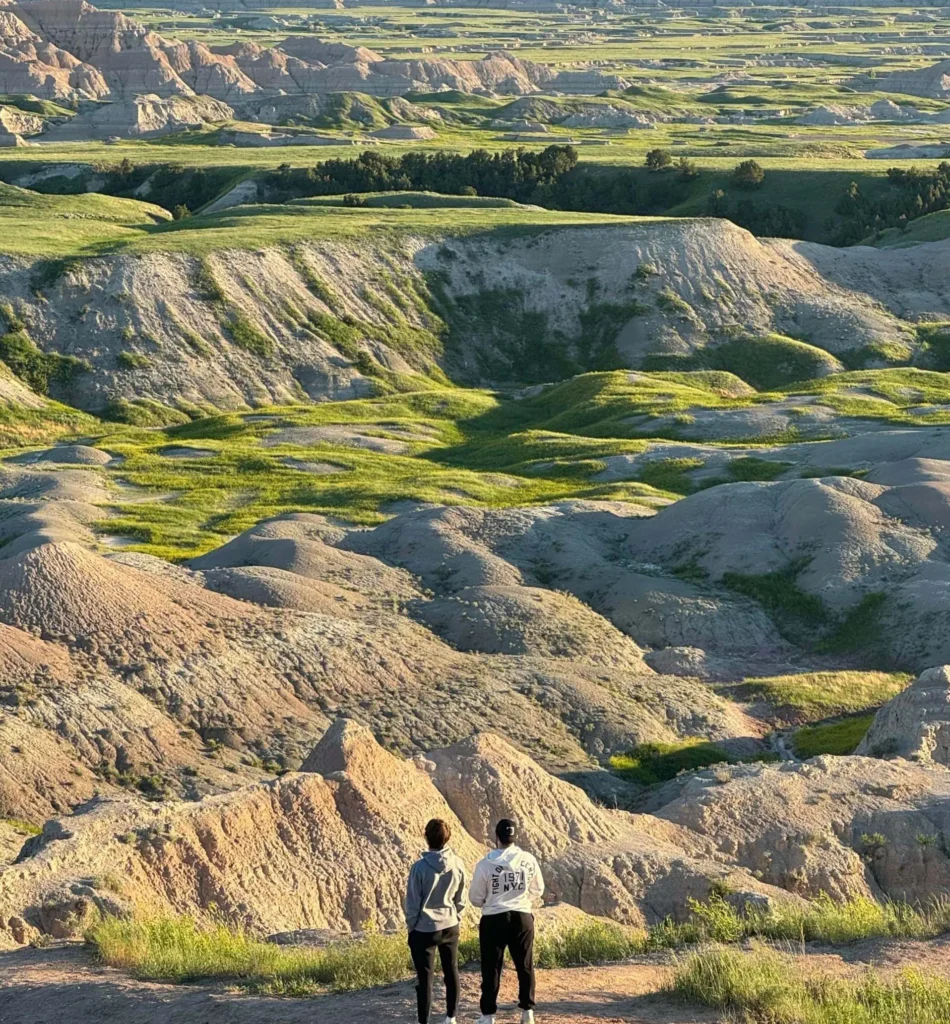
For those venturing east, Badlands National Park is an easy day trip from Wind Cave. Known for its dramatic rock formations and expansive vistas, Badlands National Park offers a striking contrast to the lush greenery of the Black Hills. With its rugged beauty, the park is a must-see for anyone seeking plenty of opportunities to marvel at South Dakota’s diverse landscapes.
To the north is Rapid City, and Rapid City Regional Airport. If you decide to stay at accommodations in Rapid City, itineraries to all the sites of the Black Hills and Badlands are within reach.
The Crazy Horse Memorial is another nearby icon, located just north of Wind Cave along the route to Hill City. This massive sculpture honors the Lakota leader Crazy Horse and is a testament to the enduring spirit and history of the Native American people. The on-site museum adds depth to the experience, providing context about the ongoing work to complete the world’s largest mountain carving. Many visitors pair a trip to Wind Cave with stops at the Crazy Horse Memorial, as it’s easily accessible along the way to other Black Hills landmarks like Hill City and Mount Rushmore.
Exploring Wind Cave also provides access to several hiking opportunities, including the Centennial Trail, which traverses the Black Hills and passes through the park’s diverse terrain. The Wind Cave Canyon trail offers a unique combination of scenery and history, following an old roadbed while showcasing stunning cliffs and a chance to encounter wildlife. Adventurers will also appreciate the park’s cave entrance, a feature that embodies Wind Cave’s geological allure while connecting to its many above-ground attractions. While visiting the natural cave entrance, it’s important to respect the cultural significance of the site.
Plan Your Journey Through the Black Hills
Wind Cave National Park is more than an isolated destination—it’s the gateway to South Dakota’s most iconic attractions. From the nearby charm of Hot Springs and the prehistory of the Mammoth Site, to the grandeur of Mount Rushmore, the spiritual significance of the Crazy Horse Memorial, and the splendor of Badlands National Park, the region offers something for everyone. Whether you’re navigating the twists and turns of Iron Mountain Road, marveling at the formations of Jewel Cave National Monument, or trekking through Wind Cave Canyon, you’ll find ample opportunities to connect with the beauty and history of the area.
Keep in mind that while Wind Cave’s entrance is easily accessible, some parts of the park may involve travel on gravel roads, so plan accordingly. You don’t pay to enter the park, but every cave tour has its own fee, and an interagency pass doesn’t cover it. Whether you’re hiking the prairie or taking in the scenic drives along Highway 87, Wind Cave National Park is perfectly positioned for an unforgettable Black Hills, National Forest, Crazy Horse Memorial and Custer State Park adventure.
Discover Wind Cave with My XO Adventures
Our private Wildlife Tour of the Black Hills spends time on Wind Cave National Park’s prairie and forest edges with a wildlife biologist, and then it moves into Custer State Park. It runs April 15 through October 15 and stops after October 15, so we don’t run it from October 16 through April 14. That tour stays above ground, so a ranger cave tour isn’t part of the day. Our guides are passionate about sharing the wonder of this incredible landmark, offering insights you won’t find in a guidebook. Looking for a unique experience? We’ll help you pair your visit with other Black Hills destinations, creating a personalized adventure you’ll never forget.
Join us and uncover the magic of Wind Cave National Park—your journey starts here!