
Spring into Summer in Paha Sapa
Paha Sapa is the Lakota name for the Black Hills, and they rise off the prairie in no hurry for anybody. The granite at the center of these hills is more than 1.5 billion years old. It began as molten rock deep underground, cooled into stone and was slowly lifted to the surface, and wind and water are still wearing it down today. I call this place home, and the stretch from spring into summer is one of the best times to see it, because the hills keep changing right in front of you.
Spring takes its time here. Winter has a stubborn grip, and every year it tries once more with a late snowfall, an icy morning or a cold patch tucked into a shady canyon, so bring a jacket even when the forecast looks kind. Winter loses in the end, the way it always does. One of the first signs is the pasque flower, South Dakota’s state flower, which pushes up through cold soil and lingering snow before most plants dare to try.
Then the storms show up. They build dark along the horizon and roll across the land, sending wind through the canyons and rain into the forests, and the granite takes the pounding as it has through millions of storms before this one. When the clouds break, the sun pours back over the hills and you get another version of Paha Sapa, because no two days here look the same.
The forests have a history of their own. As the climate shifted, different trees took over. Long ago, lodgepole and limber pine spread across the hills, and then they gave way to Black Hills spruce in the cooler pockets and the big stands of Ponderosa that glow orange in the afternoon light. You can still find patches of those older forests if you know where to look. Limber pine grows near the Cathedral Spires, the rocks in the photo at the top of this post, and lodgepole grows in the northern hills near Rochford.
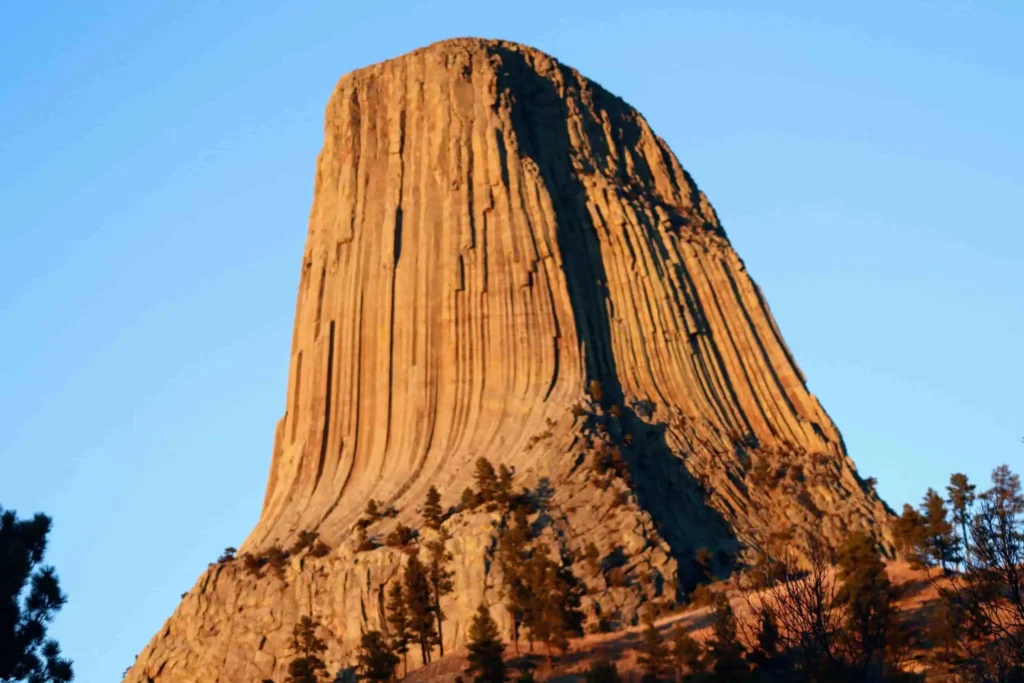
You’ll start finding shapes in the rocks too, the same way you find them in clouds. There’s a face here and a crouched animal there, and there’s one tall spire that gets a quick laugh from whoever notices it, and I’ll leave that one for you to find. The stones don’t mind, and the longer you’re here, the more personality the land seems to have.
Plenty of animals call these hills home. Mountain lions move through the rugged canyons and usually leave nothing but tracks. Mountain goats cling to impossible cliffs, bighorn sheep show off in broad daylight, and elk step through the meadows in the early morning. Chipmunks dart along the logs and boulders, carrying seeds and mischief in equal measure. In Custer State Park, bison calves are born from late April through May, and the young ones, called red dogs, stay close to their mothers. None of these animals keep a schedule, so treat every sighting as a bonus, and stay at least 100 yards away or stay in your vehicle, because even a calm animal can charge.
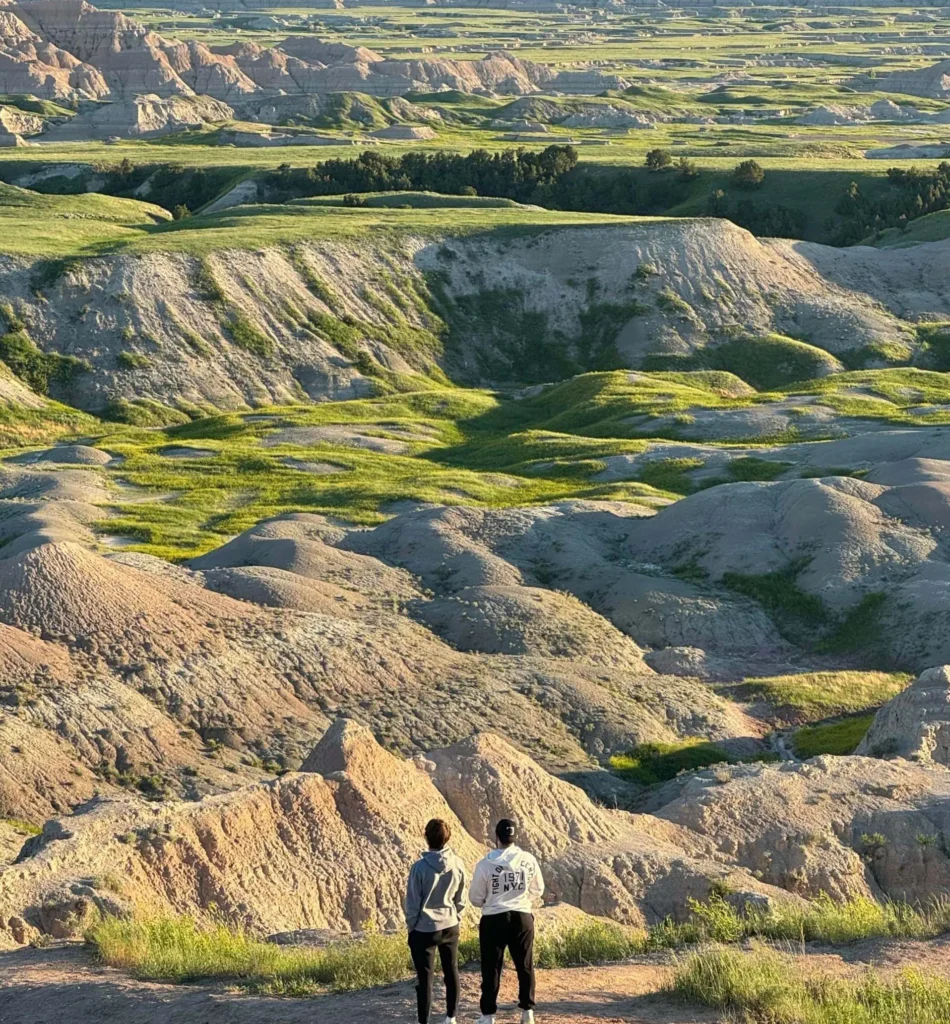
Meanwhile the rain soaks into the soil and reaches the roots of the grasses, forbs and wildflowers, and the hills turn emerald green, with soft purples, warm yellows and bold flashes of orange. As the days get longer, winter finally steps back. Water runs freely in the canyons, new animals take their first steps, the meadows hum with insects and the birds return to their nesting grounds. Trails that were muddy in spring dry out and fill in with blooming plants. Spearfish Canyon is a good place to see the season at its best, with its waterfalls and its tall limestone cliffs.
Even the rocks move. Heavy rain knocks stones loose, and they settle in new places and show fresh faces that haven’t seen daylight since they formed underground. Change comes slowly here, but it never stops.
Guests who walk these trails, drive these winding roads and watch this sky often tell me they felt something here that they can’t quite describe. I’ve heard many Lakota speak of the Black Hills as the Heart of All That Is, and I encourage you to learn more through respectful dialogue. Treat the place with respect, stand on a ridge for a while and let it slow you down, and you’ll carry it home with you.
Guests on a private tour with My XO Adventures often notice colors, scents and textures they’d have missed on their own, because your guide knows where to look and yours is the only group in the vehicle. If you’re bringing kids, this post on family vacations in the Black Hills has ideas for all ages.
That’s Paha Sapa from spring into summer, with new color, new warmth and a different sky every day. If you’d like a guide for it, the button below reaches My XO Adventures, and if you’d rather wander on your own, the hills will be just as green.
Daniel Milks
Needle Threader, Adventure Seeker, Creator of Travel, Answerer of Phones and occasional writer.