Can older travelers and people with limited mobility enjoy the Black Hills and Badlands?
Yes. Mount Rushmore, Badlands National Park and Wind Cave National Park all have places you can reach without long walks or stairs. Some spots are paved or have boardwalks. Others have elevators. Others don’t, so it helps to know which is which before you go.
Mount Rushmore National Memorial
If you need to unload a passenger with a mobility impairment, use lane 4. A staff member there directs you to the drop-off zone next to the main entryway. The top levels of both parking structures have the most accessible parking spaces, and elevators reach every level of the garage.
The Information Center lends manual wheelchairs in standard and wide sizes. They’re free, first come, first served. Elevators on either side of the Grand View Terrace take you to the Lincoln Borglum Visitor Center and the amphitheater. Carvers’ Café and the gift shop are wheelchair accessible too.
The Presidential Trail is surfaced for wheelchairs for its first 0.2 miles, from the Grand View Terrace to the viewing areas at the base of the mountain. The remaining 0.4 miles has 422 stairs and isn’t accessible for mobility impairments. The Nature Trail isn’t wheelchair accessible either.
Badlands National Park
Both visitor centers, Ben Reifel and White River, have ramps, reserved parking and accessible restrooms. At Ben Reifel you can touch and hold fossils and rocks in the exhibit area.
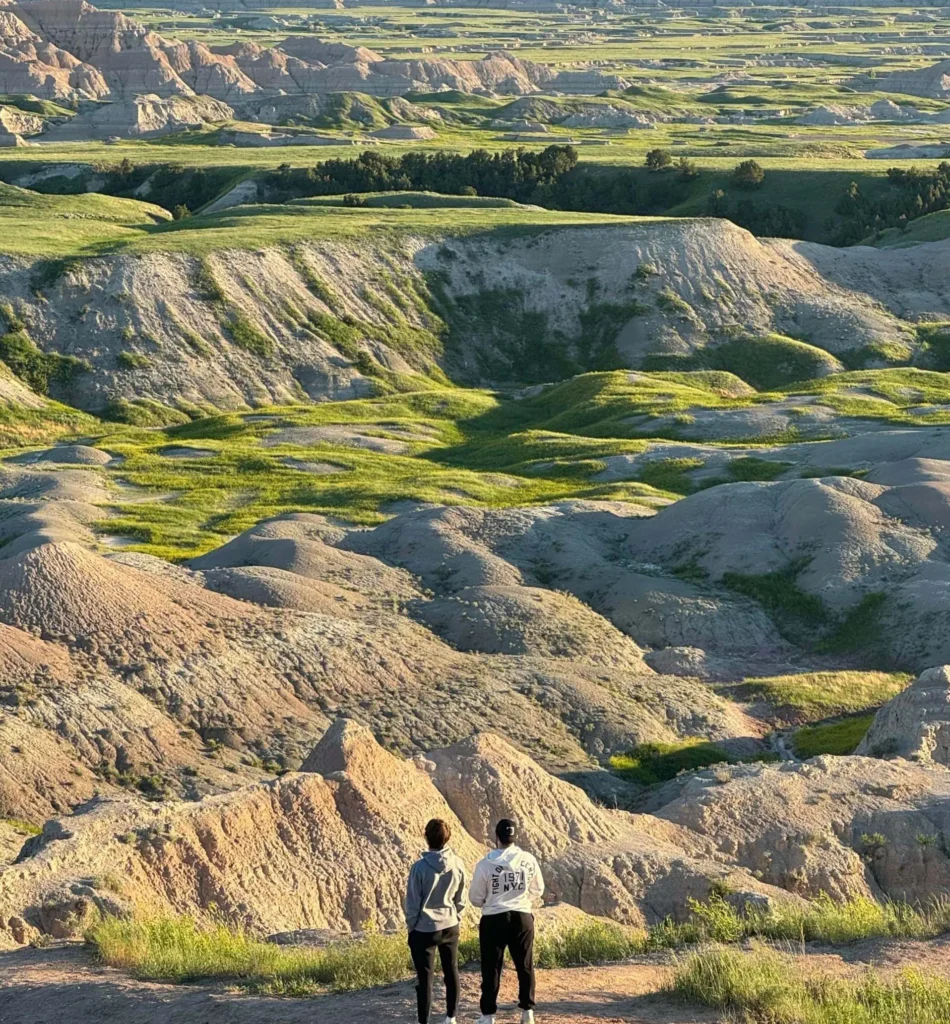
Most scenic overlooks are accessible to wheelchair users, and many have boardwalks with gentle grades. The Fossil Exhibit Trail and the Window Trail are accessible boardwalks. The first sections of the Door Trail and the Cliff Shelf Trail are accessible as well. Ranger-led hikes usually aren’t, because the badlands ground is rugged.
Wind Cave National Park
You can only go into Wind Cave on a ranger-led tour. The Accessibility Cave Tour takes about half an hour and rides an elevator in and out of the cave, and it shows boxwork, the cave’s signature feature. Call the visitor center at (605) 745-4600 to arrange it. Every other cave tour climbs between two and eight flights of stairs at a time. The visitor center itself has an elevator, and a ramp and sidewalk lead to the cave’s natural entrance.
How our private tours work for older guests
We set the pace for each guest and adjust every tour to that guest’s needs. There’s a running board to step up on, and for the van we bring a step stool. You can stay in the vehicle if you want to.
A cane, walker or wheelchair works in some places but not all. You’ll need to get in and out of the vehicle under your own power. Please tell us ahead of time in the special requests so we can prepare.
Our private Mount Rushmore tour and our Mount Rushmore and the Big Badlands Tour both stop at Mount Rushmore. You can see every tour we offer on our tours page.
Planning on your own?
Our guides to the best ways to visit Mount Rushmore and things to do in Badlands National Park can help you plan the day on your own. Each park has its own accessibility page on nps.gov, so check it before you travel.