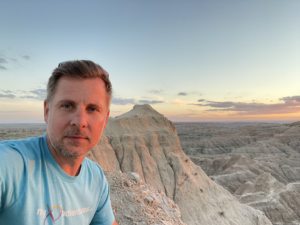

Planning a visit to Mount Rushmore? This guide covers the best ways to visit, how long to stay, the ideal time of day, parking basics, and what to explore nearby in the Black Hills.
Mount Rushmore is more than a monument. Set in the pine covered granite of western South Dakota, it’s a place where history, scale, and landscape meet in a way that surprises many first time visitors.
If you’re deciding between a quick stop, a guided tour, or a full Black Hills itinerary, you’re in the right place.
Mount Rushmore at a Glance
- Ideal visit length: 60 to 90 minutes for the core experience. 2 to 3 hours if you add the Presidential Trail and exhibits.
- Best time of day: Early morning for fewer crowds and softer light. Late afternoon for warmer tones and calmer pacing.
- Parking basics: Admission is free. Parking requires a paid annual pass per vehicle.
- Best nearby pairing: Iron Mountain Road for framed tunnel views or Custer State Park for wildlife and scenic drives.
Why Mt Rushmore Belongs on Your Travel List
What It Is and Why It Matters
Mount Rushmore is far more than a sculpture carved into granite. It represents a bold engineering effort, a specific chapter in American history, and a visual symbol that has shaped how generations picture the nation. Seeing it in person is different than seeing it in photographs. The scale surprises people. The setting in the Black Hills changes the context completely.
Landscape Context
The memorial sits within the Black Hills, known in Lakota as Paha Sapa. Granite spires, pine forests, and winding scenic roads surround it. When you step back and look at the monument as part of the landscape rather than separate from it, the experience becomes deeper. The faces are part of a much larger geological and cultural story.


Nuanced Historical Framing
The monument honors George Washington, Thomas Jefferson, Theodore Roosevelt, and Abraham Lincoln, leaders associated with defining eras of the country’s growth. At the same time, the Black Hills hold profound cultural meaning for the Lakota people. Understanding both perspectives adds dimension to the visit and invites a more thoughtful experience.
The Best Ways to Visit Mt Rushmore
Travelers experience Mt Rushmore in different ways depending on timing, pace, and how much context they want. Below is a simple framework to help you choose the best approach for your travel style.
1. Ranger Programs
Best for: First-time visitors who want official historical context.
Ranger programs at Mount Rushmore offer structured insights into the monument’s design, the engineering challenges of carving granite with dynamite, and the historical debates surrounding its creation. These talks add depth that you may not get from simply walking the terrace.
Schedules change seasonally, so check current program times on the official National Park Service website before your visit.
2. Self-Guided Visit with Audio
Best for: Families, independent travelers, and flexible pacing.
A self-guided visit allows you to move at your own speed. Audio tours and mobile guides provide background on the four presidents, the sculpting process, and the Black Hills setting without locking you into a fixed schedule. This approach works well if you prefer to pause for photos, revisit exhibits, or explore the Presidential Trail without feeling rushed.


3. Private Guided Experience
Best for: Travelers who want deeper context, smoother routing, and quieter viewpoints.
A private guided visit transforms Mt Rushmore from a stop into a full experience. Instead of navigating logistics and timing on your own, the day flows intentionally.
A private visit can include:
Strategic arrival timing to avoid peak crowds
Scenic routing through the Black Hills instead of standard GPS directions
Cultural context of Paha Sapa and the surrounding landscape
Wildlife or scenic add-ons in nearby Custer State Park
Photo stops at viewpoints most visitors drive past
This approach removes stress and adds meaning.
4. Sunset Visit
Best for: Soft light, atmosphere, and pairing with evening plans.
Late afternoon and early evening visits often feel calmer and more dramatic. As the sun lowers, the granite softens in tone and shadows add texture to the faces. In summer, evening programs and illumination can extend the experience. A sunset visit pairs well with dinner in Keystone or Rapid City afterward.
5. Scenic Approach via Iron Mountain Road
Best for: Framed views and memorable photo stops before you even arrive.
Driving Iron Mountain Road is one of the most iconic ways to approach Mt Rushmore. Several narrow tunnels were intentionally aligned to frame the monument in the distance. The winding pigtail bridges and granite spires make the journey part of the experience rather than just transportation.
If you enjoy scenic drives, this route elevates the entire visit.
My Pick for Most Travelers
For most visitors, the simplest and most rewarding plan is an early morning arrival paired with a scenic drive along Iron Mountain Road. Spend about 90 minutes exploring the terrace, exhibits, and trail, then continue into Custer State Park or another Black Hills highlight.
It keeps the day relaxed, meaningful, and visually unforgettable.
Private Tours for a Deeper, More Personal Experience
Mount Rushmore is impressive on its own. But for many travelers, the real magic happens in the context around it, along the scenic roads, in the granite formations, and in the layered stories of the Black Hills.
A private tour changes the pace and perspective of your visit.
Instead of navigating traffic, parking, and timing on your own, your day unfolds intentionally. Arrival time is chosen strategically. Scenic routes replace default GPS directions. Pull-offs and quiet viewpoints become part of the experience rather than missed opportunities.
Here’s what that difference looks like in practice:
Arrival timed to reduce crowd density
Scenic approach via Iron Mountain Road when conditions allow
Deeper cultural context of Paha Sapa and the surrounding Black Hills
Wildlife or landscape pairings that fit your schedule
Space for conversation, questions, and flexibility
This isn’t about adding more stops. It’s about creating flow.

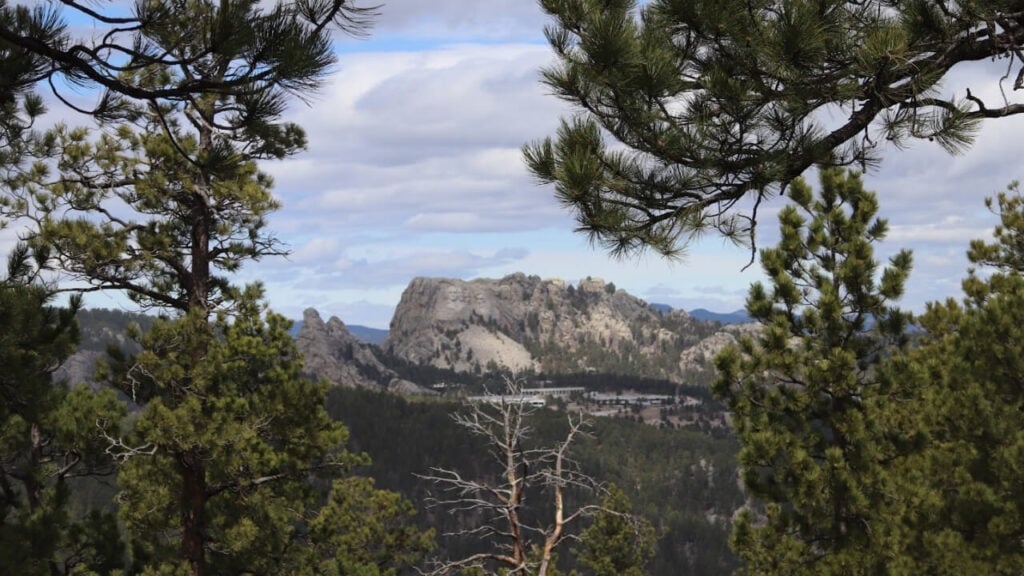
Many travelers tell me they expected to “see the monument.” What they remember most are the stories layered into the land, the quiet moments between viewpoints, and the feeling of not being rushed.
If you value clarity, pacing, and meaningful context, a private Mount Rushmore experience may be the right fit.
What to See at Mt Rushmore in Order
Once you arrive at Mt Rushmore, the layout is straightforward, but knowing what to prioritize makes the visit smoother. Here’s the simplest way to experience the memorial without feeling rushed.
1. The Avenue of Flags
This walkway represents all 50 U.S. states and territories and creates the ceremonial entrance to the main viewing area. It sets the tone for the experience and leads directly toward the monument.
Time needed: 5 to 10 minutes
Why it matters: It builds anticipation and provides a strong first photo opportunity.
Accessibility: Fully paved and accessible.
2. The Grand View Terrace
The Grand View Terrace is the primary viewing platform and offers the most iconic perspective of Mount Rushmore. From here, you can see the full scale of the carving against the granite backdrop.
Time needed: 10 to 20 minutes
Best time for light: Early morning or late afternoon for softer shadows and more texture in the stone.
Tip: Step slightly off-center to avoid crowd clusters in your photos.
This is where most visitors spend the majority of their time.

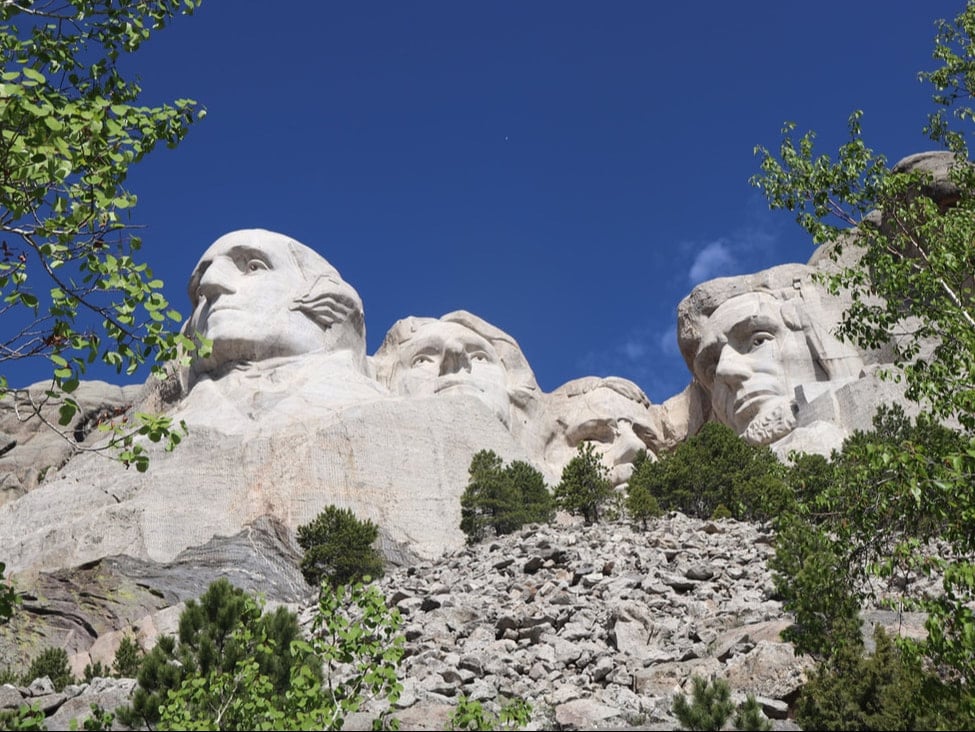
3. The Lincoln Borglum Visitor Center
The visitor center provides context that changes how you see the monument. Exhibits explain the sculpting process, the engineering challenges, and the people who worked on the project. A short film adds helpful background.
Time needed: 20 to 30 minutes
Best for: History lovers and first-time visitors
Why it’s worth it: The monument feels more dimensional after understanding how it was built.
4. The Presidential Trail
The Presidential Trail is a short walking loop that offers closer angles and different perspectives of the monument. It includes stairs and elevation changes, but portions are accessible.
Time needed: 20 to 40 minutes depending on pace
Distance: Approximately half a mile
Why it’s worth it: You’ll see details in the granite that aren’t visible from the main terrace.
If you have extra time, this trail adds depth to the visit.
Most visitors can comfortably explore all four highlights in 90 minutes without feeling rushed.
What to Pair with Mt Rushmore Based on Your Travel Styles
Mt Rushmore is just the beginning. The surrounding region offers some of the most striking scenery in the United States. There’s so much to do within one hour of Rapid City, you’ll need a guide to help you make the most of your vacation experience!
Custer State Park
Best for: Wildlife lovers and scenic drivers
Drive time from Mount Rushmore: About 30 minutes
Ideal pairing: Morning Mount Rushmore, afternoon Wildlife Loop Road
Custer State Park fits naturally into a Mount Rushmore day because it continues the same granite and pine landscape you’ve already experienced, just on a larger scale. After exploring the monument in the morning, the short drive south opens into open meadows, granite spires, and one of the most scenic wildlife drives in the country.
The Wildlife Loop Road is known for bison herds, pronghorn, deer, and burros. Driving it in the afternoon allows you to slow down, stretch the day, and trade monument crowds for open space. The transition feels seamless because you stay within the Black Hills ecosystem rather than jumping to an entirely different environment.
If your goal is a balanced day of history and nature, this pairing makes the most sense.
Considered one of South Dakota’s crown jewels, Custer State Park is known for granite spires, pristine lakes, and wildlife roaming across open meadows. Driving the Wildlife Loop Road often becomes a highlight for anyone who loves animals.
Badlands National Park
Best for: Travelers with a full day or overnight stay
Drive time from Mount Rushmore: About 90 minutes
Ideal pairing: Mount Rushmore early, Badlands sunset
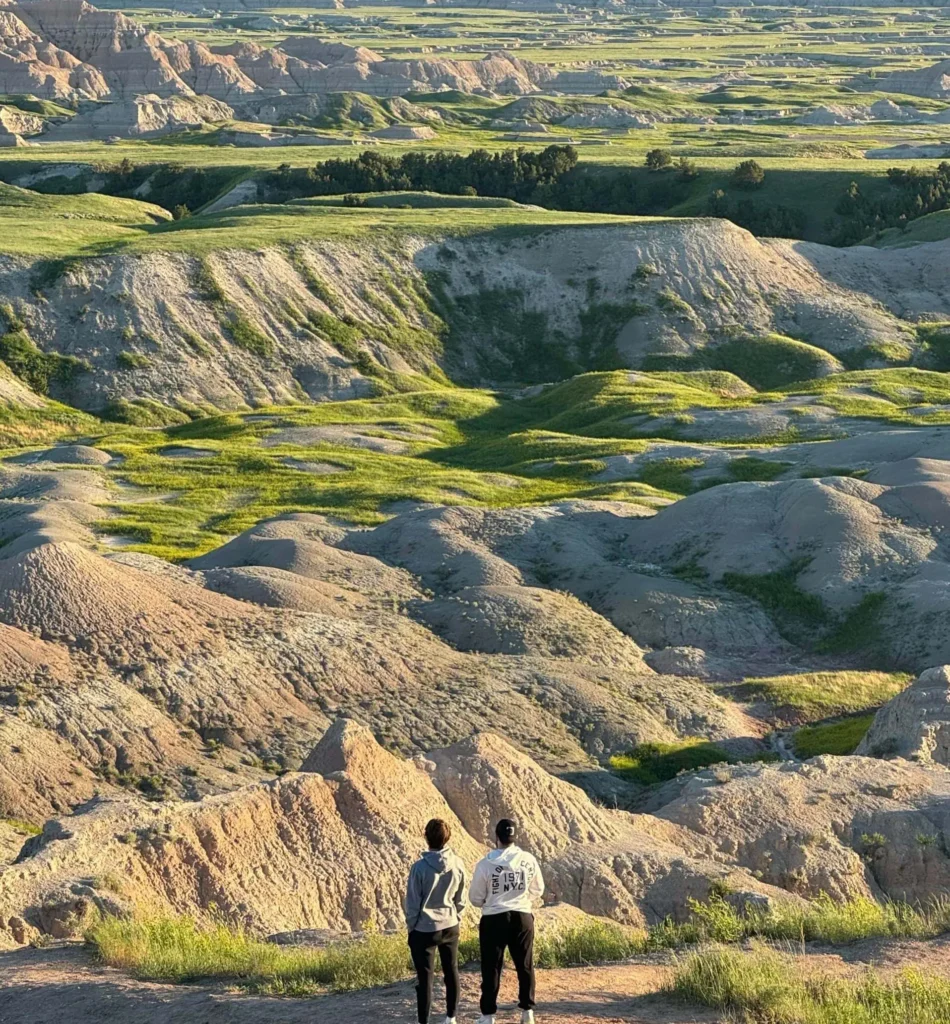
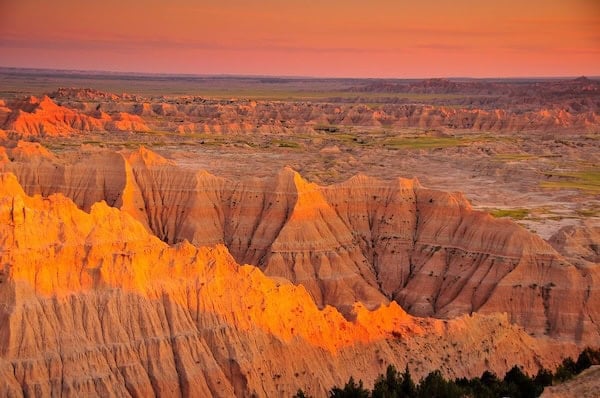
Badlands National Park requires more commitment, but the visual contrast makes it powerful. After a morning at Mount Rushmore, where granite and forest dominate, the drive east shifts into open prairie and sharply eroded formations that feel almost otherworldly.
Because of the distance, this pairing works best if you start early at Mount Rushmore and treat the Badlands as the second half of a long, intentional day. The light in the Badlands becomes especially dramatic in the late afternoon and near sunset, when shadows deepen the layered formations.
This pairing transforms your visit from a single landmark stop into a full western South Dakota experience. It’s ambitious, but if you have the time, it creates a memorable contrast between carved granite and naturally sculpted stone.
Spearfish Canyon and Historic Towns
Best for: Multi-day visitors
Drive time: 45 to 60 minutes north of Mount Rushmore
Ideal pairing: Mount Rushmore first, canyon drive in late afternoon
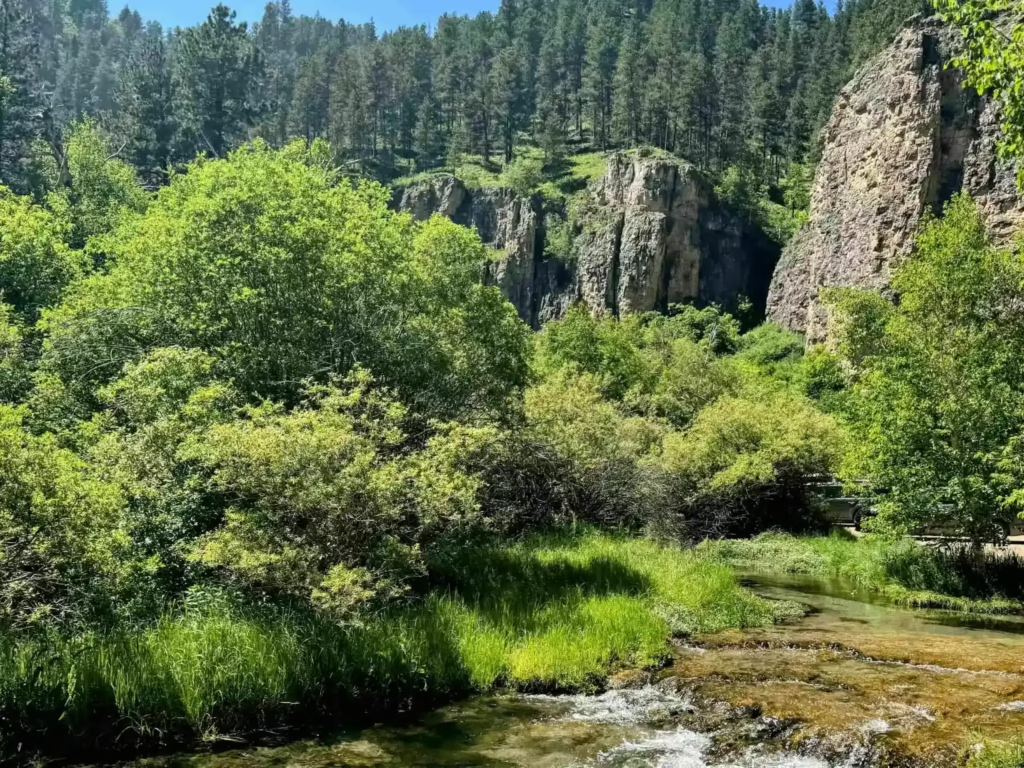
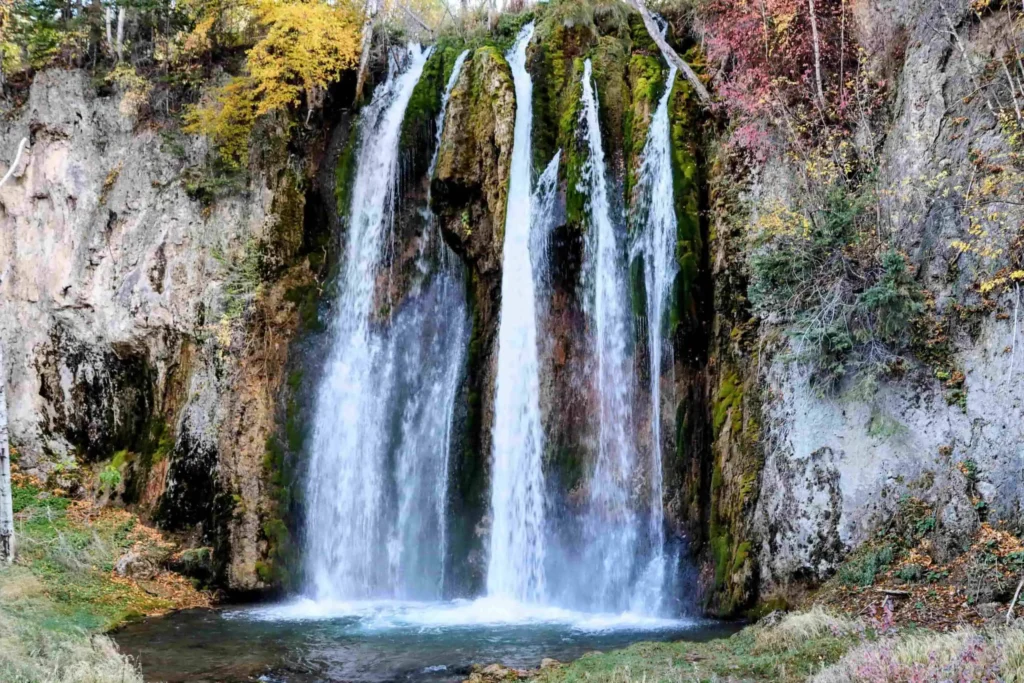
Spearfish Canyon and the historic towns of Deadwood and Lead add a different kind of depth to a Mount Rushmore trip. Instead of expanding outward into prairie or wildlife range, this pairing leans into limestone cliffs, waterfalls, and gold rush history.
After visiting Mount Rushmore earlier in the day, heading north into Spearfish Canyon in the late afternoon offers cooler temperatures, shaded canyon walls, and softer light along the scenic drive. The shift from monument viewing to canyon exploration keeps the day dynamic without requiring a long cross-state drive.
This option works especially well for travelers staying multiple nights in the Black Hills who want to combine national icons with regional character and history.

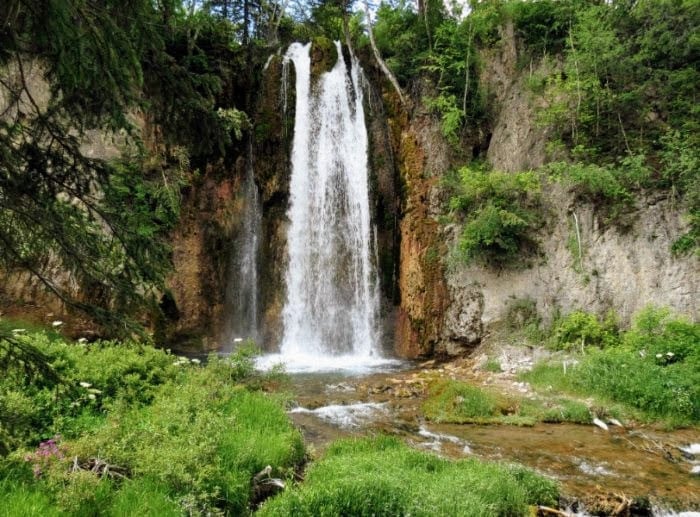
Most visitors can comfortably combine Mount Rushmore with one of these experiences in a single day. The key is choosing the pairing that fits your pace, energy level, and how much driving you want to do.
Mount Rushmore may be the headline, but the surrounding Black Hills are what turn a stop into a story.
Understanding the Cultural Context of the Black Hills
The Black Hills, known in Lakota as Paha Sapa, hold deep cultural and spiritual significance. Long before Mount Rushmore was carved into granite, these lands carried stories, ceremonies, and connections that continue today.
When visiting Mt Rushmore and the surrounding Black Hills, understanding that layered history adds depth to the experience. This region is both a national symbol and a living cultural landscape.
Approach your visit with awareness. Learn what you can. Respect the land. The monument becomes more meaningful when you understand the broader story around it.
For a deeper look at Lakota history and the significance of Paha Sapa, read: The Importance of Lakota Heritage.
Travel Tips for Visiting Mt Rushmore
A little planning makes a Mount Rushmore visit smoother and more enjoyable. Here are the practical details most travelers want to know before arriving.
Timing Your Visit
Most visitors spend 1 to 3 hours at Mount Rushmore. Arriving early in the morning usually means lighter crowds and softer light on the granite. Late afternoon can also be pleasant, especially in summer when evenings feel calmer.
If your schedule allows, avoid the late morning to mid-afternoon peak window during busy season.
Parking
Admission to Mt Rushmore National Memorial is free. Parking requires a per-vehicle fee that is valid for one year from the date of purchase.
Plan a few extra minutes to navigate the parking structure during peak hours.
Navigation
The roads around Mount Rushmore wind through forested hills and scenic byways. Cell service can be inconsistent in parts of the Black Hills, so downloading offline maps before driving is helpful.
Build buffer time into your route, especially if combining the visit with Iron Mountain Road or Custer State Park.
Seasonal Considerations
Summer is the busiest season, with the largest visitor numbers between late May and early September. Spring and fall often offer cooler temperatures and more breathing room on trails and viewing areas.
Weather can change quickly in the Black Hills, so layered clothing is always a smart choice.
FAQ: Best Ways to Visit Mount Rushmore
Mount Rushmore can feel very different depending on how and when you visit. Timing, pacing, and context shape the experience far more than most people expect. These questions help you choose the approach that fits your schedule and travel style.
Is it better to visit Mt Rushmore in the morning or evening?
Morning is usually the best time to visit Mt Rushmore if you want lighter crowds and softer light on the granite. Early arrivals feel calmer and allow you to explore the terrace and exhibits without peak congestion.
Evening visits can be more dramatic, especially in summer when illumination programs are scheduled. The best choice depends on your overall itinerary and how you plan to pair the memorial with other Black Hills destinations.
How much time do I realistically need at Mt Rushmore?
Most visitors need 60 to 90 minutes to experience Mt Rushmore comfortably. This allows time for the Grand View Terrace, the Avenue of Flags, and a brief visit to the Lincoln Borglum Visitor Center.
If you plan to walk the Presidential Trail and explore exhibits more thoroughly, budget 2 to 3 hours.
Should I visit independently or with a guide?
A self-guided visit works well if you prefer flexibility and plan to focus on the main viewing areas. Audio guides and exhibits provide helpful background.
A guided experience adds deeper context about the monument’s construction, the Black Hills landscape, and Lakota history. It also simplifies routing and timing if you’re combining Mount Rushmore with scenic drives or wildlife viewing.
Is the Presidential Trail worth walking?
Yes, the Presidential Trail is worth walking if you have the time and mobility. The loop is approximately half a mile and offers closer perspectives and unique angles of the monument.
It provides a more immersive experience than viewing from the terrace alone.
Are there quieter viewpoints of Mount Rushmore?
Yes, quieter moments are possible with thoughtful timing and routing. Early morning visits typically feel less crowded. Scenic approaches such as Iron Mountain Road provide framed views before arriving at the main memorial complex.
Within the memorial, stepping slightly away from the central terrace can reduce congestion during peak hours.
Does weather significantly change the experience?
Yes, weather changes the atmosphere of Mt Rushmore noticeably. Bright midday sun creates strong contrast, while early morning and late afternoon light soften the granite and highlight textures.
Cloud cover can add depth and drama to photographs. Rapid weather shifts are common in the Black Hills, so layered clothing is recommended.
Is Mt Rushmore suitable for visitors with limited mobility?
Yes, Mt Rushmore is accessible for most visitors with limited mobility. The Avenue of Flags and Grand View Terrace are paved and wheelchair accessible. Elevators provide access to the visitor center.
The Presidential Trail includes stairs and uneven terrain in sections, though parts are accessible.
What’s the most common mistake visitors make at Mt Rushmore?
The most common mistake is rushing the visit or arriving during peak midday hours without a broader plan. Mt Rushmore works best when paired intentionally with nearby scenic drives or wildlife experiences.
Planning arrival time and knowing what to prioritize makes the experience smoother and more meaningful.
Helpful Resources and Outbound Links
These trusted external resources support your planning and offer additional official information.
• Mount Rushmore National Memorial
• South Dakota Department of Tourism