
Talk to Your Guide: (605) 252-9100
Your guide to unforgettable landscapes, rich history, and meaningful experiences in the heart of South Dakota
There’s a moment that happens when you enter The Black Hills.
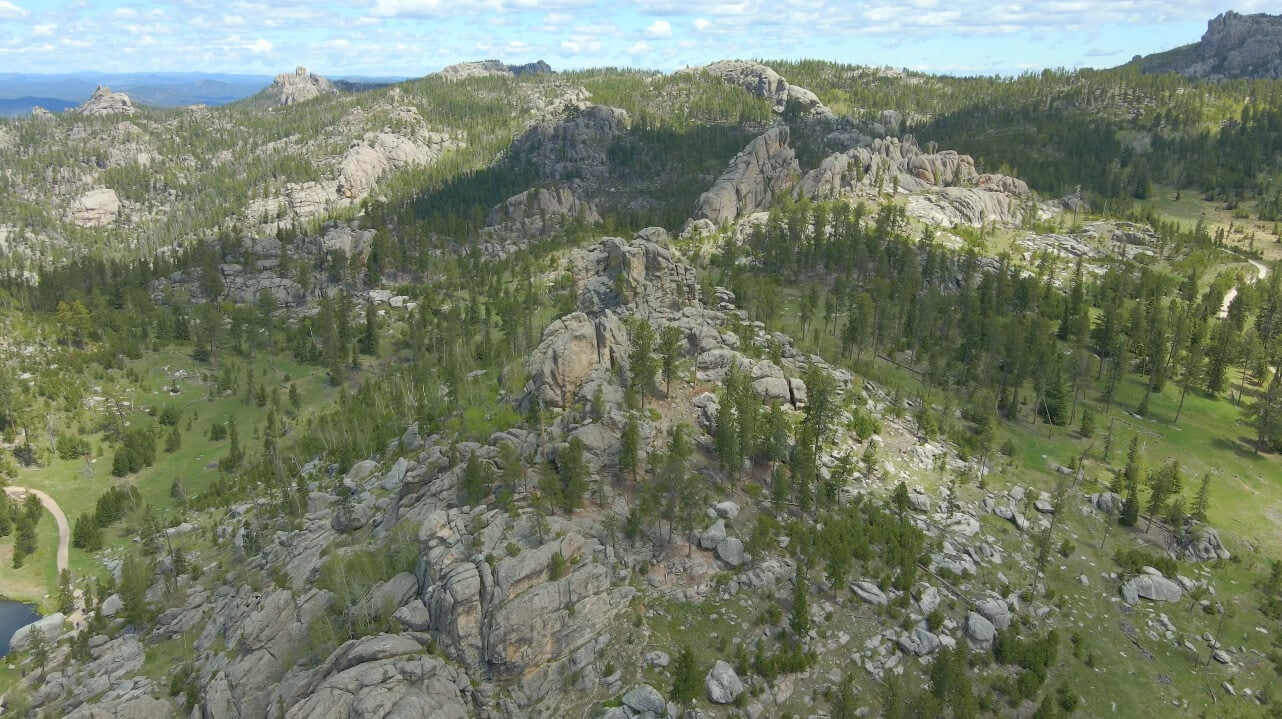
You leave behind the wide-open prairie, and almost without warning, the land begins to rise. Pine trees close in. Granite pushes through the earth. The air feels different. It’s subtle at first, then undeniable.
I’ve watched that shift happen for years, both for myself and for the people I guide. It never feels routine.
The Black Hills aren’t just a place you visit. They’re a place you move into, slowly, layer by layer. And once you start to understand them, everything changes. What you notice, what you value, even how you travel begins to shift.
The Black Hills rise out of western South Dakota like an island in a sea of grass.
From a distance, they appear dark, almost black, covered in dense pine forests. That’s where the name comes from. But once you’re inside them, the experience opens up. Light filters through the trees. Granite formations appear without warning. Wildlife moves quietly through the landscape.
The Lakota call this place Paha Sapa, meaning “the Black Hills,” but also something much deeper. This is considered the center of everything, a place of origin, spirituality, and connection.
And that perspective matters.
Because while many people come here for scenery and landmarks, the deeper value of The Black Hills is how many stories exist at once. Geological, cultural, historical, and personal. You don’t just pass through. You begin to understand something.


The Black Hills are ancient.
Their story goes back nearly two billion years, making them one of the oldest mountain systems in North America. What you’re seeing today is the exposed core of those mountains, shaped by uplift and slowly worn down by erosion.
At one point, these hills may have reached heights near 15,000 feet. Today, Black Elk Peak stands at 7,242 feet, still the highest point between the Rocky Mountains and Europe.
When you walk through the hills, you can see that history under your feet. Granite, quartz, feldspar, mica. The ground catches light in a way that almost feels intentional, like the land is quietly showing off its age.
It’s not dramatic in the way the Rockies are. It’s something else entirely. Older. Worn. More grounded.
The Northern Black Hills don’t get the attention they deserve.
Most visitors head straight toward Mount Rushmore and the southern region, but the north offers something different. It’s quieter, less structured, and in many ways more personal.
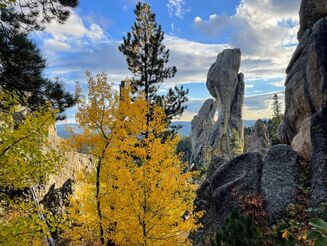
This is where the landscape starts to feel layered. The forest changes. Ponderosa pine mixes with spruce, birch, and aspen. Water becomes more present. Light softens.
Spearfish Canyon is the centerpiece.
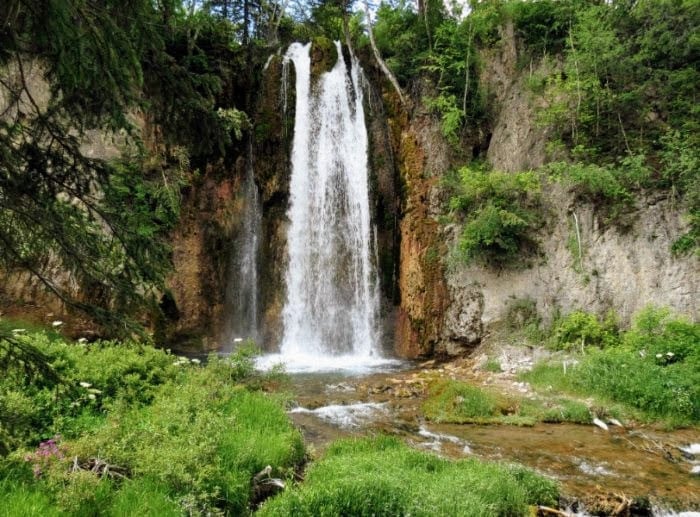
Driving through it feels like stepping into a different version of the Black Hills. Limestone cliffs rise high above the road. Spearfish Creek winds through the canyon floor. Waterfalls appear almost unexpectedly, especially after rain.
It’s not a place you rush through.
You stop. You listen. You notice details.
Deadwood sits nearby, carrying its Wild West history with it. It’s energetic, story-driven, and tied closely to the gold rush that changed this region forever. But even there, if you step just a little outside the main streets, you start to feel the hills again.
Then there’s Spearfish itself, one of my favorite towns in the area. It’s relaxed, welcoming, and surrounded by some of the most beautiful terrain in the region. I often bring guests here for a quieter lunch or a picnic along the creek.
If you’re looking for space, for calm, for something that feels less curated, the Northern Black Hills deliver.


This is what most people picture when they think of The Black Hills.
Granite peaks. Winding roads. Iconic landmarks. And yes, more people.
But there’s a reason for that.
The Southern Black Hills hold an incredible concentration of experiences. Mount Rushmore, Custer State Park, Iron Mountain Road, Needles Highway, Sylvan Lake. All of it sits within a relatively small area, which makes it easy to see a lot quickly.
The mistake people make is trying to do exactly that.
Rushing through this area means missing what actually makes it special.
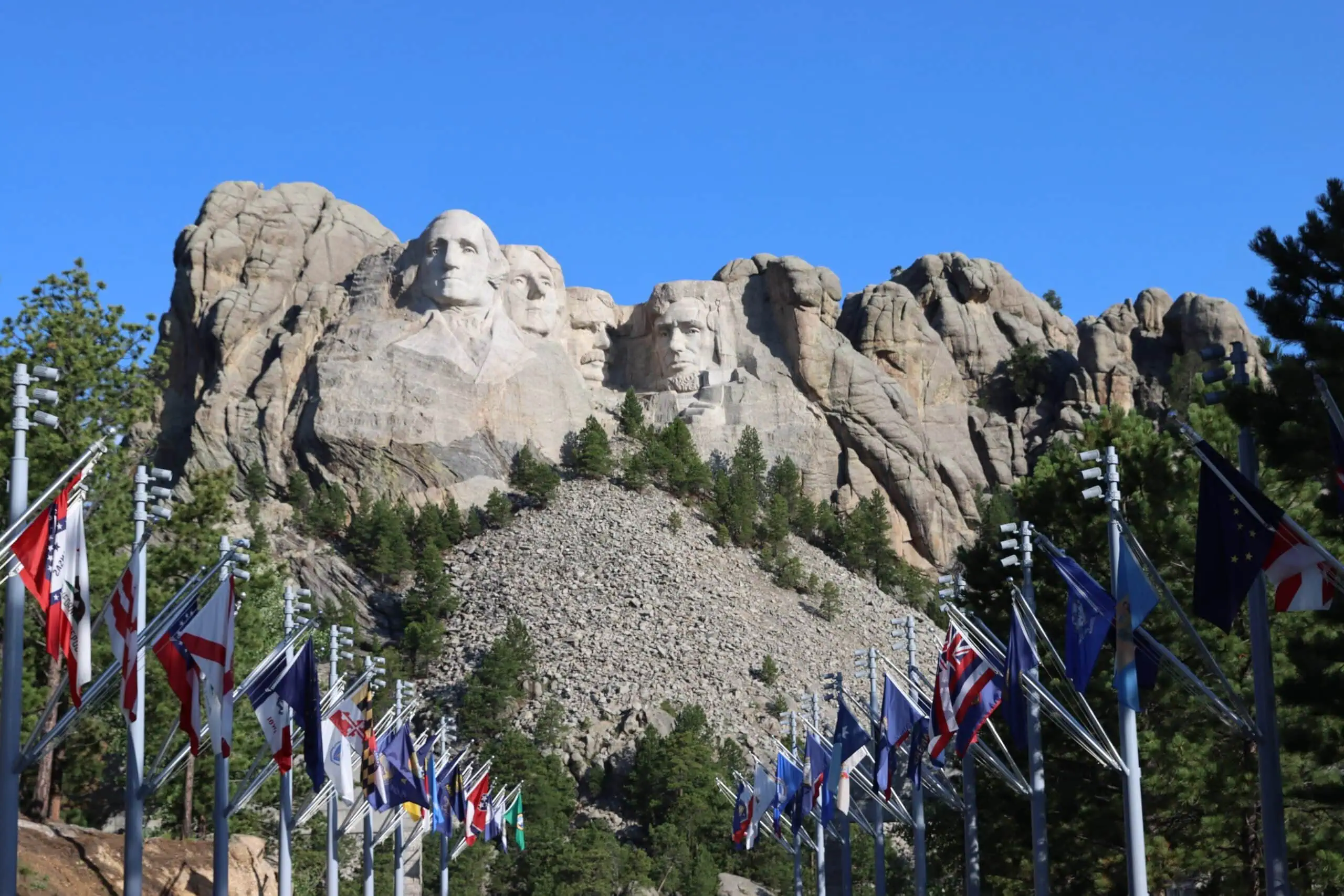
Mount Rushmore is impressive. The scale, the engineering, the idea behind it all. Over two million people visit every year, and it’s easy to understand why.
But there’s another layer that deserves attention.
This mountain, once known as The Six Grandfathers, is sacred to the Lakota. For many, the carving represents loss and desecration rather than pride. That perspective doesn’t diminish the monument. It adds depth to the experience.
Understanding both sides changes how you see it.
Then there’s Iron Mountain Road.
This isn’t just a scenic drive. It was designed to interact with the landscape. Tunnels frame Mount Rushmore perfectly. Curves feel intentional, almost playful. It’s one of the best examples of how design and nature can work together.
Needles Highway offers a completely different experience. Narrow passages, towering granite spires, and moments where you genuinely wonder how the road fits through the rock. It’s dramatic, memorable, and worth taking your time.
Custer State Park brings everything together.
Wildlife moves freely across the landscape. Bison herds, pronghorn, deer, wild burros. The park feels alive in a way that’s hard to explain until you’re in it.
And then there’s Sylvan Lake.
If there’s a place that captures the feeling of the Southern Black Hills, it’s this. Granite formations rising out of still water, trails leading in every direction, and a sense that you could stay there longer than you planned.


The central region often gets grouped into the south, but it deserves its own attention.
Hill City sits right in the middle of everything, and it feels like it. Old mining roots, a slower pace, and easy access to some of the most iconic spots in the hills.
Nearby, the Cathedral Spires rise sharply from the landscape. These formations are striking, almost unreal at first glance. It’s also where the original idea for Mount Rushmore began before shifting to its current location.
Crazy Horse Memorial is here as well.
And it’s impossible to ignore.
Massive in scale, still in progress, and deeply tied to Native American heritage. When complete, it will be the largest mountain carving in the world. Even now, standing in front of it gives you a sense of just how ambitious the project is.
This part of The Black Hills feels like a crossroads. History, culture, tourism, and landscape all intersect here.

Bear Butte stands apart.
Geographically, it’s just outside the main hills. But spiritually and culturally, it’s deeply connected.
For the Lakota and Cheyenne, this is a sacred place. A site for prayer, ceremony, and reflection.
When you hike Bear Butte, you feel the difference.
Prayer cloths hang in the trees. The atmosphere is quieter, more intentional. It’s not a place for casual exploration in the same way other areas are.
It’s a place to be respectful, aware, and present.
And if you approach it that way, it offers something meaningful that’s hard to find elsewhere.
Wildlife in The Black Hills isn’t something you schedule.
It’s something you begin to notice.
Bison move slowly across open grasslands. Deer appear along forest edges. Turkeys cross the road without urgency. Birds fill the trees, especially in quieter areas like canyons and lakes.
The more time you spend here, the more your awareness shifts.
You start looking differently. Slowing down. Paying attention.
And that’s where the real experience begins.


The Black Hills aren’t something you fully understand in one visit.
They unfold over time.
You start with the landmarks. The views. The well-known places. And then, slowly, you begin to notice more. The quieter areas. The stories behind the scenery. The layers that most people miss.
I’ve spent years exploring this region, and I’m still finding new perspectives.
That’s what makes it special.
Not just what you see, but how it changes the way you see.
Every season offers something different.
Spring feels fresh and unpredictable. Wildlife becomes more active, and the landscape starts to wake up.
Summer brings long days and full access to everything, along with more people. It’s the easiest time to explore, but also the busiest.
Fall might be the most underrated. Cooler temperatures, changing leaves, and fewer crowds create a completely different experience.
Winter is quiet. Still. Almost entirely different from what most people expect. Snow transforms the landscape, and the pace slows dramatically.
There’s no wrong time to visit.
Just different versions of the same place.


Most people arrive expecting a patriotic landmark and leave realizing it’s more layered than that. When you learn that the mountain was originally known as The Six Grandfathers and holds deep spiritual meaning for the Lakota, it shifts the experience. It doesn’t take away from the scale or engineering. It adds context. And for many visitors, that context is what stays with them.
Distance and pace. On a map, everything looks close together, which leads people to try and pack too much into one day. But these roads are meant to be experienced, not rushed. Between wildlife, viewpoints, and the way the roads wind through the hills, everything takes longer than expected in the best possible way.
Spearfish Canyon catches people off guard. They expect pine-covered hills, and suddenly they’re driving through towering limestone cliffs with waterfalls and a completely different ecosystem. It feels like a different region altogether, and that contrast is part of what makes the Black Hills so interesting.
Everything slows down. Instead of scanning the horizon hoping to “spot something,” you begin to notice movement, patterns, and behavior. A group of turkeys crossing the road, deer standing just inside the tree line, birds shifting through the canopy. The experience becomes less about checking off sightings and more about being present in the environment.
Because they engage you the entire time. Roads like Iron Mountain Road and Needles Highway aren’t just transportation. They’re designed experiences. The way tunnels frame Mount Rushmore or how the road squeezes through granite formations creates moments that feel personal, not just something you look at and leave.
Choose fewer places and give them more time. Instead of trying to see everything, spend longer in fewer locations. Walk a trail instead of just stopping at a viewpoint. Sit by a lake instead of moving on to the next stop. The Black Hills reward presence more than efficiency.
The variety. At first, it feels like one continuous landscape. Over time, you start recognizing distinct regions. The softer feel of the northern hills, the dramatic granite in the south, the transitional character of the central hills. It becomes less of a single destination and more of a collection of experiences.
Because they realize they didn’t actually see it the first time. They saw the highlights, but not the depth. The second visit is slower, more intentional, and often more rewarding. It’s a place that reveals more the longer you spend with it.
If you’re the kind of traveler who likes to understand a place before stepping into it, there are a few resources I consistently point people toward. Not because you need them, but because they can deepen the experience in ways most people don’t expect.
For current conditions, trail access, and fire restrictions, I recommend checking the U.S. Forest Service Black Hills National Forest site. It’s one of the most reliable ways to understand what’s actually happening on the ground before you head out.
If wildlife is part of why you’re coming here, take a look at South Dakota Game, Fish and Parks. They provide updates on wildlife activity, park conditions, and seasonal insights that can help you time things better.
For broader travel planning, Travel South Dakota does a solid job outlining major attractions, scenic drives, and regional highlights. It’s useful for getting your bearings, especially if this is your first time in the area.
And if you’re interested in the deeper cultural and historical context of The Black Hills, I’d encourage you to spend some time learning about Lakota history and perspective. It adds a layer of understanding that changes how you see places like Bear Butte and Mount Rushmore once you’re here.
At the end of the day, you don’t need to over-plan this region.
But having the right context before you arrive makes everything you experience out here feel more intentional.
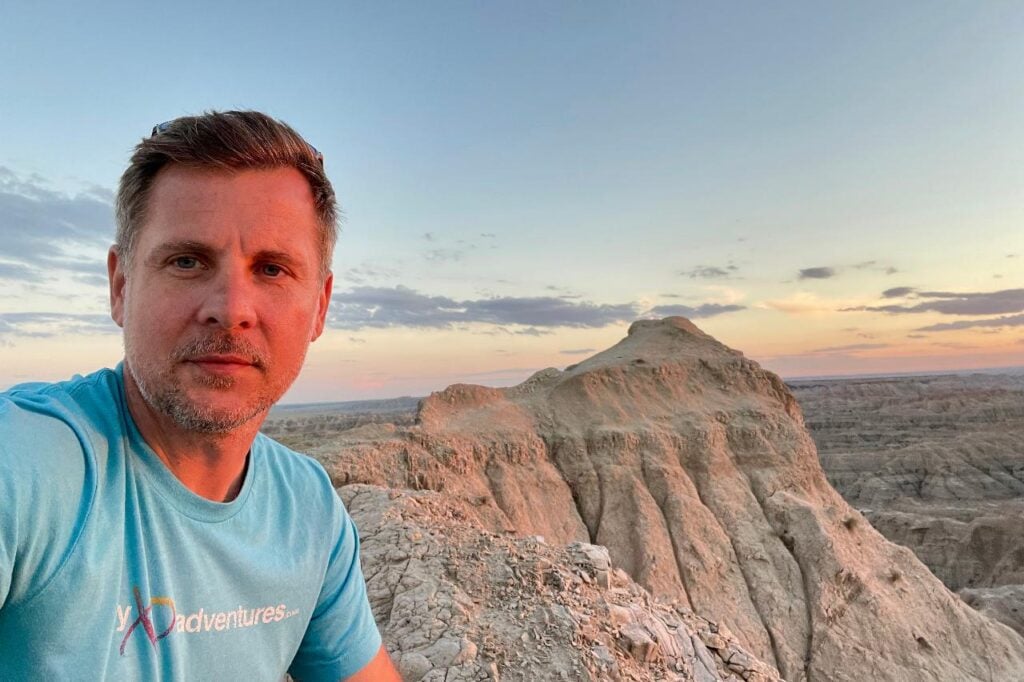
Owner and lead guide at My XO Adventures in Rapid City, South Dakota
Daniel Milks is the owner and lead guide of My XO Adventures, based in Rapid City, South Dakota. He leads private days through the Black Hills and Badlands built around wildlife behavior, geology, local history, and photo worthy stops, with a calm pace that leaves room for real discovery. Each route is shaped around your interests, current conditions, and simple, practical planning so your day feels easy, personal, and genuinely local. My XO Adventures tours include admission fees for the parks, monuments, and memorials on your itinerary. Learn more about Daniel on his bio page.