What Is Mount Rushmore Famous For?
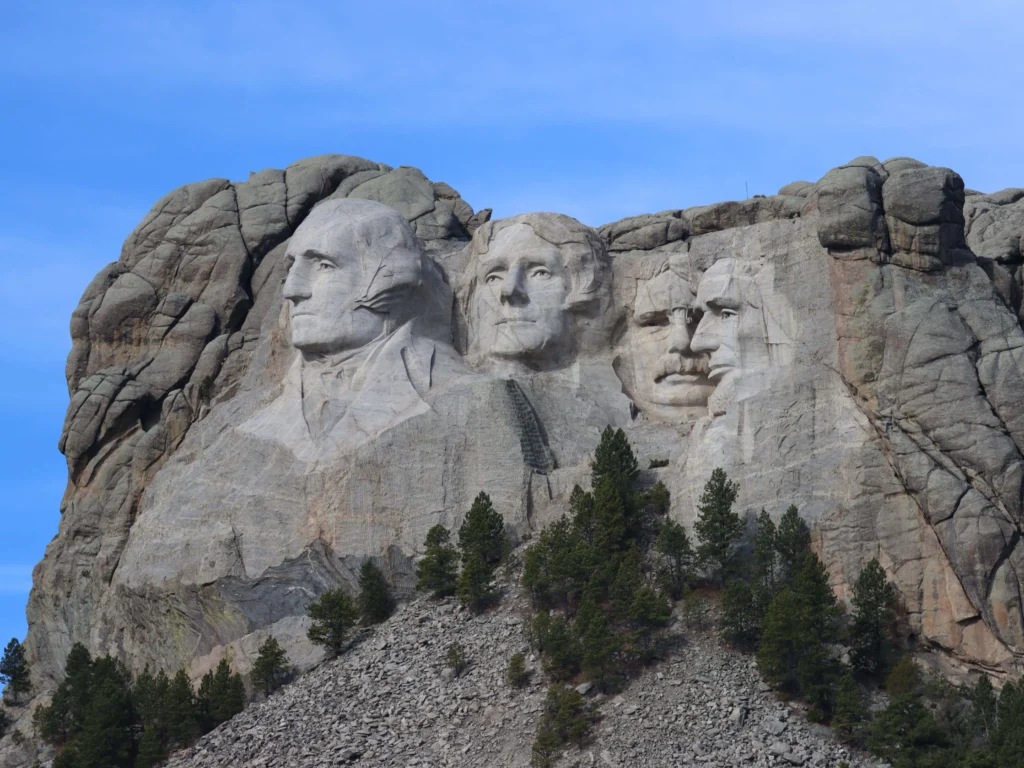
Most people recognize Mount Rushmore long before they ever visit South Dakota. The massive granite faces of George Washington, Thomas Jefferson, Theodore Roosevelt, and Abraham Lincoln have appeared in textbooks, documentaries, movies, and postcards for generations. Yet seeing it in person feels completely different from seeing a photograph.
What surprises many visitors is not just the scale. It’s the setting.
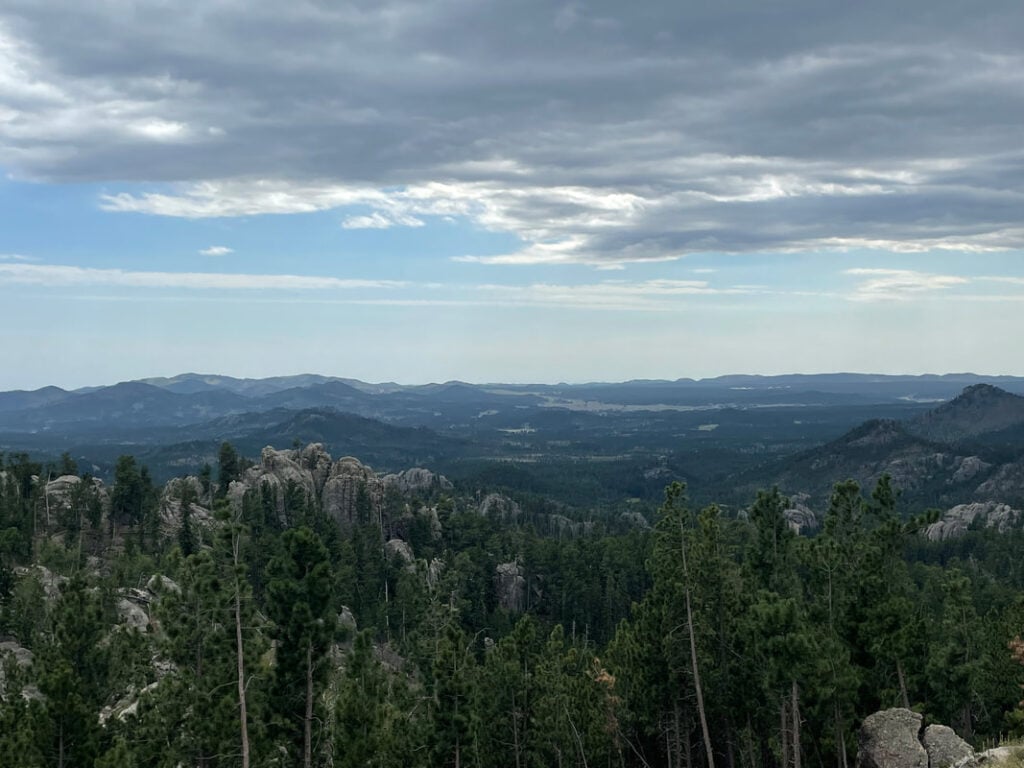
Mount Rushmore rises directly out of the Black Hills, surrounded by granite spires, ponderosa pine forests, winding mountain roads, and some of the most dramatic scenery in the American West. The monument feels both engineered and deeply tied to the landscape around it. That contrast is part of what makes it unforgettable.
So what exactly is Mount Rushmore famous for?
Part of the answer is obvious. It’s one of the most recognizable monuments in the United States. But its significance goes deeper than the four carved faces. Mount Rushmore represents an idea about American history, national identity, ambition, engineering, politics, and preservation. It also tells a far more complicated story than many visitors expect when they first arrive.
Today, more than two million people visit Mount Rushmore National Memorial every year. Some come for the history. Others come because it has been on their bucket list since childhood. Many simply want to stand in front of something they’ve seen their entire lives and finally experience it for themselves.
And once they arrive, most people end up learning much more than they expected.
Why Were These Four Presidents Chosen?
The four presidents carved into Mount Rushmore were selected to represent major chapters in the development of the United States.
George Washington
Washington represents the founding of the nation. As commander of the Continental Army during the American Revolution and the country’s first president, he became the symbolic starting point of the United States itself.
Thomas Jefferson
Jefferson was chosen because of expansion and growth. He authored the Declaration of Independence and oversaw the Louisiana Purchase, which dramatically expanded the size of the young country and opened the door to western exploration.
Theodore Roosevelt
Roosevelt represents industrial growth, modernization, and conservation. He helped position the United States as a growing global power while also protecting millions of acres of public land. Visitors are often surprised to learn how important conservation was to Roosevelt’s presidency, especially when standing in the middle of the Black Hills landscape.
Abraham Lincoln
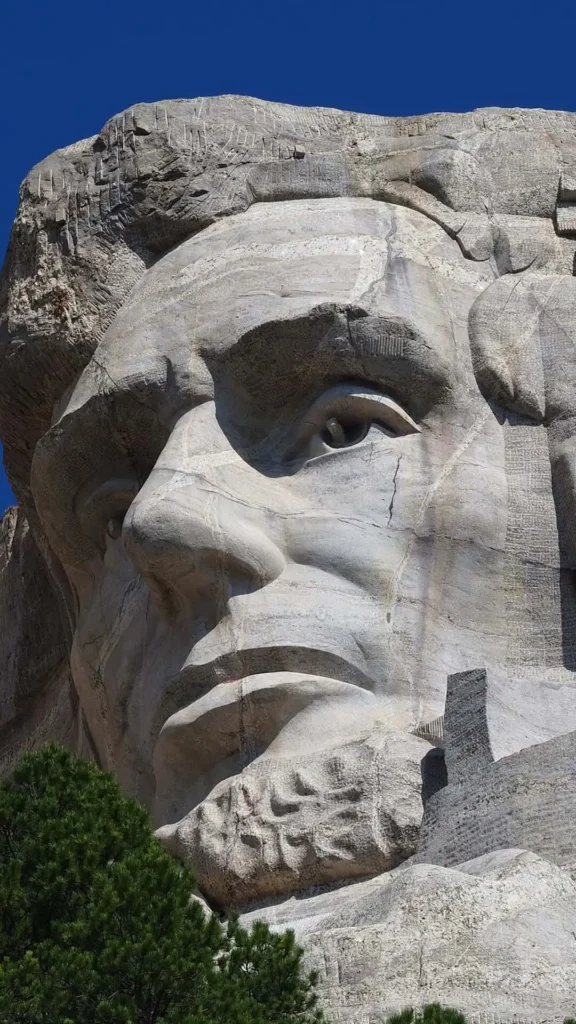
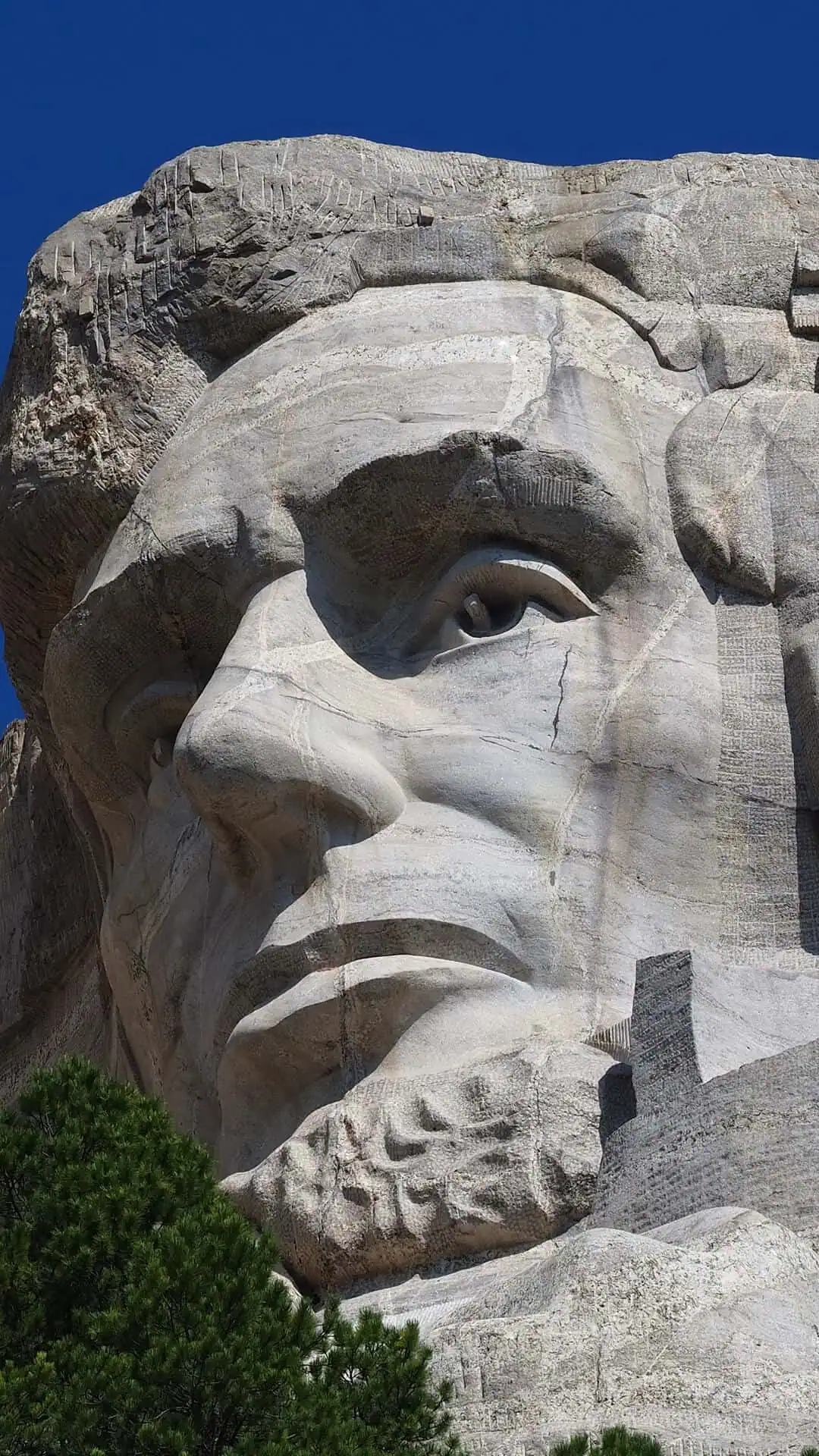
Lincoln symbolizes preservation and unity. His leadership during the Civil War and his role in ending slavery made him one of the most consequential figures in American history. Borglum viewed Lincoln as the president who held the nation together during its greatest internal crisis.
Together, the four presidents were meant to tell a larger story about the creation, expansion, development, and preservation of the United States.
The Monument Itself Is an Engineering Achievement
Even people who know the basic history of the monument are often shocked by how Mount Rushmore was built.
The faces are each about 60 feet tall and were carved directly into granite using dynamite, drills, cables, and hand-finishing tools during the late 1920s and 1930s. Workers hung from harnesses hundreds of feet above the ground while shaping the mountain with remarkable precision.
One of the biggest misconceptions visitors have is assuming the carving was done slowly by hand alone. In reality, roughly 90 percent of the rock removal was completed using carefully placed dynamite charges. The finer details came later.
The project officially began in 1927 under sculptor Gutzon Borglum and continued for 14 years until Borglum’s death in 1941. His son, Lincoln Borglum, helped oversee the final stages of the work.
Remarkably, despite the dangerous conditions, there were no worker fatalities during construction.
Why Mount Rushmore Became So Famous
Part of Mount Rushmore’s fame comes from visibility. It has become one of the defining visual symbols of the United States.
But there are other reasons the monument continues attracting visitors from around the world.
It Combines History With Landscape
Many famous monuments are located in cities. Mount Rushmore feels different because it sits deep within the Black Hills. The drive itself becomes part of the experience. Iron Mountain Road, the granite tunnels, forested curves, wildlife, and changing elevations all build anticipation before visitors even reach the memorial.
The Scale Feels Different in Person
Photos flatten the monument. In person, visitors start noticing details that cameras rarely capture well. The texture of the granite, the steepness of the mountain, and the precision of the carving all become more impressive when standing below it.
It Represents More Than One Era
Mount Rushmore is often associated with patriotism, but it also reflects changing conversations about American identity, leadership, westward expansion, conservation, and Indigenous history. That complexity is part of why the monument continues generating discussion today.
The Complicated History Behind Mount Rushmore
For many visitors, one of the most important parts of understanding Mount Rushmore is understanding where it was built.
The Black Hills are deeply sacred to the Lakota people and hold enormous cultural and spiritual significance. The land itself remains central to ongoing conversations surrounding treaties, federal actions, land ownership, and historical injustice.
That history cannot be separated from the monument.
Many visitors arrive expecting only a patriotic landmark and leave realizing the Black Hills carry multiple layers of history at the same time. The region tells stories about Native cultures, westward expansion, tourism, conservation, mining, settlement, and national identity all within the same landscape.
Understanding that complexity often gives visitors a much fuller appreciation of the area itself.
Hidden Details Many Visitors Miss
The Hall of Records
Behind Lincoln’s head sits a hidden chamber known as the Hall of Records. Borglum originally imagined this room as a place to store important documents explaining the history and meaning of the monument.
The full vision was never completed, but a repository containing historical information was eventually placed inside the chamber in the 1990s.
The Original Design Was Much Larger
Borglum initially wanted the presidents carved from head to waist. Funding problems and time limitations forced the project to stop after the faces were completed.
The Monument Requires Constant Preservation
The National Park Service continuously monitors cracks, water intrusion, erosion, and freeze-thaw cycles within the granite. Specialists regularly inspect the carving and perform maintenance to help preserve the monument long term.
What It’s Like to Visit Mount Rushmore Today
For first-time visitors, Mount Rushmore often feels more emotional than expected.
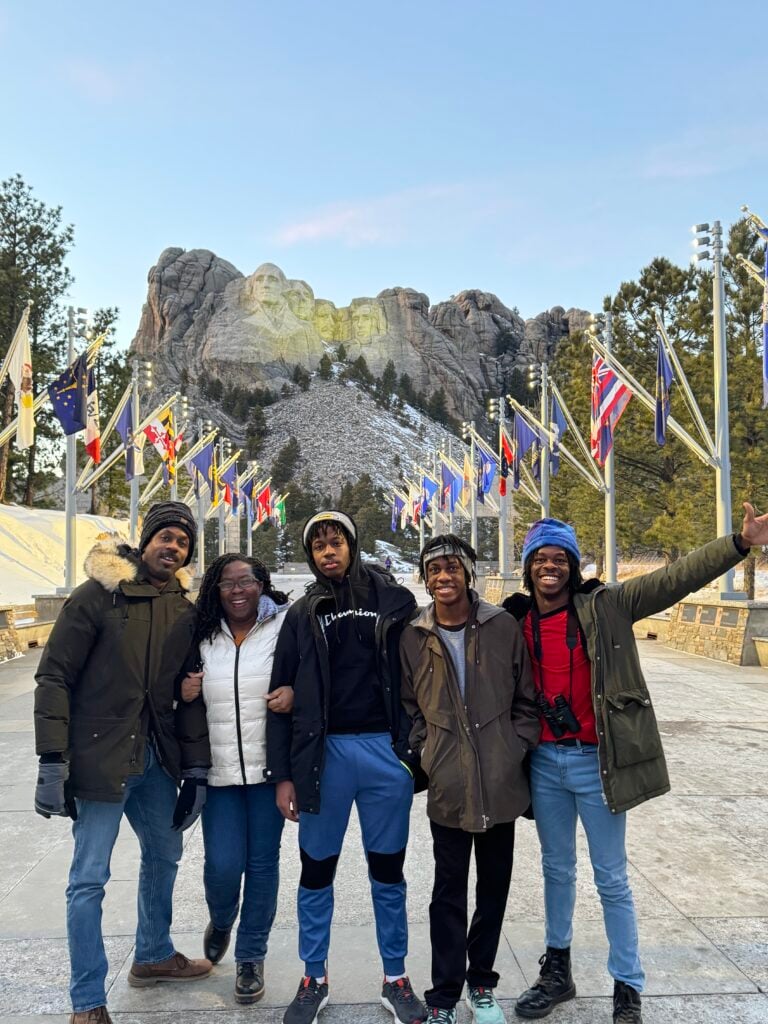
Some people become quiet the moment they step onto the viewing terrace. Others spend more time looking at the surrounding Black Hills than the sculpture itself. Children usually notice the size first. History enthusiasts tend to linger on the exhibits and sculpture details.
The experience changes dramatically depending on:
- time of day
- season
- weather
- crowd levels
- lighting conditions
Early mornings tend to feel calmer and cooler, especially during summer. Evening lighting ceremonies create an entirely different atmosphere, particularly as the monument gradually illuminates against the darkening sky.
Many visitors also combine Mount Rushmore with:
- Custer State Park
- Crazy Horse Memorial
- Iron Mountain Road
- Needles Highway
- Sylvan Lake
- Wildlife Loop Road
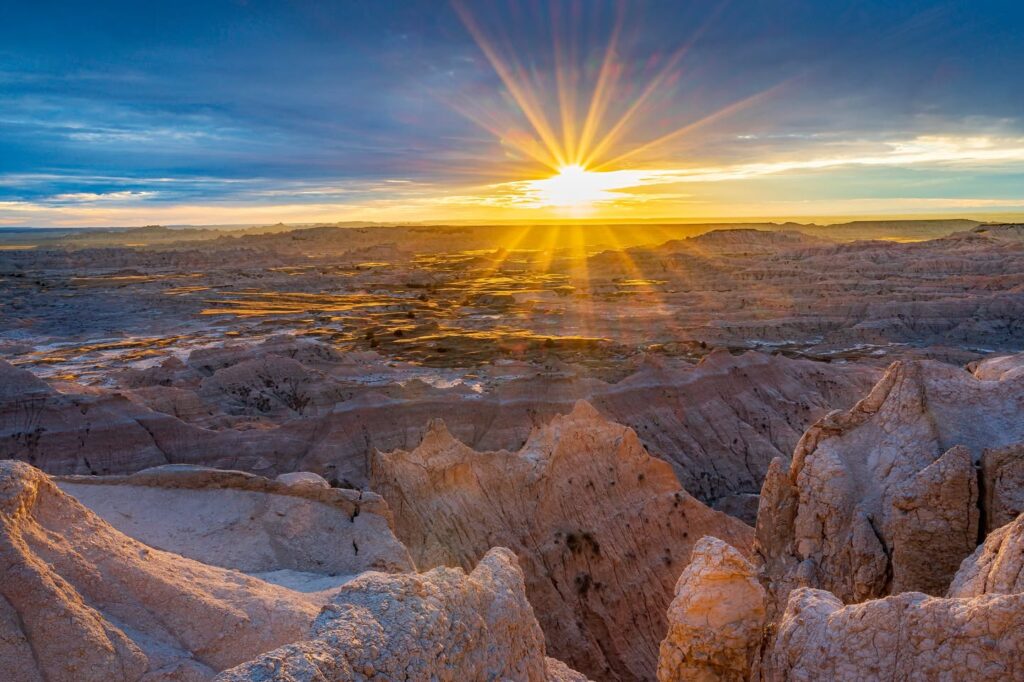
- Badlands National Park
- Devils Tower
That combination is part of what makes the Black Hills one of the most unique road trip destinations in the country.
Why Mount Rushmore Still Matters
Mount Rushmore remains famous because it sits at the intersection of art, politics, engineering, tourism, and American identity.
Some visitors see inspiration.
Some see contradiction.
Some see extraordinary craftsmanship.
Others come away thinking more deeply about the broader history of the Black Hills itself.
Very few leave without a strong reaction.
That’s part of why the monument continues drawing millions of visitors nearly a century after construction began.
Seeing Mount Rushmore in person is one thing. Understanding the stories surrounding it, the landscape around it, and the historical layers connected to it creates a far richer experience.
If you’re planning to explore the Black Hills, having a local guide can completely change how you experience Mount Rushmore and the surrounding region.