
Talk to Your Guide: (605) 252-9100
Badlands National Park Photos: Golden Hour Views, Wildlife Moments, and Wide Open Skies
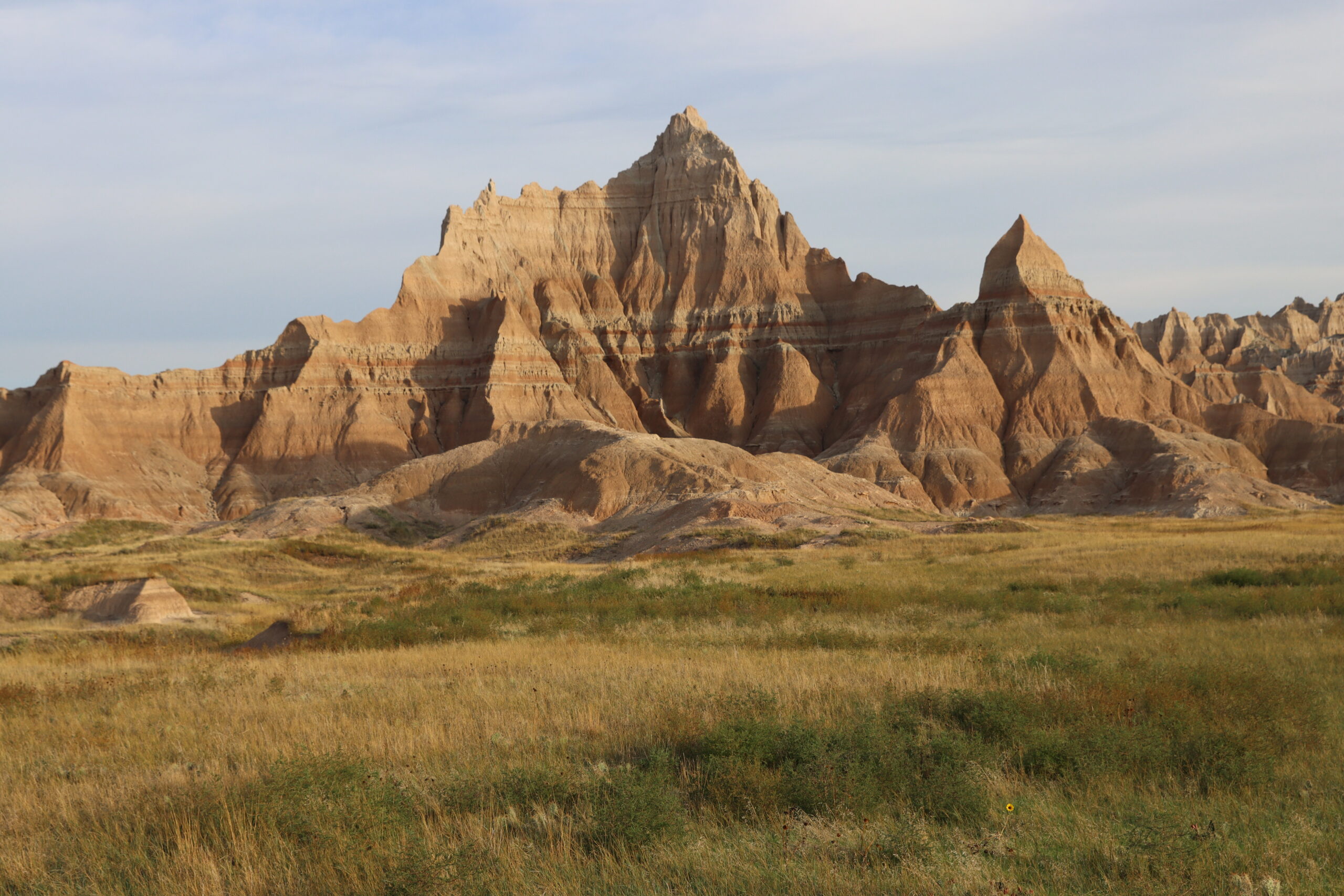
Badlands National Park is one of the most visually striking landscapes in the United States. Rising unexpectedly from the surrounding prairie of western South Dakota, the park reveals a maze of layered rock formations carved by erosion over millions of years. These images of Badlands National Park capture the textures, colors, wildlife, and sweeping views that make this national park one of the most unforgettable places to explore in the American West.
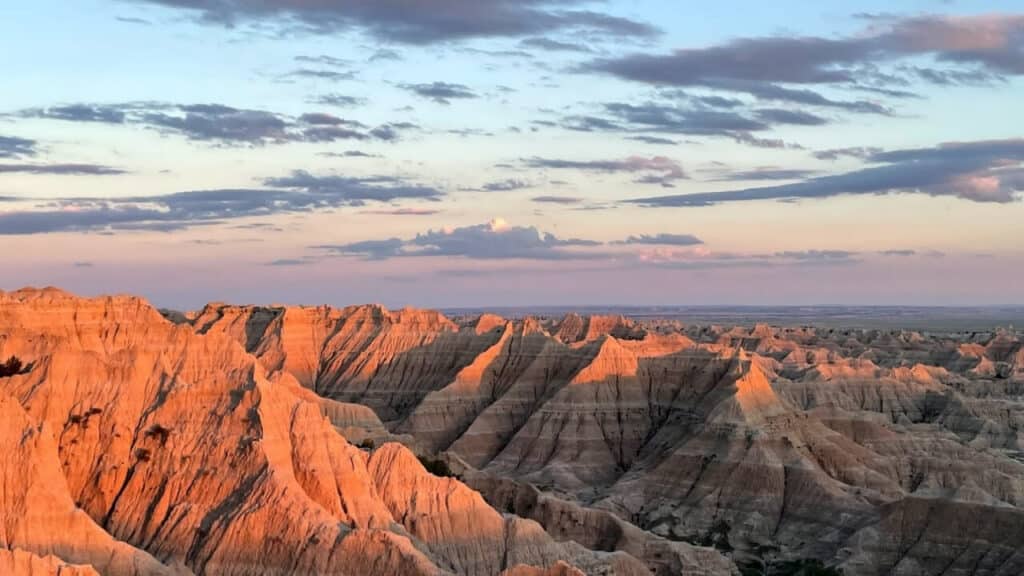
At first glance the Badlands appear rugged and chaotic, but a closer look reveals remarkable patterns within the landscape. Bands of sediment form distinct layers of gray, tan, red, and gold across the ridges and buttes. As sunlight moves across the terrain throughout the day, shadows and highlights reveal the subtle structure of the formations. This constantly changing light is one reason photographers return to the Badlands again and again.
Beyond its dramatic geology, Badlands National Park also preserves one of the largest protected mixed-grass prairie ecosystems in North America. Bison roam across open grasslands, prairie dogs gather in their colonies, and bighorn sheep navigate steep rock slopes with surprising ease. The combination of rugged formations, expansive prairie, and wildlife creates a landscape that feels both wild and deeply connected to the natural history of the Great Plains.

If you only have one day, here’s the simple rhythm that works. Go early for soft light and active wildlife
• Midday, shoot details and patterns instead of wide landscapes
• Go back late for the richest color on the formations
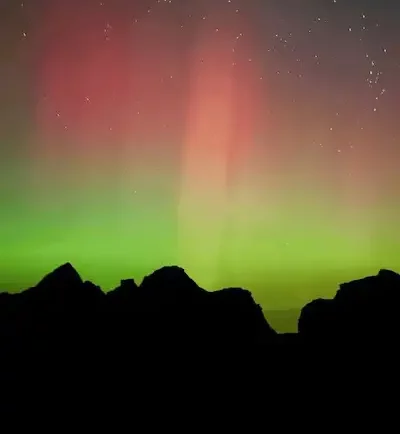
• Stay after sunset for blue hour silhouettes and sky shots if conditions are right
Morning light is softer and cooler, which pulls out texture without harsh contrast. It’s also one of your best windows for wildlife movement, especially on cooler days.
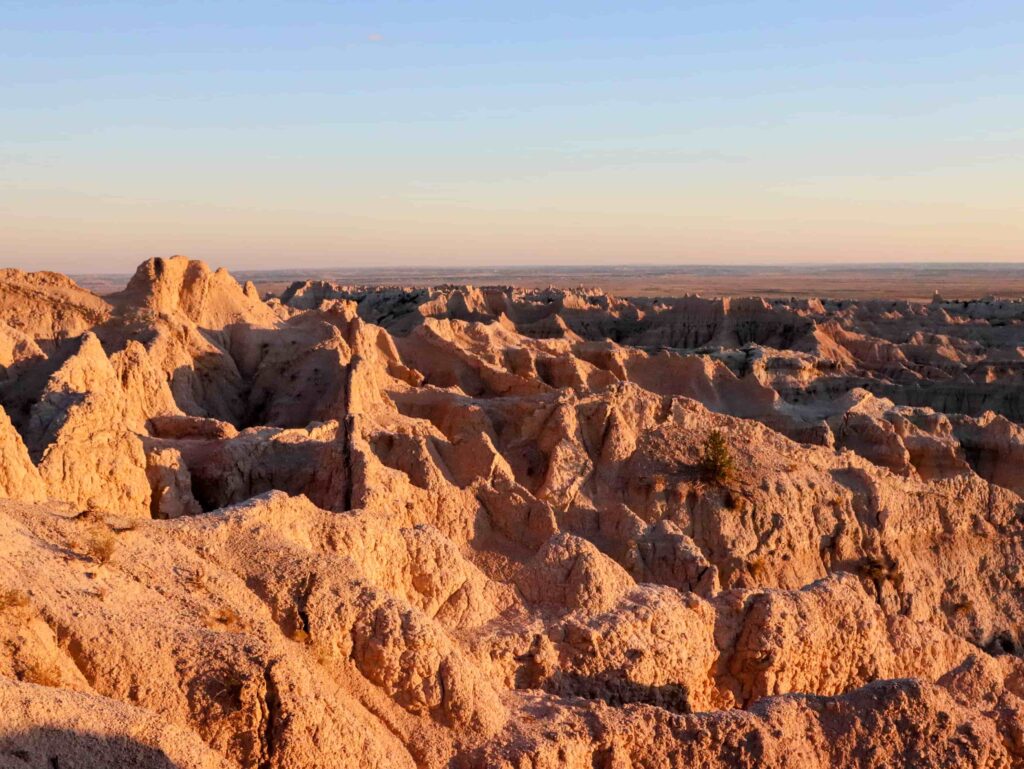
Late day light is when the Badlands really glow. Shadows deepen, ridgelines pop, and the color in the layers gets richer. If you want dramatic landscapes, build your plan around this window.
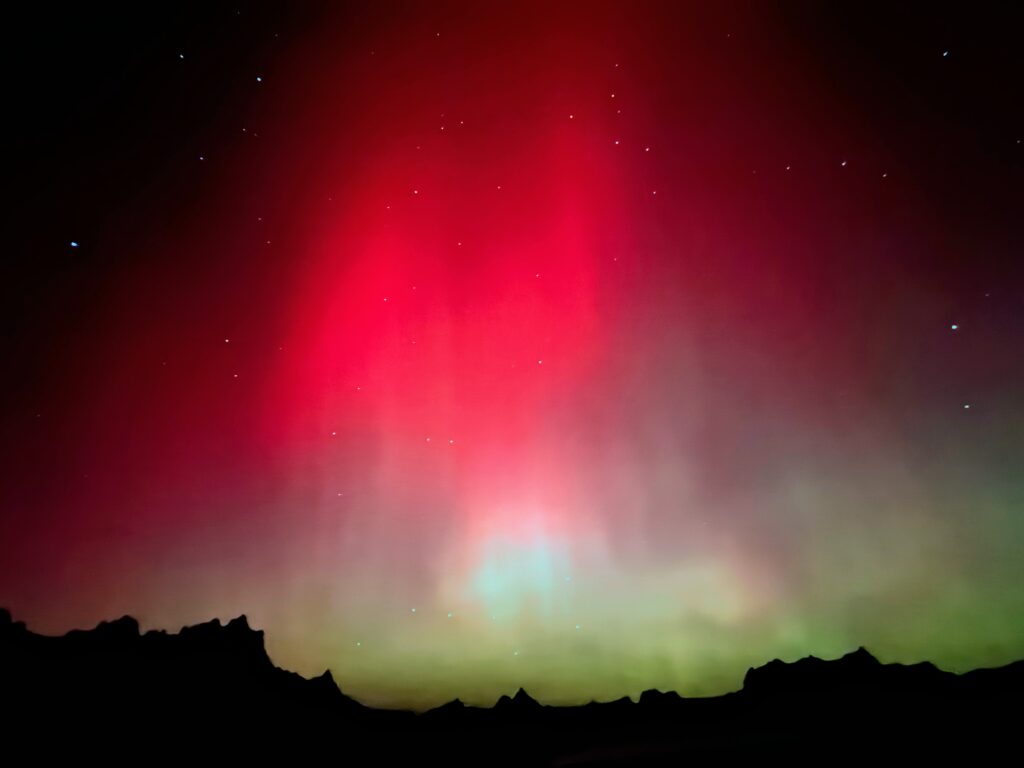
Right after sunset, the sky holds color and the landscape turns into clean silhouettes. With a steady setup and patience, you can get moody, high impact images even if you’re new to night photography.

For fast wins, focus on overlooks and short trails along the Loop Road. Pick a few spots and revisit them at different times, because the same view can look completely different with new light.
Many of the most recognizable photos of Badlands National Park are taken along the Badlands Loop Road. This scenic drive winds through the heart of the park, offering numerous overlooks where visitors can stop and take in expansive views of the formations.
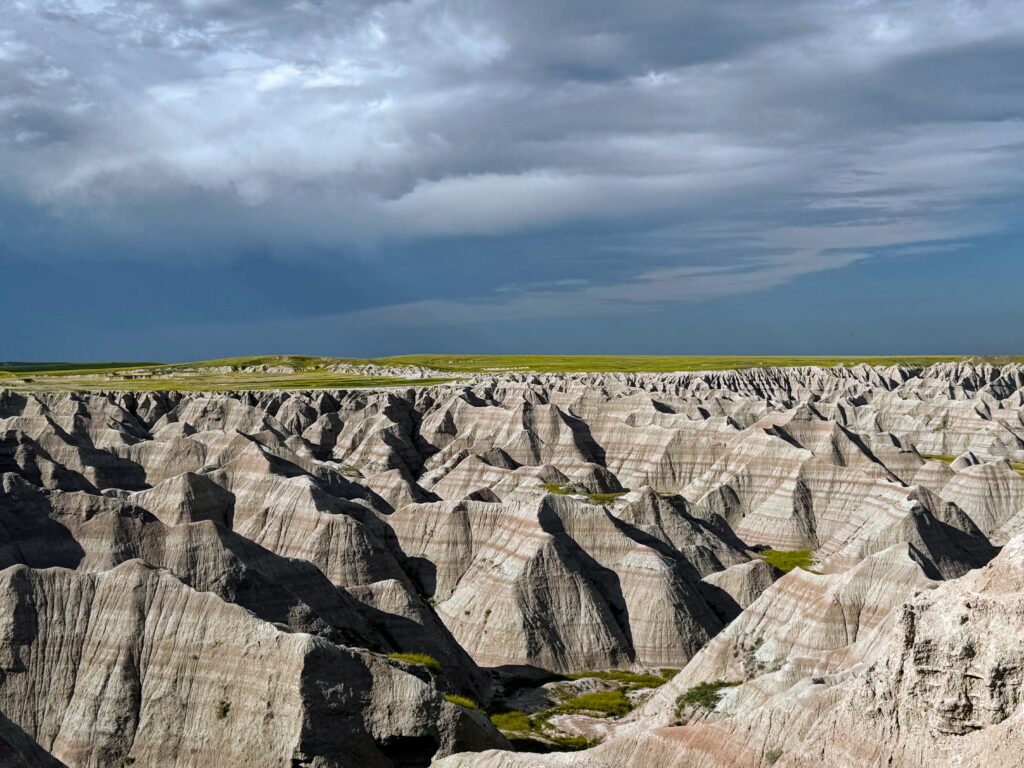
From these viewpoints the scale of the Badlands becomes clear. Long ridges stretch across the horizon while deep valleys cut through the rock layers below. On clear days the visibility across the landscape can extend for many miles, creating opportunities for wide panoramic images that capture the vastness of the terrain.
Several overlooks along this route are particularly well known among photographers. Big Badlands Overlook offers a sweeping introduction to the park’s layered ridges, while Yellow Mounds Overlook reveals unusually colorful sediment formations. Panorama Point provides elevated views across both the rock formations and surrounding prairie, making it one of the most diverse photographic locations within the park.
Visitors who enjoy landscape photography often find that the light changes dramatically at these overlooks throughout the day. Early morning and late evening produce softer light and longer shadows, while midday sunlight highlights the complex textures carved into the formations.

Sunrise: one overlook, then a short trail for texture shots
Midday: detail hunting, shadows, patterns, wildlife scouting
Sunset: return to your favorite overlook
After dark: blue hour silhouettes, then optional sky shots
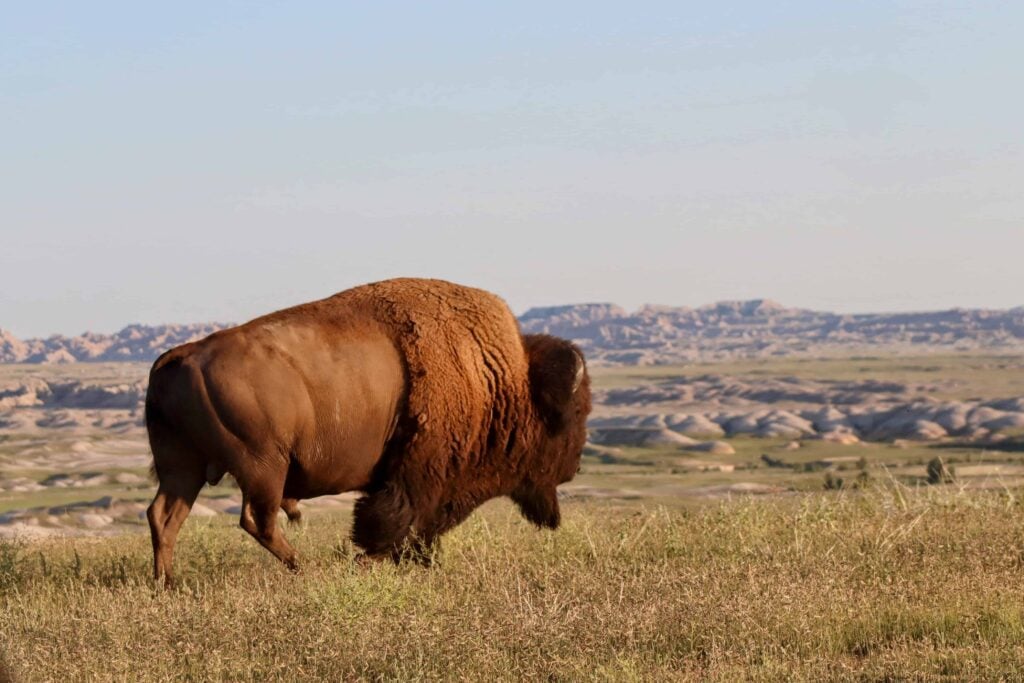


Wildlife photography is another reason many visitors seek out images of Badlands National Park. Although the park is known primarily for its geology, the surrounding prairie supports a surprising diversity of animals.
American bison are among the most iconic wildlife species in the park. Large herds can often be seen grazing across open grasslands, particularly in areas west of the main scenic drive. Watching these animals move through the prairie offers a glimpse into the landscape as it existed long before modern development reached the region.
Bighorn sheep provide another memorable wildlife experience. These animals are remarkably agile and frequently travel along steep slopes and rocky ridges. Observing them navigate terrain that appears nearly vertical from a distance can be an unforgettable sight for visitors.
Prairie dog colonies also play an important role in the ecosystem of the Badlands. These small mammals create extensive networks of burrows that support a wide range of other species. Hawks, coyotes, and other predators often appear near prairie dog towns, creating opportunities for wildlife photography that reflects the dynamic relationships within the prairie ecosystem.
The Badlands are not only landscapes. Wildlife can show up fast, and the best photos usually come from calm observation, not chasing.
• Give wildlife space and let behavior happen naturally
• Use your vehicle as a viewing blind when possible
• A longer lens helps, but timing matters more than gear
• Early morning and late afternoon are your strongest windows
• If an animal changes behavior because of you, you’re too close


Many photographers believe that sunrise and sunset provide the most dramatic images of Badlands National Park. During these times the angle of the sun creates long shadows that emphasize the intricate shapes of the rock formations.
Sunrise often begins quietly in the Badlands. As the eastern horizon brightens, the formations gradually emerge from the darkness, revealing subtle tones within the rock layers. Early morning light tends to be soft and even, making it ideal for capturing the full range of colors within the landscape.
Sunset offers a different but equally impressive experience. As the sun lowers in the western sky, the formations take on warmer tones while shadows stretch across the valleys between ridges. The sky itself often becomes part of the composition, with clouds reflecting colors that echo the hues within the rock formations.
For visitors interested in improving their photography skills in the region, our guide to Black Hills and Badlands Photography Tips provides practical advice for capturing the changing light and landscapes of western South Dakota.
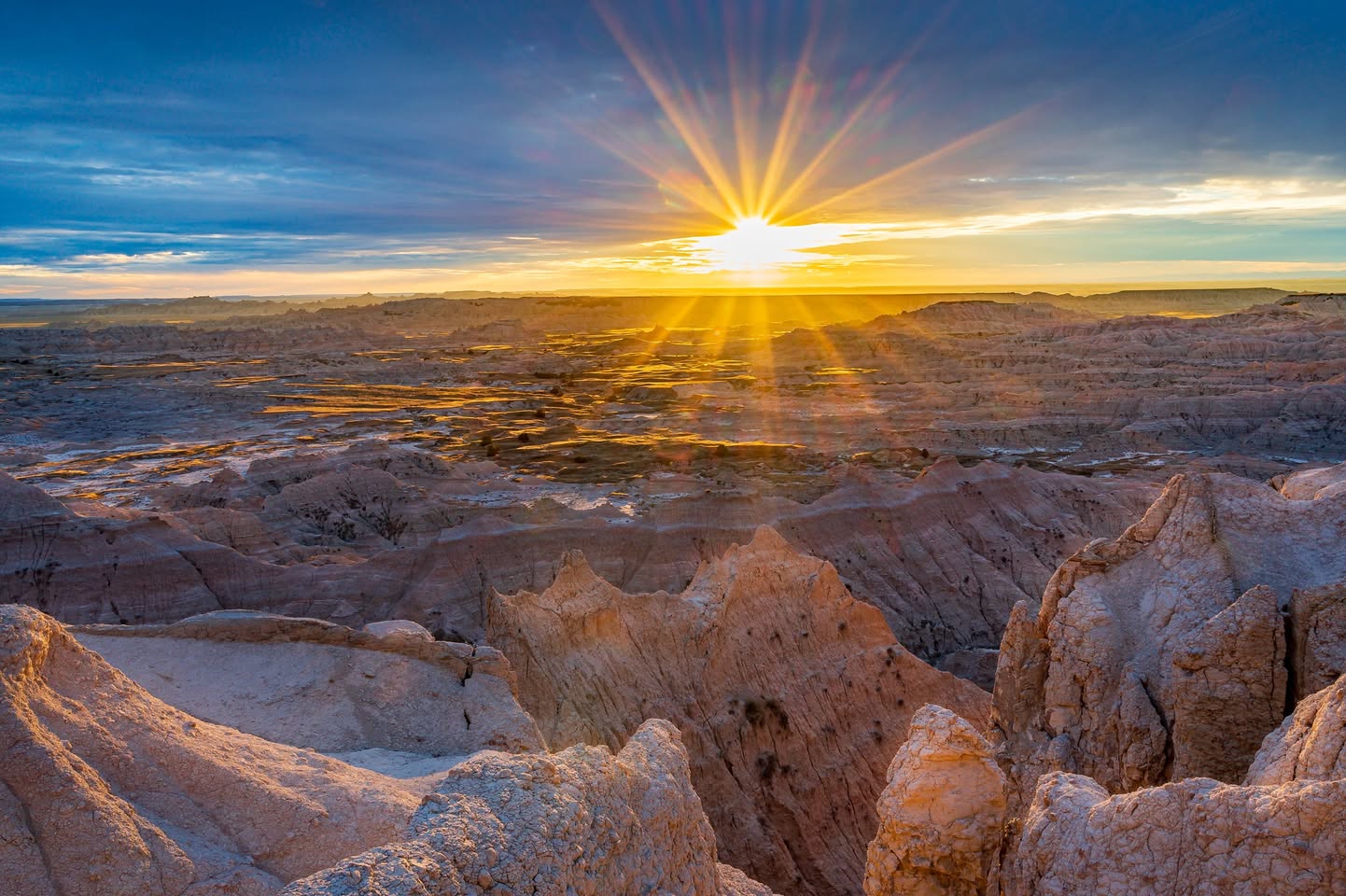
While sweeping views often dominate photographs of Badlands National Park, many of the park’s most fascinating details appear in smaller scenes that visitors might initially overlook. Close-up images of rock layers reveal patterns formed by ancient rivers and floodplains. Fossilized remains of prehistoric animals have also been discovered within the park’s sediment layers, making the Badlands one of the richest fossil beds in North America.
Wildflowers add another dimension to the landscape during certain times of year. In late spring and early summer patches of prairie flowers appear among the grasses, providing bursts of color that contrast beautifully with the muted tones of the rock formations.
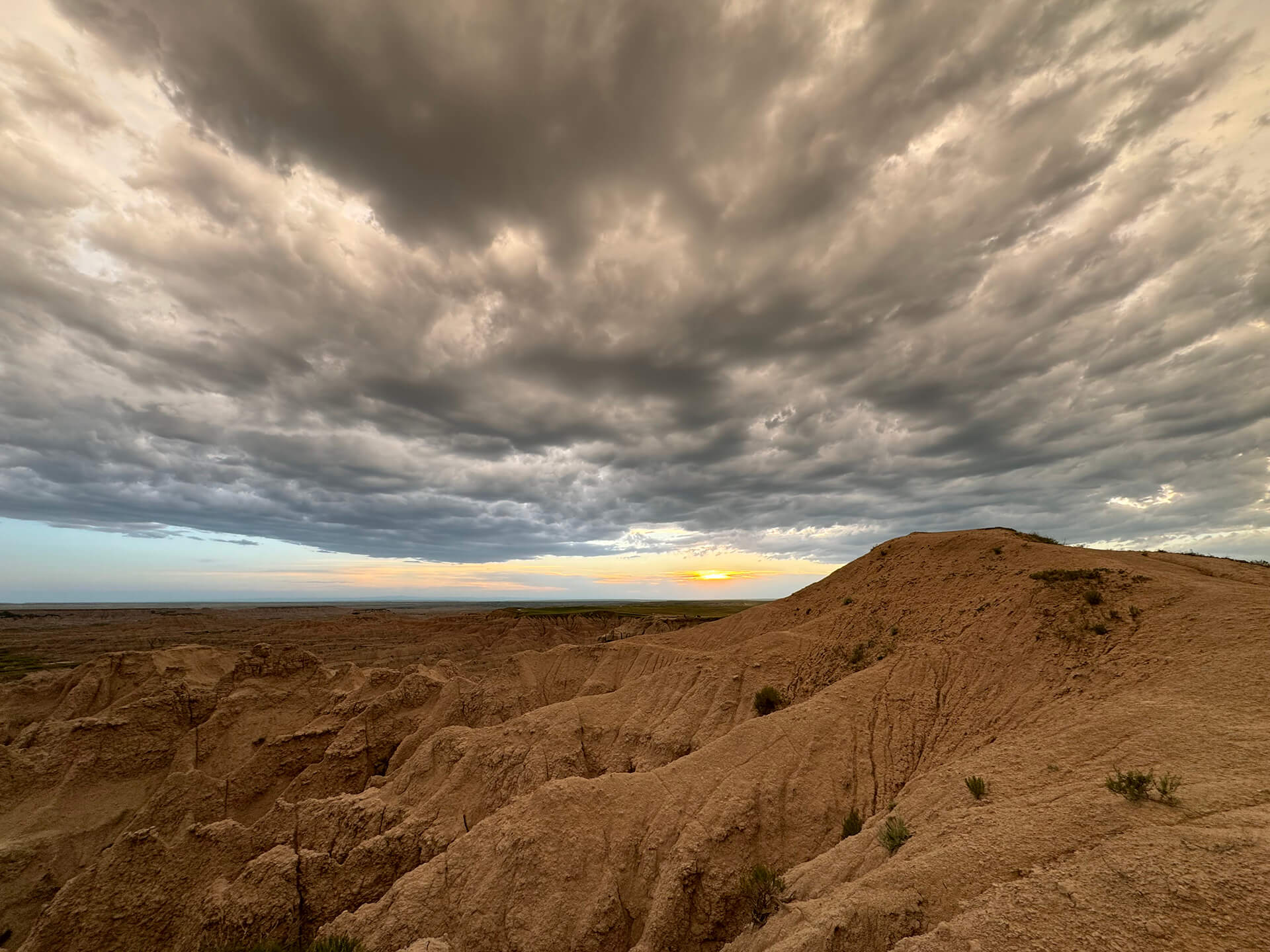
Weather also plays a major role in shaping the visual character of the Badlands. Passing storms can create dramatic skies above the ridges, while occasional fog settles into valleys during cooler mornings. These atmospheric conditions often produce some of the most unique images of Badlands National Park, revealing moods and textures that change from day to day.


You don’t need a complicated kit. A few basics make everything smoother in wind, dust, and shifting light.
Items:
• Wide angle lens for big landscapes
• Telephoto lens for wildlife
• Tripod for sunrise, sunset, and night shots
• Extra batteries, wind and cold drain them
• Lens cloth and a way to handle dust
For landscapes, use aperture priority and choose a mid range aperture. Watch your shutter speed in wind, and adjust exposure compensation as the light shifts on the formations.
Although photographs offer a glimpse of the Badlands, experiencing the landscape in person reveals details that images alone cannot fully capture. Walking along short trails near the overlooks allows visitors to observe the formations from different perspectives and appreciate the intricate shapes carved into the rock.
Exploring beyond the main scenic drive also reveals quieter areas of the park where the prairie landscape becomes more prominent. In these regions visitors may encounter wildlife moving across open grasslands or discover unique vantage points where the formations appear dramatically different from the well-known viewpoints.
Badlands National Park is also part of a broader region of remarkable landscapes in western South Dakota. Many travelers combine their visit to the Badlands with time exploring the nearby Black Hills, where forests, granite peaks, and historic landmarks provide a striking contrast to the rugged terrain of the Badlands.
Together these landscapes create one of the most diverse travel experiences in the American West.


The views are incredible, and the footing can be loose in places. Stay on established trails, watch edges, and plan for sun and wind. Carry more water than you think you need.
With wildlife, distance is safety. Let animals cross the road, avoid sudden movement, and keep the experience calm so you can photograph natural behavior.
The images of Badlands National Park featured here represent just a small portion of the visual diversity found within this remarkable landscape. From sweeping ridges and colorful rock formations to wildlife moving across the prairie, the Badlands offer endless opportunities for exploration and discovery.
For photographers, nature lovers, and travelers alike, the park provides a rare opportunity to experience a landscape shaped by deep time and natural forces. Each visit reveals new details as light, weather, and seasons transform the appearance of the terrain.
Whether you are planning your first trip or simply exploring through photographs, the Badlands remain one of South Dakota’s most extraordinary natural treasures.



If you post your photos, tag us. I love seeing what people notice out there, and it helps other travelers plan a smarter visit.
The Badlands reward people who pay attention to light, wind, and texture. This FAQ is built to help you get stronger photos with simple choices that work in the real world, even if you’re shooting on a phone or traveling on a tight schedule.
Build your day around three modes: soft light early, detail hunting midday, and dramatic light late. You’ll get better results by revisiting a few locations in different light instead of racing to every overlook once.
Switch from grand landscapes to patterns and textures. Look for repeating ridgelines, cracked clay, color bands, and shadow shapes. Midday is also great for scouting locations for your later return.
Use foreground on purpose. Include a near object like textured ground, a ridge edge, or a trail curve, then let the formations rise behind it. A low shooting angle often adds depth fast.
Increase shutter speed and stabilize your stance. If you’re using a tripod, lower it, widen the legs, and keep the camera bag off the hook if wind is pushing it around. For handheld shots, brace your arms and take short bursts.
Keep gear changes minimal. If you swap lenses, do it inside the vehicle with windows up. Carry a lens cloth, keep a simple protective bag or cover, and avoid setting equipment directly on the ground.
Yes. The keys are timing and composition. Tap to expose for the sky near sunrise or sunset, use the widest lens for dramatic foreground, and avoid digital zoom. If your phone has a night mode, use a stable surface or small tripod.
Make the person small in the frame and place them near a ridge line or along a trail for context. That single figure helps viewers understand the size of the landscape, and it keeps the scene feeling expansive.
Blue hour simplifies the scene. The formations turn into clean silhouettes, the sky holds color, and the contrast becomes smoother. It’s one of the easiest times to create moody, high-impact images with minimal effort.
Some of the best photography locations in Badlands National Park are found along the Badlands Loop Road. Popular viewpoints include Big Badlands Overlook, Panorama Point, Yellow Mounds Overlook, and the area near Pinnacles Overlook. These locations offer expansive views of layered rock formations and are especially striking during sunrise and sunset.
Sunrise and sunset usually provide the most dramatic lighting in Badlands National Park. Early morning light highlights the textures of the formations and creates long shadows across the ridges. Sunset produces warm colors that enhance the reds, golds, and grays within the rock layers.
These are the official pages I trust for planning light, weather, road conditions, and park rules. Save them before you head out so you can make smart calls fast.