
Buffalo Gap National Grasslands: Standing in the Heart of the Open Prairie
First Impressions of the Open Prairie
Buffalo Gap National Grasslands do not so much welcome you as surround you. One moment, you may be driving through rolling land that seems ordinary. The next, you crest a rise and realize that the world has opened in every direction. The sky feels enormous here, stretching from horizon to horizon in a blue arc that glows in daytime and deepens into pastel or fiery shades at sunrise and sunset. Below, the prairie moves in waves of grass, small draws, and distant buttes that rise like weathered guardians.
Stepping out of your vehicle, you hear the sound of wind as it combs through the grasses. It is a low, constant whisper, sometimes punctuated by the call of a meadowlark perched on a fence post or the bark of a prairie dog. The air smells of sun-warmed earth, dry plants, and sometimes the faint sweetness of blooming wildflowers. There is nothing complicated about the scene, yet the feeling it creates is surprisingly rich. Buffalo Gap National Grasslands remind travelers that open space has its own kind of power.
Prairie Life and Subtle Beauty

The grasslands cover a large area across southwestern South Dakota, and Buffalo Gap is one of the more accessible expressions of this ecosystem. Here you find mixed-grass prairie, which means a blend of shorter and taller grasses adapted to this climate. In spring and early summer, these grasses wake up from their winter rest and paint the land in fresh greens. As the season progresses, subtle tones of gold, tan, and rust appear, especially in late summer and autumn.
Look closely, and you discover that the prairie is not a simple carpet. It is a patchwork of species, each occupying slightly different niches based on soil type, moisture, and exposure. Wildflowers appear in bursts of purple, yellow, and white, drawing insects and creating vibrant accents against the grasses. Small shrubs take hold in spots that offer enough support. These details reveal themselves slowly if you take time to walk rather than stand.
Wildlife is part of the experience here. Prairie dog towns dot the landscape, with small sentinels popping up to watch visitors and then diving suddenly into burrows when alarmed. Pronghorn may be seen moving with incredible speed across the distance. Raptors soar overhead, using the vast sky as their hunting ground. In some sections of the broader grasslands region, bison still roam, echoing the days when enormous herds shaped this entire ecosystem.
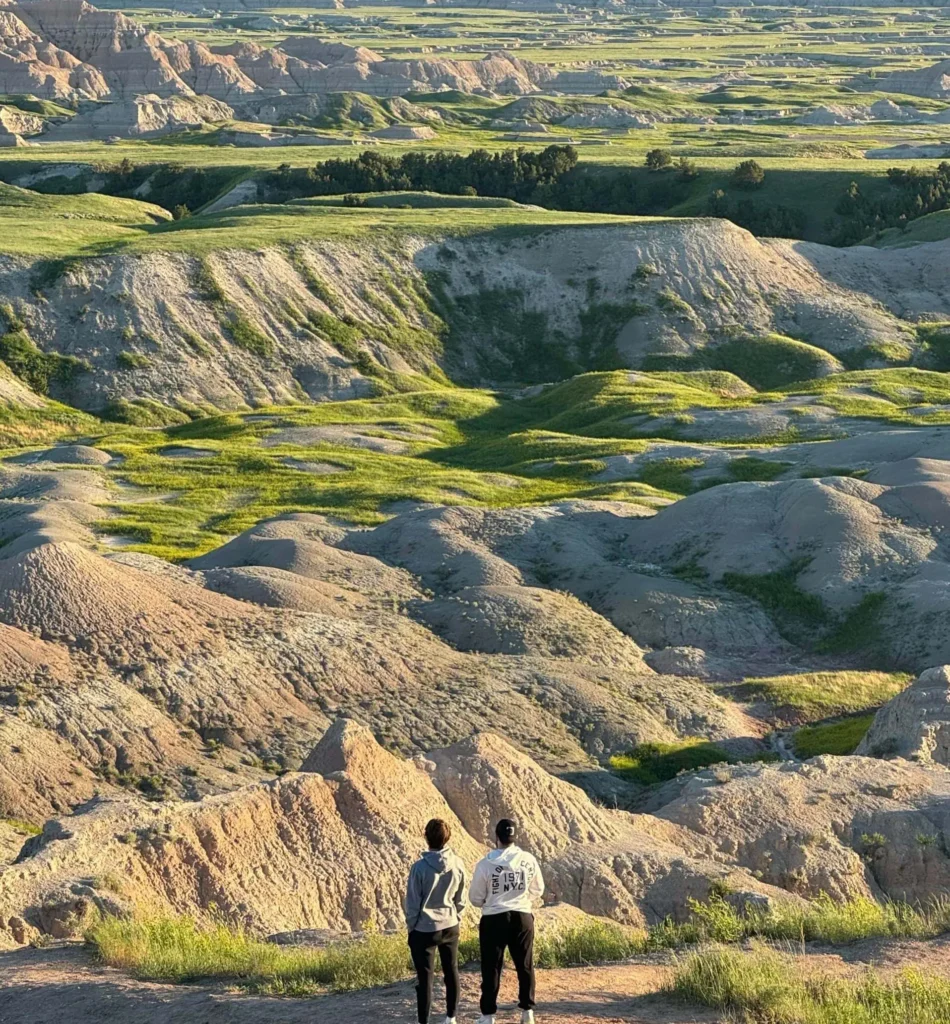
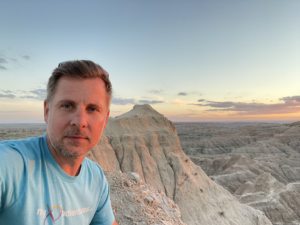
Geologically, the grasslands often sit above ancient layers of sedimentary rock shaped by inland seas, erosion, and time. In certain areas, you can see glimpses of badlands-style formations, where softer rock has been carved into sharp ridges and gullies. These exposed areas hint at what lies beneath the grasses that cover much of the plateau.
Visiting Buffalo Gap National Grasslands
A visit to Buffalo Gap National Grasslands can take many forms. Some travelers explore the area by vehicle, following gravel or dirt roads that branch off paved routes. Others park and walk out into the prairie, following faint two-track paths or simply choosing a direction and moving carefully across the terrain. The land feels open, but it deserves respect. Distances can be deceptive, and the lack of landmarks can make navigation difficult.
Bring plenty of water and sun protection. The same open sky that creates such dramatic views also offers little shade. A hat, sunscreen, and light, breathable clothing make the experience more comfortable. Footwear with good support helps handle uneven ground and the occasional rocky patch.
The weather can shift quickly on the plains. A day that begins clear can see clouds building by afternoon, sometimes bringing strong winds or storms. Watching the sky is part of the experience, but staying aware of changing conditions is essential. Even so, many visitors find that approaching storms or dramatic cloud formations deepen their appreciation for the place’s scale and mood.
Why the Grasslands Belong in Your Journey
Buffalo Gap National Grasslands are not about a single viewpoint, waterfall, or summit. They are about a feeling. Standing here, you sense how small you are compared to the land and sky, yet you do not feel insignificant. Instead, you feel part of something larger. The quiet, the open space, and the prairie’s natural rhythms create space for thought and reflection.
This landscape also connects to important cultural and historical threads. Indigenous nations lived with and moved across these plains long before modern borders. Bison, once nearly gone, have returned in some areas, symbolizing both loss and renewal. Travelers who take time here often leave with a deeper understanding that the American prairie is not empty land, but a living, breathing ecosystem with stories that span centuries.
Final Thoughts
If you want your Black Hills and Badlands journey to include not just forests and rock formations, but also the wide-open soul of the prairie, make time for Buffalo Gap National Grasslands. Walk into the grasses, feel the wind, and listen to the quiet song of this landscape. When you are ready to explore with guidance that respects both the beauty and the history of this place, My XO Adventures will help you experience the grasslands in a way that feels thoughtful, immersive, and sincere.