Badlands Travel Tips: Essential & Effortless Safety Guide
Hey there, fellow adventurers!
I’m Daniel Milks, the owner/operator of My XO Adventures, and I am glad you are here looking for smart, practical Badlands Travel Tips before you head out. The Badlands are one of those places that feel otherworldly and ancient at the same time. The land is rugged, the beauty is real, and with a bit of preparation, your visit can be both unforgettable and safe.
Below is a deeper, more detailed guide that keeps everything you already had and expands on it into a handy resource for anyone planning a trip to Badlands National Park in South Dakota.
Understanding the Badlands
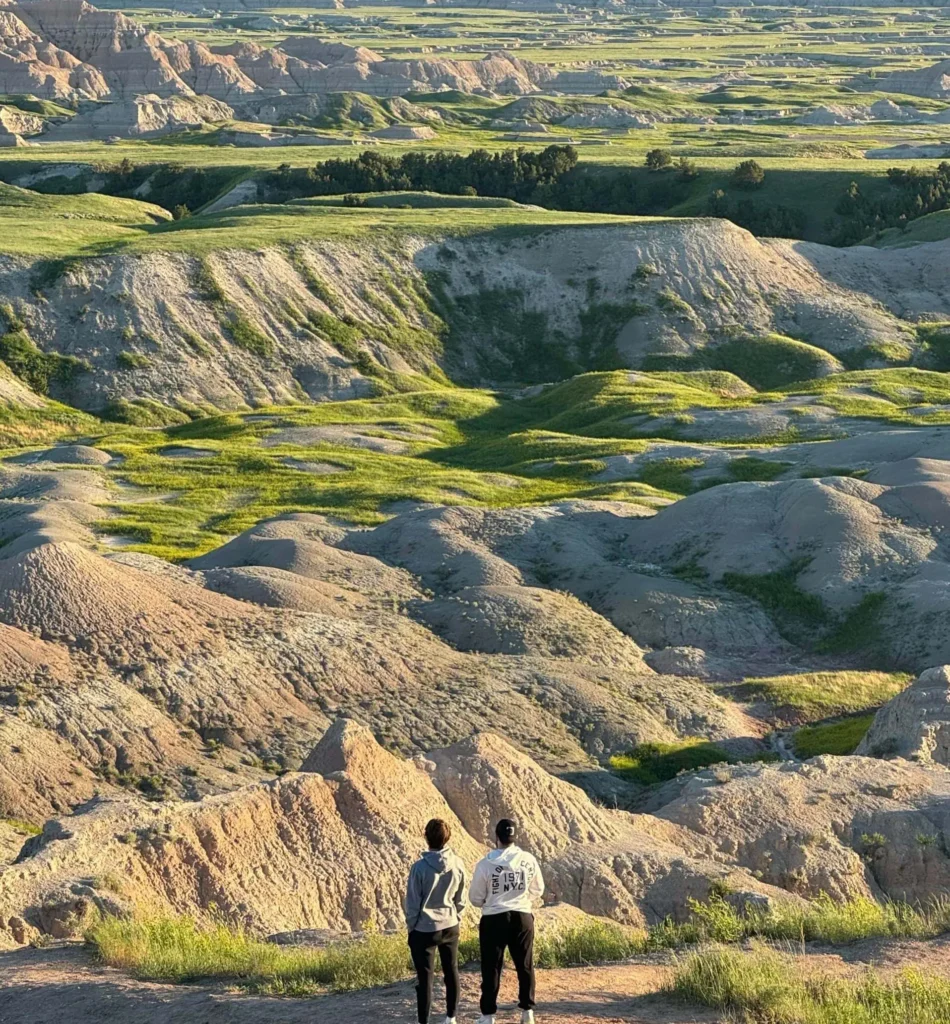
The Badlands, located in South Dakota, are a striking landscape of eroded buttes, pinnacles, and spires.
Over millions of years, water and wind carved into ancient sedimentary layers, revealing colorful bands of rock and a remarkable record of Earth’s history. Paleontologists still find fossils here that tell the story of long-gone animals and environments.
That beautiful roughness is part of the charm, but it is also what makes Badlands Travel Tips so important. The terrain is uneven and often exposed, and the weather can shift from peaceful to punishing more quickly than many visitors expect. Knowing what you’re stepping into helps you enjoy the experience rather than fight against it.
Preparing for Your Adventure
A safe and enjoyable trip begins long before your boots hit the trail. Let’s start with planning, gear, and mindset.
Research And Route Planning
One of the most critical Badlands Travel Tips is simple. Do your homework.
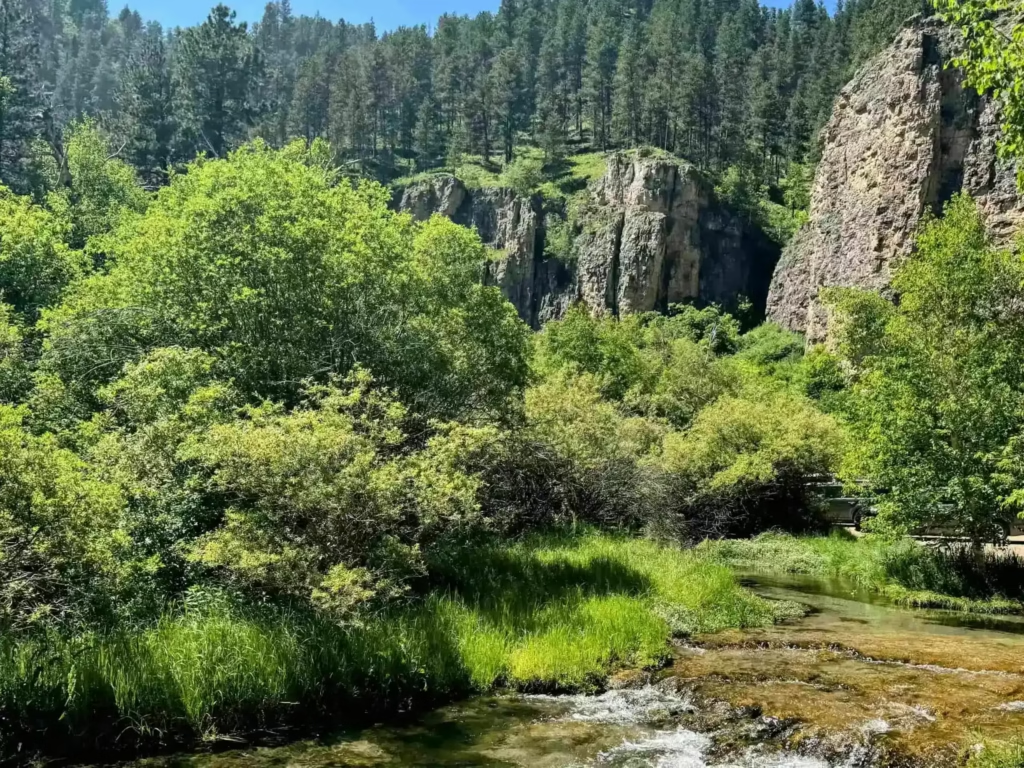
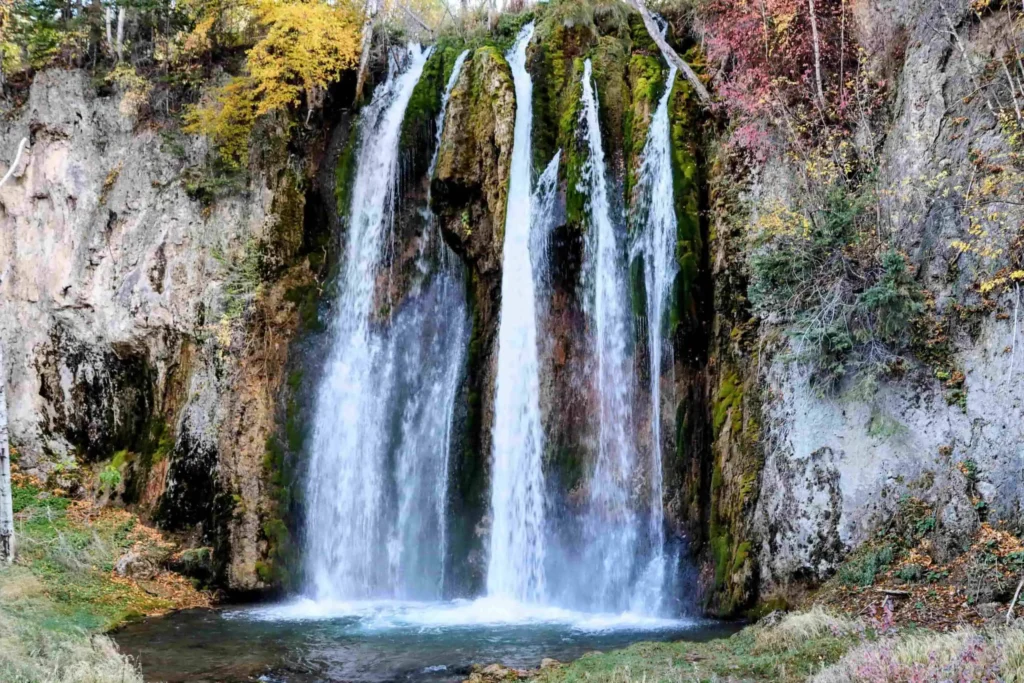
Study a map of Badlands National Park and note the main areas: the loop road, overlooks, popular trails, and visitor centers. As you plan your visit, consider exploring natural wonders of Black Hills that offer breathtaking views and unique geological formations. Additionally, the area is rich in cultural history, with numerous sites that tell the stories of the indigenous peoples and early settlers. Walking along the scenic trails will provide a deeper connection to the stunning landscapes that make this region a must-see destination.
Check current conditions on the National Park Service website. Trails, overlooks, and roads sometimes close due to weather, erosion, or maintenance.
Understand the season you are visiting. Summers can be extremely hot and dry, winters can be frigid with ice and snow, and wind is a year-round companion.
Having a general plan does not mean you cannot be spontaneous. It simply means you have a safe framework for your choices.
Packing Essentials For The Badlands
When packing for the Badlands, think lightweight, functional, and protective.
Here are the core items I strongly suggest:
Sturdy hiking boots with good tread. The ground can be loose, uneven, and sometimes slick with fine dust or mud. Your feet deserve better than flip-flops.
Layered clothing so you can adapt to temperature swings. Mornings can be cool, afternoons can be extremely hot, and evenings can be breezy.
Wide-brimmed hat and sunglasses to shield you from the intense sun reflected off the pale rock and soil.
High SPF sunscreen and lip balm, reapplied regularly.
Plenty of water, far more than you think you will need. A hydration pack keeps your hands free and makes it easy to sip often rather than chug when you already feel thirsty.
Snacks or a simple trail lunch. There are long stretches of time when you are far from services, so fueling your body matters.
These may sound basic, but many of the issues rangers see come from people skipping one or more of these simple Badlands Travel Tips.
Safety Gear That Makes A Difference
You don’t need a mountaineering kit to visit the Badlands, but a small amount of safety gear goes a long way.
Consider bringing:
A basic first aid kit with blister pads, bandages, antiseptic wipes, and any personal medications.
A whistle that can be heard over the wind if you need attention.
A small flashlight or headlamp, especially if you are visiting at sunrise, sunset, or during shorter winter days.
A fully charged phone, and if possible, a portable battery. Some areas have limited service, so never rely entirely on reception.
These items are light but provide peace of mind in a rugged, remote place.
Navigating the Badlands Safely
Once you are prepared, it is time to explore the trails and overlooks. This is where many of the most practical tips come into play.
Stick To Marked Trails And Established Routes

The Badlands have designated trails and clearly signed viewpoints for a reason. The landscape can be deceptive, and what looks like a simple slope may be steeper or more unstable than it appears. Crumbly rock, hidden drop-offs, and areas prone to erosion make wandering off route risky.
Staying on marked trails:
Protects you from unexpected hazards
Protects the fragile ecosystem from damage
Makes it easier for rangers to assist you if something goes wrong
If you want a more in-depth hiking experience, choose a marked trail that matches your fitness and comfort level rather than creating your own.
While the allure of exploring off-trail can be tempting, it’s best to stick to designated paths. The landscape can be deceiving, and it’s easy to lose your way. Marked trails are not only safer but also designed to minimize impact on the fragile ecosystem.
Wildlife Awareness And Safe Distances
The Badlands support a variety of wildlife, including bison, bighorn sheep, prairie dogs, and many species of birds and smaller mammals. Encountering these animals is one of the joys of visiting the park, but safety must always come before the perfect photo.
A few guidelines:
Watch wildlife from a distance with binoculars or a zoom lens.
Never approach, feed, or attempt to touch any animal.
Be especially careful around bison. They can look calm but are powerful, fast, and capable of charging when threatened.
One of the best ways to see wildlife of the Badlands is with a guide. Since we love raw nature and wildlife so much, we’ve crafted tours like the Badlands Wildlife Expedition to guide you on the best routes, most likely places to see wildlife and provide expertise when observing. Respecting wildlife protects both you and them.
Weather, Storms, And Flash Floods
Weather in the Badlands is part of the adventure, but also part of the risk.
Summer heat can quickly lead to dehydration and heat exhaustion. Pace yourself, seek shade when you can, and drink water consistently.
Thunderstorms can form rapidly, especially in warmer months. Lightning and hail are real possibilities.
Dry channels and washes can experience floods, making the terrain difficult to travel in and a sticky mess.
Always check the forecast before you start your day. If clouds build and conditions look unstable, be willing to change plans. Turning back early is always better than pushing into dangerous weather.
A small weather radio or using an updated weather app when you have service is a smart part of your Badlands Travel Tips toolkit.
Badlands Travel Tips For Enjoying The Experience
Safety is essential, but so is your personal enjoyment. There are ways to experience the Badlands that leave you both safe and deeply moved by the landscape.
Sunrise And Sunset: The Best Light In The Badlands
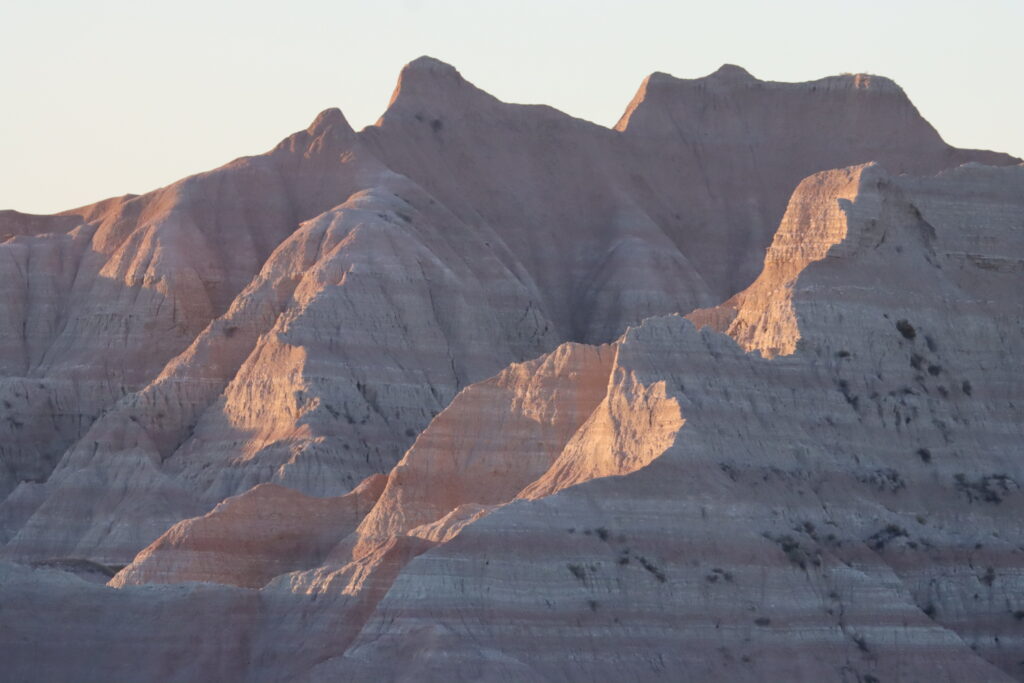
The Badlands are visually striking in every light, but sunrise and sunset transform the formations into layered shades of gold, pink, and shadow. These times of day are cooler, quieter, and ideal for photography.
At sunrise, the park feels peaceful and fresh. Wildlife is often more active, and the colors are soft and subtle.
At sunset and golden hour, the ridges and spires glow as the sun dips low, and the sky can catch fire with color.
- Stay a while. As the park says “half the park is after dark.” The sunset combined with the night sky makes for an incredible experience.
Plan at least one early or late outing so you can experience this magic for yourself. Build it into your Badlands Travel Tips list as a “must do.”
Photography Tips In The Badlands
You do not have to be a professional photographer to capture beautiful images here.
A few easy suggestions:
Look for leading lines such as ridges, paths, and shadows to guide the eye.
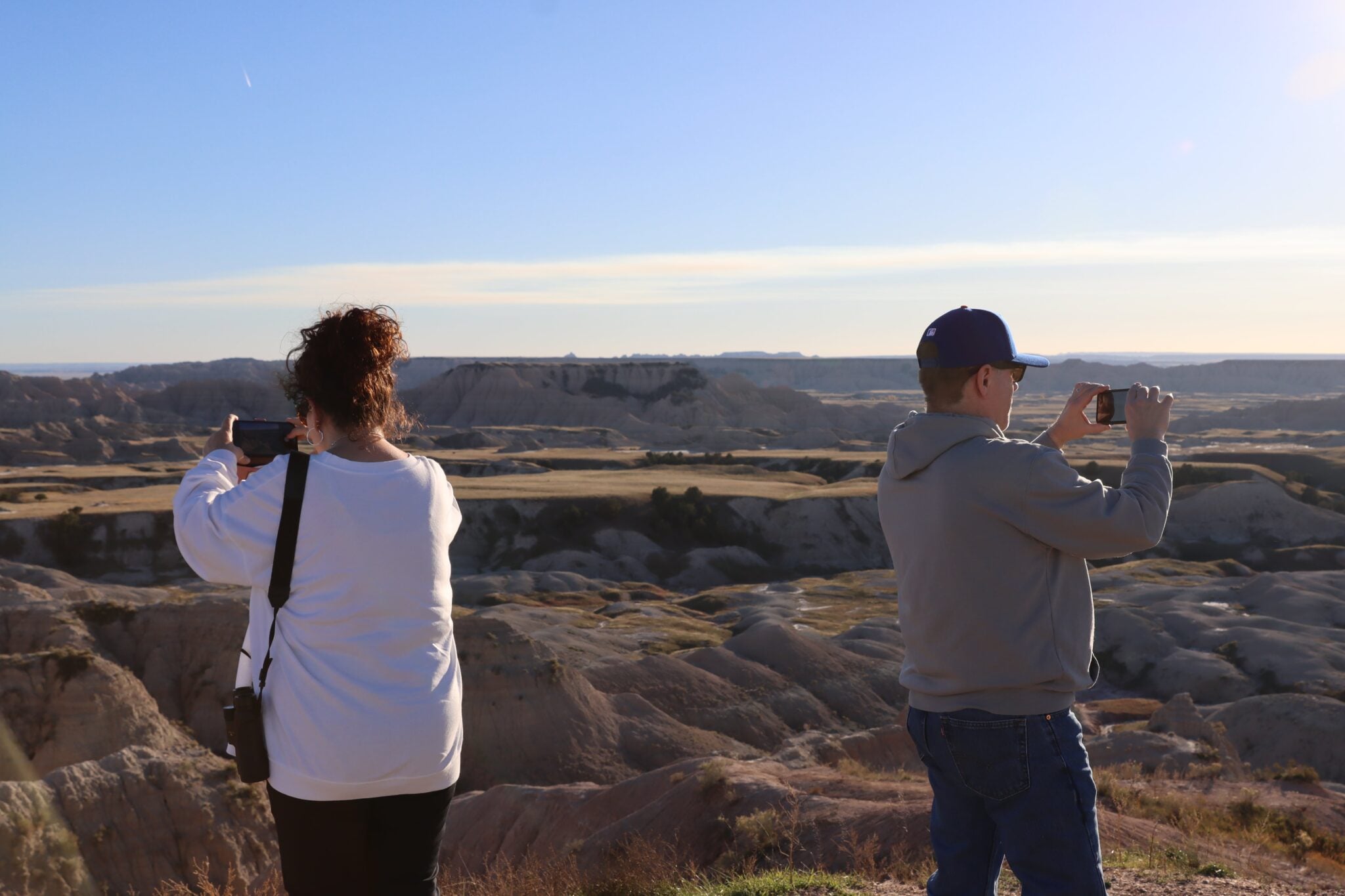
Include a person or object for scale. The formations are enormous, and without a sense of size, photos can flatten the scene.
Experiment with angles. Sometimes crouching low or moving a few steps to one side makes a big difference.
Most importantly, take time to put the camera down and look around. The memory is just as valuable as the photo.
Connecting With Nature And Yourself
The Badlands offer a kind of quiet that many people rarely experience in daily life. Use it.
Sit for a few minutes without talking or checking your phone.
Listen to the wind, the birds, and the occasional rustle of small animals in the grass.
Let your eyes follow the curves of the landscape and notice how the light shifts across the layered rock.
One of the deeper travel tips is this. Do not rush every moment. Leave room for stillness.
Practical Considerations And Responsible Travel
To round off your adventure, here are a few practical tips to ensure everything goes smoothly.
To finish your experience well, it helps to think about impact, support, and rest.
Leave No Trace In The Badlands
The Leave No Trace principle is essential here.
Pack out everything you bring in, including food wrappers, tissues, and bottle caps.
Stay on trails and respect closed areas so the land can heal from erosion.
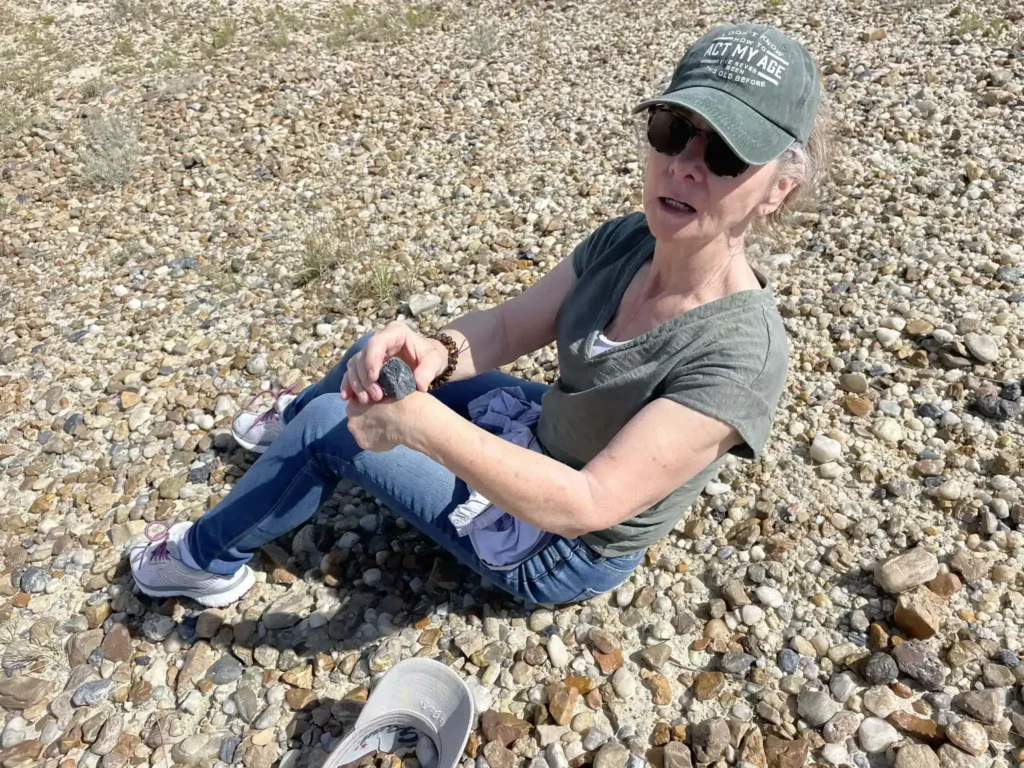
Do not remove rocks, fossils, or plants. Leave them for future visitors and for the ecosystem itself.
Every small action adds up. When we talk about Badlands Travel Tips, caring for the land belongs on the list.
Talk To Rangers And Local Guides
Park rangers and knowledgeable guides are one of the best resources you have.
Ask about current conditions, less crowded viewpoints, and seasonal wildlife behavior.
Listen to stories about the geology, fossil discoveries, and human history throughout the region.
Their insights turn a nice day into a meaningful one.
Rest, Recharge, And Respect Your Limits
After a full day in the heat, wind, or cold of the Badlands, you will feel it. Make sure you have a comfortable place to rest, whether you are camping under the stars or staying in nearby accommodations.
Good rest:
Helps your body recover
Keeps your reactions sharp for driving and hiking
Makes the next day’s adventures more enjoyable
Listening to your body is one of those quiet Badlands Travel Tips that people often overlook.
Final Thoughts From The Trail
Exploring the Badlands is an unforgettable experience, filled with awe-inspiring landscapes and moments of tranquility.
By following these Badlands Travel Tips, you give yourself the best chance at a journey that is safe, memorable, and full of genuine connection to the landscape.
Thank you for joining me on this walk through the Badlands in words. I hope these ideas help you step into the real place with confidence, curiosity, and respect.
Warm regards,
Daniel Milks