Talk to Your Guide: (605) 252-9100

Follow us on:

Badlands National Park Wildlife Guide and Best Times to Spot Animals

Badlands National Park Wildlife Guide and Best Times to Spot Animals | My XO Adventures

Badlands National Park wildlife is one of the best reasons to slow down in this wild corner of South Dakota. Between the rugged buttes and wide open prairie, you’ve got a real shot at seeing bison, bighorn sheep, prairie dogs, and, if you’re lucky, a bobcat slipping through the shadows. This guide covers what you can see, when sightings are most likely, and how to watch animals safely and respectfully.

Badlands National Park wildlife has a headline star, the American bison, often called buffalo. Once pushed to the edge by overhunting and habitat loss, bison have made a remarkable comeback through conservation work across the region. In the Badlands, you can sometimes see entire herds grazing the prairie, a powerful reminder that protection efforts can actually work.

badlands national park wildlife guide

Badlands National Park wildlife you can see

Bison are only the beginning. Badlands National Park wildlife includes a wide mix of prairie and cliff dwelling species that make every drive feel like a safari with the windows down. Pronghorn, often mistaken for deer, can be seen sprinting across the grasslands at surprising speeds. Bighorn sheep use the park’s steep terrain like it’s nothing, moving along rocky slopes with calm confidence. And if you stay patient and keep your eyes moving, you might spot coyotes or foxes working the landscape, especially in the cooler hours near sunrise and late afternoon.

the burrowing owl is one of the many birds included in the wildlife of badlands national park

For bird lovers, Badlands National Park wildlife is just as impressive in the sky as it is on the ground. Keep your eyes up and you’ll often spot golden eagles riding the wind along the cliffs, with hawks and prairie falcons cruising the open country as they hunt. And if you slow down near prairie dog towns, you might catch one of the park’s most fun finds, the burrowing owl, a small, watchful bird that often uses abandoned prairie dog burrows as a ready made home.

a golden eagle is one of the raptors you'll find amongst the wildlife of badlands national park

The Wildlife of Badlands National Park is best viewed with patience and respect. Early morning and late afternoon are prime times for wildlife observation, as many animals are most active during mild temperatures. We highly recommend the Badlands Golden Hour Tour or Sunset and Night Sky Adventure. The park’s scenic drives and numerous trails offer ample opportunities to spot wildlife from a safe distance, whether you’re exploring on foot, by bike, or from your vehicle.

The park’s backcountry areas provide a more intimate experience for those keen on getting closer to nature. The absence of crowds allows for a deeper connection with the wildlife and landscape. However, it’s crucial to remember that while the animals of Badlands National Park are captivating, they are wild and should be observed from a distance. Respect their habitat, follow park guidelines, and ensure that future generations can enjoy this extraordinary biodiversity as much as we do today

How to see Badlands National Park wildlife safely

Best times to see wildlife

Badlands National Park wildlife is most active in the cooler hours, so early morning and late afternoon usually deliver the best sightings. Midday can still be productive, but you’ll often see fewer animals moving around when temperatures rise. Check out our guide on the best times to visit the Black Hills and Badlands. 

Where to look

The park’s scenic drives and overlooks are some of the easiest places to spot Badlands National Park wildlife from a safe distance. Slow down at pullouts, scan the grasslands and ridge lines, and watch the edges where prairie meets rock. Trails can be great too, especially if you move quietly and pause often.

Backcountry and quiet areas

If you want a more intimate experience, the quieter corners of the park can feel worlds away from the main stops. Fewer people often means calmer conditions for wildlife viewing. Just keep the same respectful approach and plan for changing weather, wind, and limited services.

Respectful viewing and safety

Badlands National Park wildlife is wild, unpredictable, and deserves space. Stay back, never approach for a photo, and follow park guidelines so animals can keep doing what they do. The goal is simple: an unforgettable sighting that does not stress the animals or put you at risk.

Want a local guide to handle the timing?

If you’d rather have the timing, pullouts, and pacing handled for you, our Badlands Golden Hour Tour is designed around the best light and the most active part of the day.

Some thoughts on Badlands National Park wildlife

Badlands National Park wildlife is a living reminder of how much life can thrive in a rugged landscape. From bison and bighorn sheep to prairie dogs and burrowing owls, every species plays a role in what makes this place feel truly wild.

Badlands National Park wildlife you can see

Prairie dogs

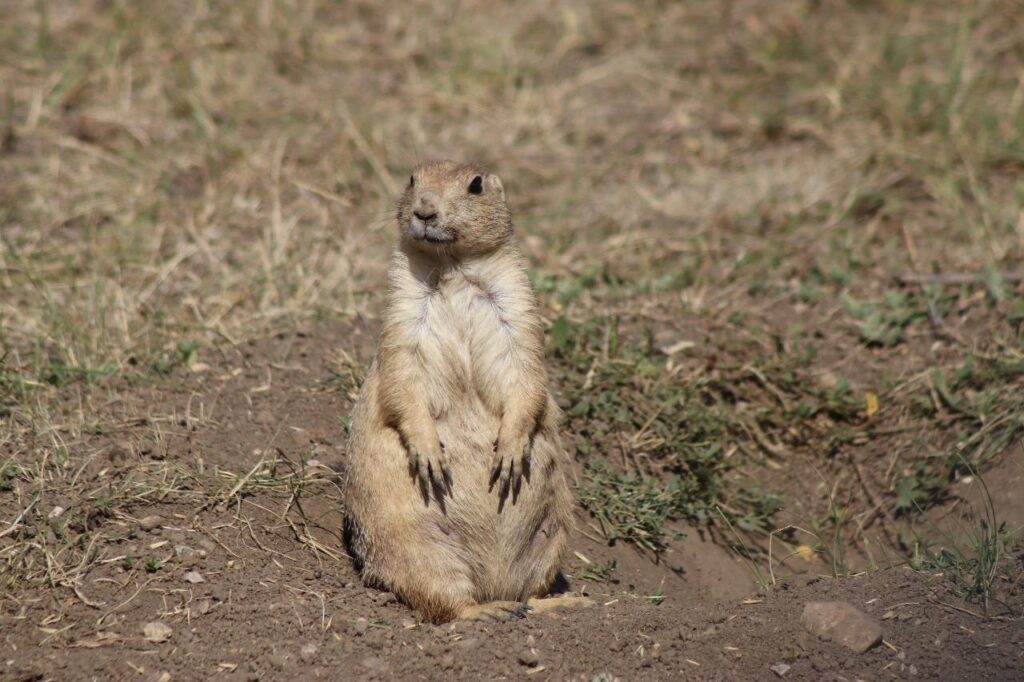
prairie dog in custer state park

Prairie dogs are one of the most entertaining parts of Badlands National Park wildlife. Their towns are busy little neighborhoods, full of chirps, barks, and constant lookout duty. Beyond the fun factor, prairie dogs matter, too. Their burrows aerate the soil and their activity shapes the grassland in ways that support other species across the park.

American Bison

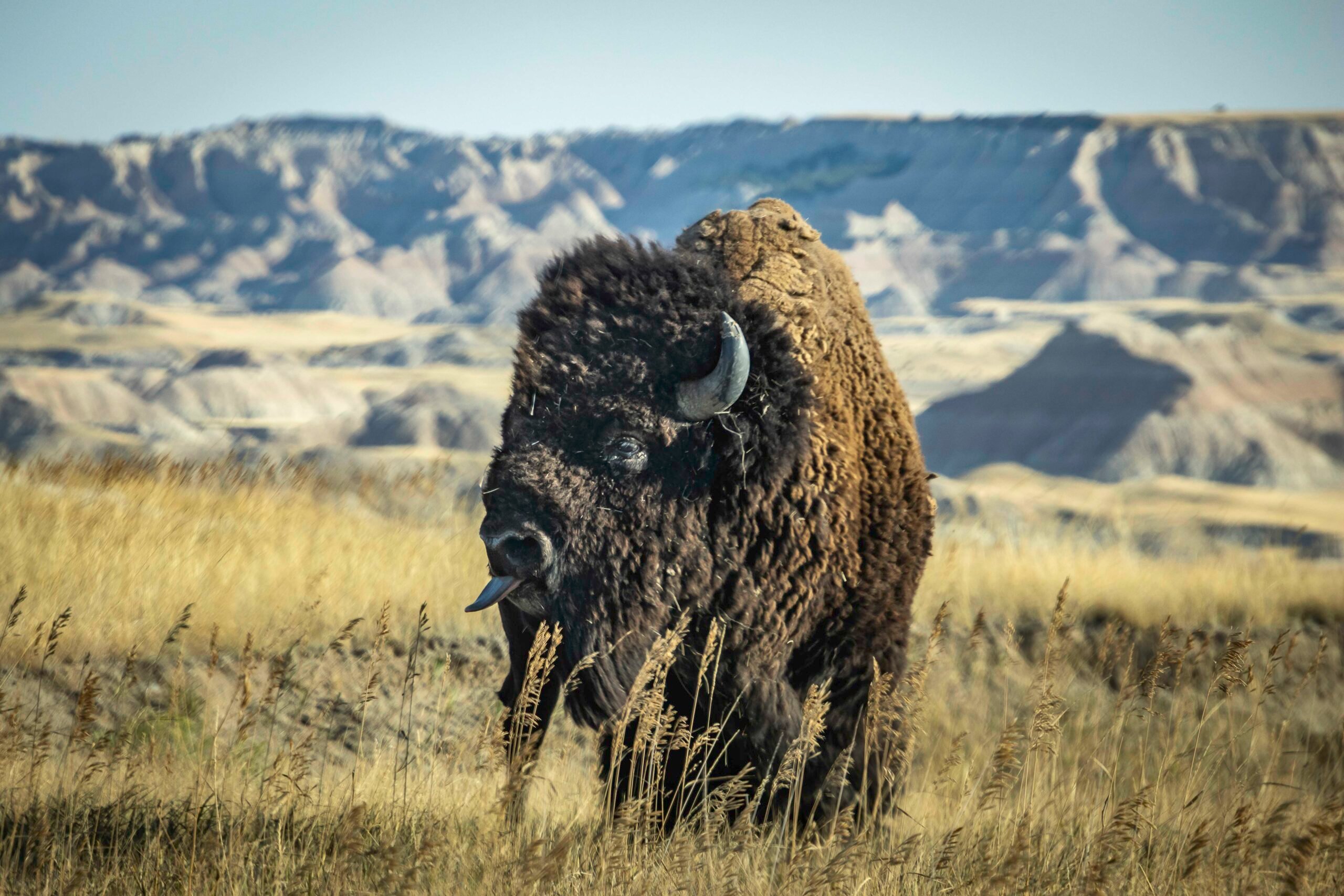
badlands tours black hills tours with the american bison

The iconic symbol of the American West, bison graze the grasslands of Badlands National Park year round. You’ll often spot them near the park’s main roads, especially in the cooler hours of early morning and late afternoon.

Sage Creek is one of the best places to look. As you drive Sage Creek Rim Road, pause at overlooks and scan the prairie below. Those little brown dots in the distance are often bison grazing, and binoculars make the experience so much better.

It’s easy to see why they thrive here. The Badlands supports a surprising variety of native grasses and prairie plants, and bison are the true megafauna of Badlands National Park wildlife.

Pronghorn

pronghorn badlands national park wildlife

Pronghorn are the speedsters of the prairie and the fastest land animals in North America, reaching speeds close to 60 miles per hour. You can see them in Badlands National Park year round, with the best activity usually in early morning and late afternoon.

People often call them antelope, and you’ll sometimes spot a group of females with a watchful male not far away. Pronghorn have incredible eyesight and prefer wide open country, so scan the grasslands and rolling prairie for movement. And here’s a fun fact: the pronghorn’s closest living relatives are the giraffe and okapi.


American Coyote

badlands wildlife expedition

Coyotes are some of the most adaptable predators in Badlands National Park wildlife, and you can spot them across the park, especially around dawn and dusk. They hunt small animals like rabbits, rodents, and sometimes prairie dogs, moving with that low, quiet confidence that makes them easy to miss if you’re not scanning the edges.

At night, you may hear them before you ever see them. A coyote howl is unmistakable and adds a wild, haunting soundtrack to the Badlands after dark. The good news is they’re not interested in people. Most of the time they’re communicating with other coyotes, traveling, or hunting much smaller prey.

Coyotes are found across the United States, and they’re especially good at living near changing landscapes, including places shaped by people. One of the coolest behaviors to watch for is their occasional teamwork with badgers, a tag team hunting strategy that can flush prey like prairie dogs from burrows.

Red Fox

red fox badlands national park wildlife

Red fox are a quieter, luckier sighting within Badlands National Park wildlife, but they’re out there if you know when to look. Early morning and late afternoon are your best bets, especially along open prairie edges where they hunt mice and other small prey. If you spot one, stay still for a moment. Foxes often pause, listen, and pounce, and it’s one of the most fun behaviors to watch.

American Badger

american badger

American badgers are one of the most underrated pieces of Badlands National Park wildlife. Stocky, powerful, and built for digging, they spend a lot of their time in grasslands and prairie edges where they can hunt and disappear underground in seconds. If you’re hoping to see one, your best chances are in the cooler hours of early morning or late afternoon, especially in quieter areas away from heavy traffic.

Badgers are expert burrowers and skilled hunters, feeding mostly on small mammals like rodents. Every now and then, they’ll even work alongside coyotes in a loose partnership, with the badger digging and flushing prey from burrows while the coyote watches for an escape. It’s not something you’ll see every day, but it’s a great reminder that Badlands National Park wildlife is full of surprising relationships if you slow down and pay attention.

If you’re lucky enough to spot a badger, give it plenty of space and let it carry on. They’re wild, fast, and focused, and the best sightings are the ones where you don’t change their behavior at all.

Burrowing Owl

burrowing owls of badlands national park

Burrowing owls are one of the most charming surprises in Badlands National Park wildlife. Unlike most owls, they often spend time on the ground, popping up near burrow entrances with a curious, wide eyed look that makes people fall in love instantly. They’re small, quick, and easy to miss, so the best strategy is to slow down near prairie dog towns and scan for a little owl standing upright like a tiny sentry.

These owls commonly use existing burrows for nesting and shelter, which is one reason prairie dog areas can be so full of life. Burrowing owls hunt insects and small prey, and they’re most active in the cooler parts of the day, especially early morning and late afternoon. If you’re watching quietly, you might see one dart out for a catch, then return to the burrow in a blink.

If you find a burrowing owl, give it lots of space and avoid lingering too close to the burrow entrance. A respectful distance keeps the owl calm and increases the chance you’ll see natural behavior. In the Badlands, patience is the secret ingredient.

American Bald Eagle

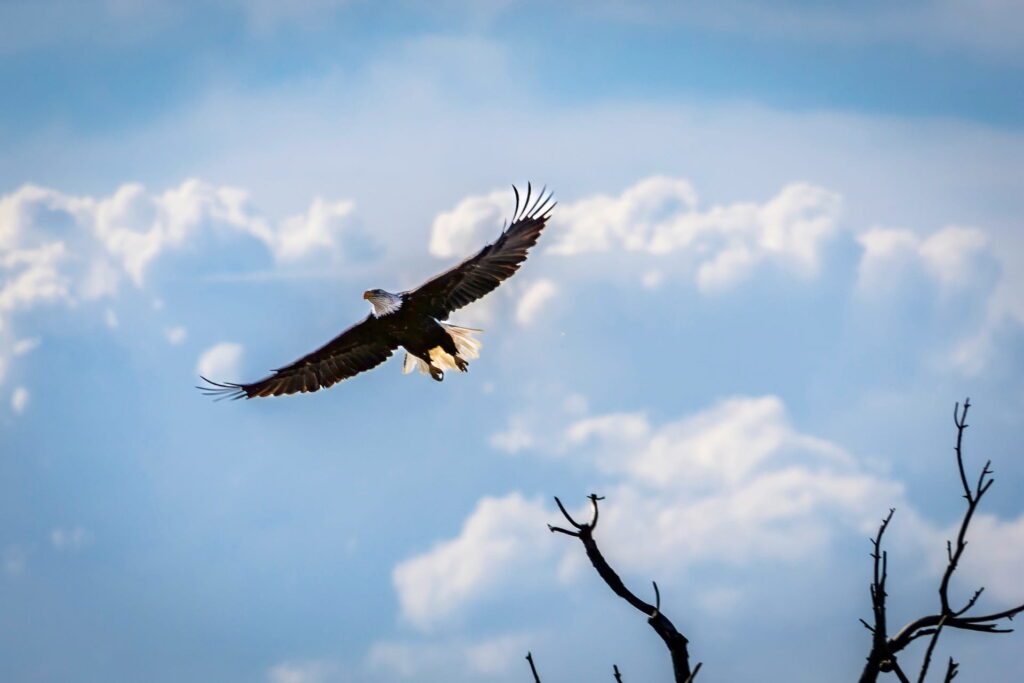
eagle flying overhead

Bald eagles are a standout in Badlands National Park wildlife, especially when you catch one riding the wind above the cliffs and open prairie. Your best chances are in the cooler hours of the day, scanning ridge lines, tall perches, and wide skies near overlooks. If you see an eagle circling, slow down and watch for a minute. They often drift on thermals with almost no wingbeats, and it’s one of the most unforgettable sights in the Badlands.

Rocky Mountain Bighorn Sheep

male bighorn sheep

Rocky Mountain bighorn sheep are one of the most unforgettable animals in Badlands National Park wildlife, because they look like they belong on the cliffs and ridgelines. Their hooves are built for steep terrain, and they move across rocky slopes with a calm, surefooted confidence that feels almost unreal.

Long before modern visitors arrived, the Badlands were home to a plains bighorn population often called Audubon’s bighorn sheep. That population was wiped out in the early 1900s, largely due to unregulated hunting and habitat pressures across the Great Plains.

The bighorn you see in the park today are Rocky Mountain bighorns brought back through restoration efforts. In 1964, Badlands National Park received 22 bighorn sheep translocated from Pikes Peak in Colorado, and later the park added another group in 2004 from Wheeler Peak in New Mexico to strengthen the population.

If you want to spot them, scan cliff faces and broken terrain, especially in the cooler hours of early morning and late afternoon. Binoculars help a lot, and the best sightings are the ones where you give them plenty of space and let them carry on naturally.

FAQ: Wildlife of Badlands National Park

Badlands National Park is rich with wildlife that thrives in open grasslands and rugged ridges. This FAQ helps you understand what animals you might see, how to watch respectfully, and how to stay safe while enjoying these unique ecosystems.

Question: What kinds of animals are commonly seen in the Badlands?

Answer: You’re most likely to see bison, pronghorn antelope, prairie dogs, bighorn sheep, deer, and a variety of birds including hawks and songbirds. Each species has its own patterns and best viewing times.

Answer: Early morning and late afternoon typically bring more activity as animals feed, move, and avoid midday heat. Quiet observation during these windows increases your chances of sightings.

Answer: Most wildlife isn’t aggressive, but bison, pronghorn, and bighorn sheep are wild and unpredictable. Keep a safe distance and never approach, feed, or try to touch animals.

Answer: At overlooks and designated pullouts, brief, careful exits are fine. Away from pullouts, stay near your vehicle and only exit where it’s safe and legal. Roads are often the safest viewing platform.

Answer: Use a telephoto or zoom lens if you have one. Keep movement slow, use natural cover if available, and get down to eye level when possible to make images feel intimate without getting too close.

Answer: No — this is nature, not a zoo. Sightings vary with season, weather, time of day, and animal patterns. Be patient and observant rather than expecting guaranteed encounters.

Answer: Back away slowly, keep your movements calm, and do not block the animal’s path. Animals have the right of way in the Badlands.

Answer: Yes. A few native snake species live here. Most avoid people, but watch where you step, especially around rocks and grass. If you see a snake, give it space.

Outbound resources you can trust

If you want to go deeper on Badlands National Park wildlife, these are the sources I’d point readers to because they’re authoritative and genuinely useful.

National Park Service: wildlife viewing.

Helps you know where to look, what you might see, and how to watch wildlife without getting in the way.

National Park Service: Badlands safety, including wildlife distance guidance

Clear, no nonsense safety guidance that protects you and keeps animals from being stressed or approached.

National Park Service: Leave No Trace Principle 6, Respect Wildlife

A quick reminder of the simple habits that make wildlife encounters better for everyone.

South Dakota Game, Fish and Parks: wildlife watching
A good statewide reference for wildlife viewing culture and ethics in South Dakota.