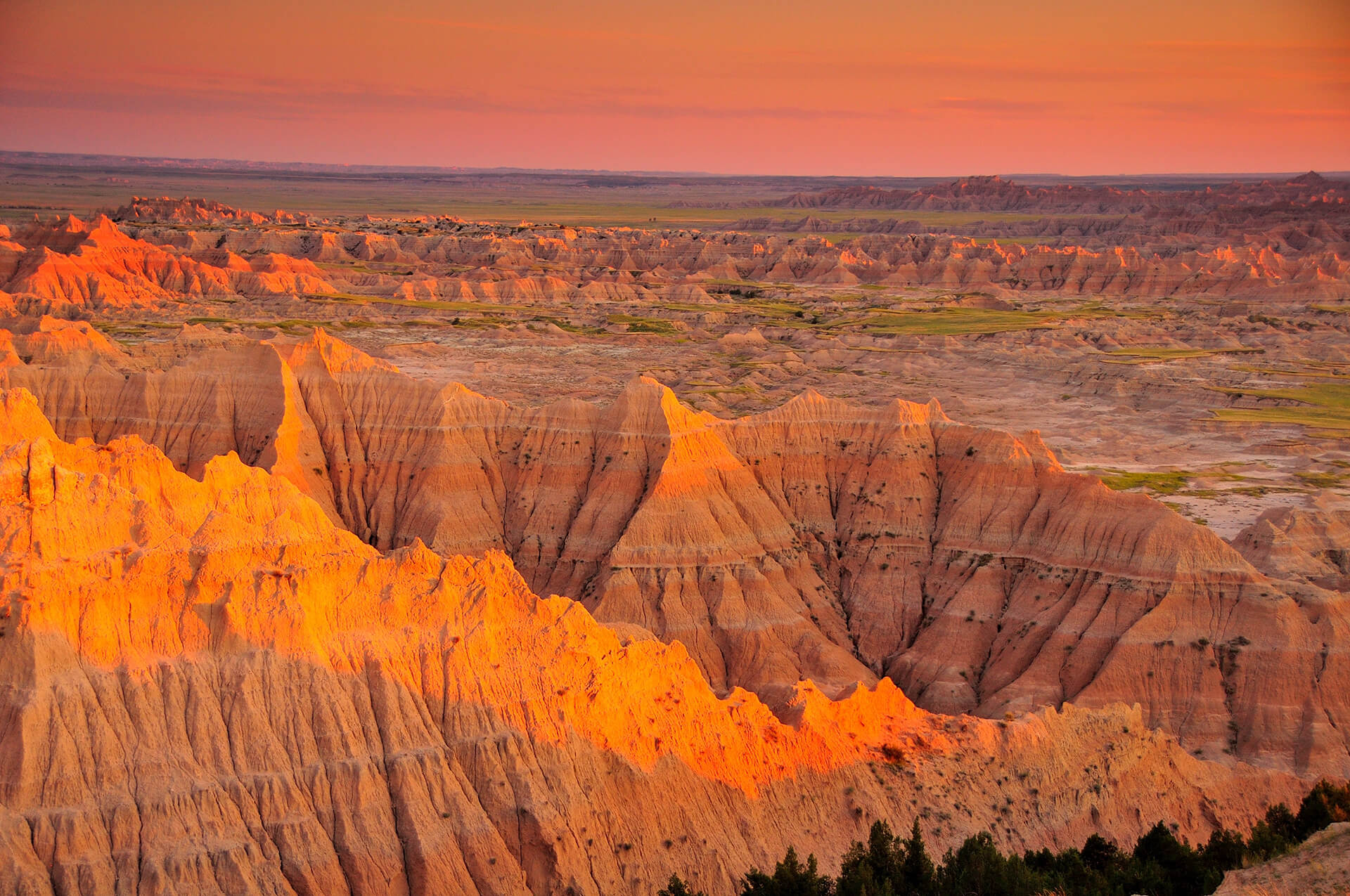
A calm, well paced way to plan your first Badlands day with viewpoints, wildlife timing, and the light that makes this place unforgettable.
The Badlands look wild and rugged, but visiting them can feel simple when you plan around light, wind, and realistic drive times. Start with one great loop, pick a few viewpoints that fit your energy, leave room for wildlife slowdowns, photo windows and the deafening sound of silence.
Right now you already have the right themes (landscape, sunsets, fossils, wildlife, night sky), but they are spread out and repeated.
Badlands National Park is big sky and quiet prairie wrapped around sculpted rock that looks like another planet. It’s a place where the same overlook can feel completely different from one hour to the next, because the light and weather move fast out here.
Most visitors see the park from the road, and that can still be spectacular. The difference is having a plan that keeps the day calm: fewer rushed stops, better photo windows, and enough flexibility to pull over when the landscape surprises you.
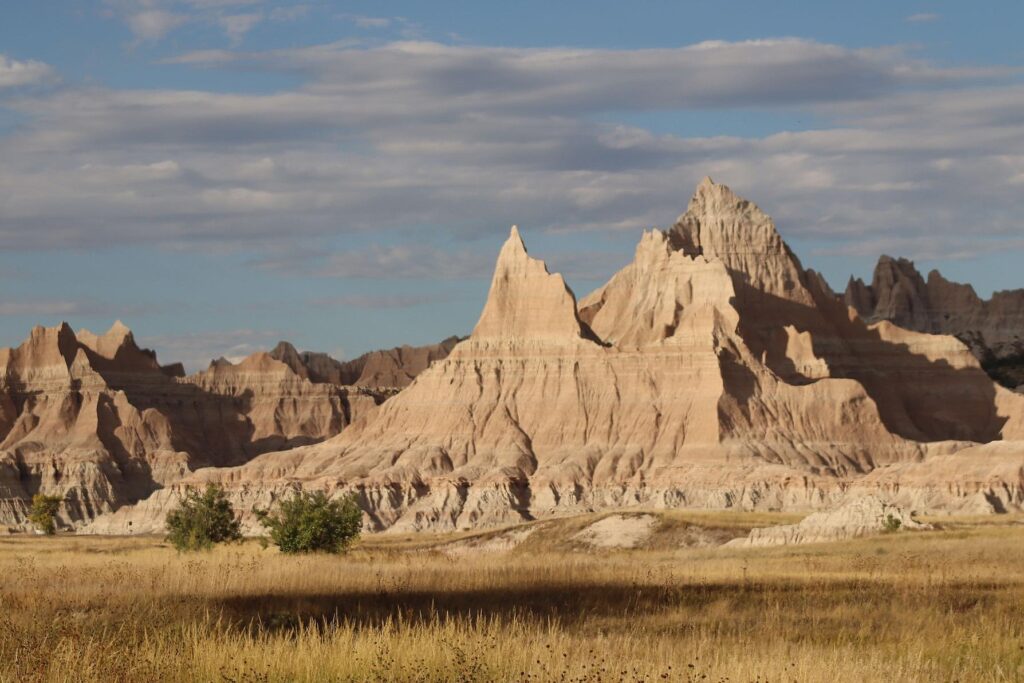
This is the low stress version that works for most first time visitors.
Drive out: about 1 hour each way, depending on your entrance and stops
Inside the park: 2 to 4 hours is a strong first visit
If you add sunset: plan to stay later, then drive back after dark
Pick a handful of overlooks, do one short walk if you want, and let the rest be open space. The Badlands are better when you leave room for wind, wildlife, and unexpected photo stops.
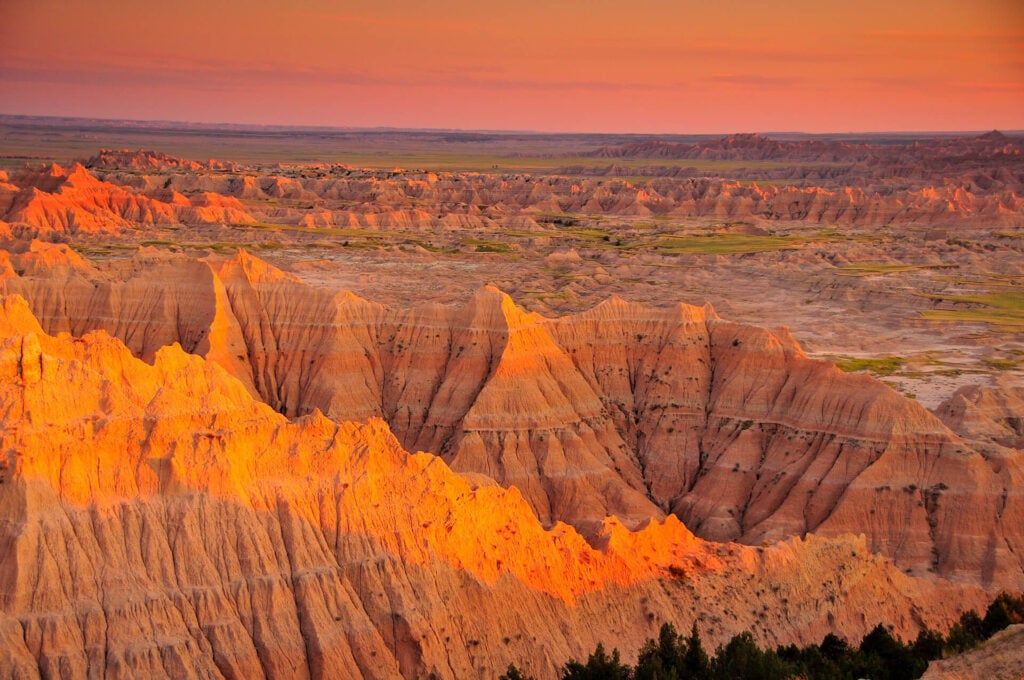
Best first overlook for first time visitors – Pinnacles Overlook
Best quieter overlook for fewer people – Conata Basin Overlook
Best sunrise viewpoint – Big Badlands Overlook
Best sunset viewpoint – Pinnacles Overlook
Best wide open prairie edge view – Homestead Overlook
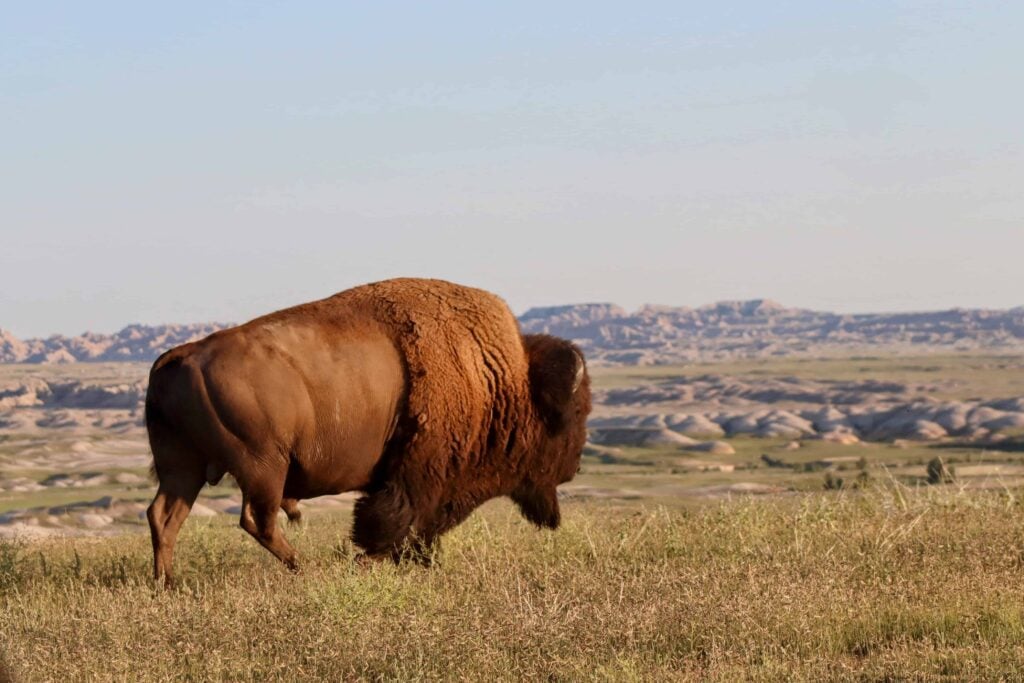
Wildlife in the Badlands is real, but it is not a zoo. Your best odds are early and late, especially on quieter roads where you can move slowly and scan the prairie without feeling rushed.
Early and late are best for bison, pronghorn, bighorn sheep, and prairie dogs
Wind and heat can make animals disappear fast
Give yourself time for slowdowns, safe pull offs, and scanning
The Badlands are one of the richest fossil areas in North America, and the rules are simple for a reason. Look closely, take photos, and leave everything exactly where you found it so the story stays intact for the next person.
Do not collect fossils or rocks inside the national park
Report significant finds to park staff
Choose guided interpretation if you want the deeper story
If you stay out after sunset, the silence gets bigger and the sky usually gets dramatic. The best nights are clear, dry, and away from town lights, and it helps to plan your exit so you are not driving tired.
Badlands Sunset and Golden Hour Tour: best for light, wildlife timing, and a calm pace that feels unrushed.
Badlands Sunset and Night Sky Tour: best if you want sunset plus staying out after dark for the full evening feel.
Badlands National Park Tour: best for a daytime deep dive with viewpoints, wildlife, and flexible stops.
Badlands National Park is one of those places that makes time feel different. The layers you’re looking at were built, buried, and reshaped over millions of years, and the park is still changing every season as wind and rain keep carving it. You don’t need to be a geology person to feel it, you just need a little context and a plan that leaves room to slow down.
That’s why this park hits hardest when you plan around light, weather, and realistic drive time, not just a list of overlooks.
The Badlands aren’t one thing. They’re a living mix of light, wildlife, deep time, and wide open quiet that can change by the hour. These are the six reasons people leave surprised by how much they felt in one day.
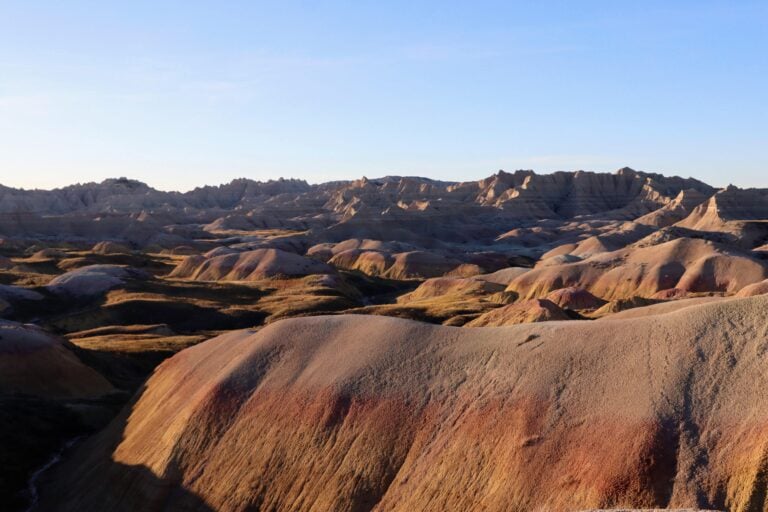
The Badlands are a carved world of ridgelines, fins, and layered cliffs that look different every time you turn a corner. Even from the road, the scale is dramatic, and the quiet feels bigger than the views. It’s the kind of place that makes you slow down without being told.
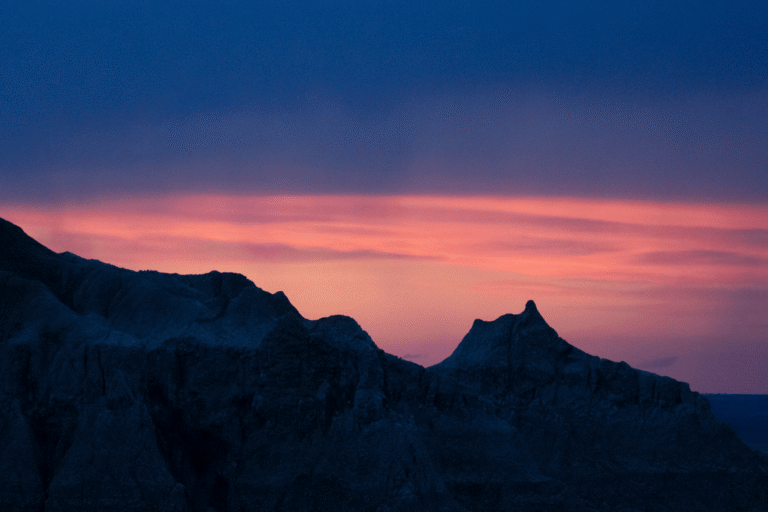
Sunset isn’t just pretty here, it’s the moment the park transforms. The rock warms up, shadows stretch, and viewpoints that felt harsh at midday suddenly feel soft and cinematic. If you want one “this is why we came” moment, this is it.

On clear nights, the Badlands go still and the sky can feel endless. The best viewing happens away from town lights, after your eyes adjust, and when the air is dry and clear. We treat stargazing like the weather: some nights are good, and some nights are jaw dropping.

Wildlife in the Badlands is real, but it’s not scheduled, and that’s part of what makes it special. Your best odds are early and late, when the prairie cools down and animals move more naturally. The best sightings usually happen when you leave time to simply watch.

The Badlands hold one of the richest fossil records in North America, and you can feel the time scale even without digging into the science. The landscape is constantly eroding and revealing clues, which is why the park protects it so carefully. This is a place to look closely, take photos, and leave everything exactly as you found it.
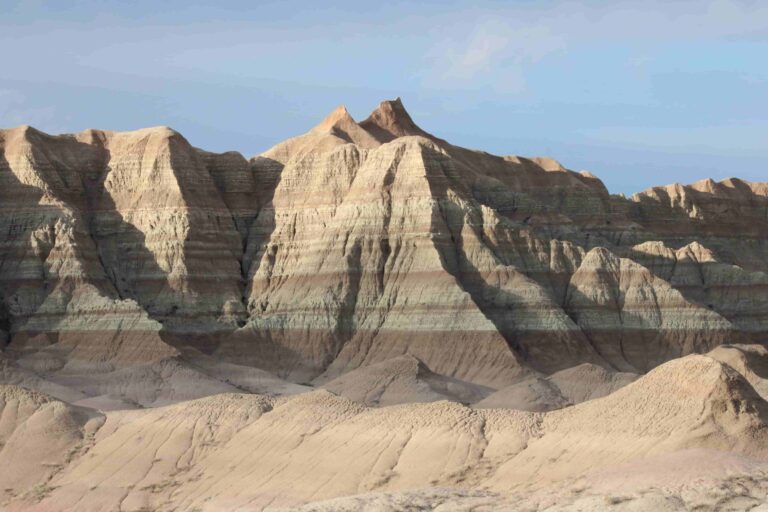
Those bands and tones you see in the cliffs aren’t just “pretty stripes.” They’re layers of ancient environments, ash, and sediment that tell a story of change over millions of years. When the light is low, the colors come alive, and you start noticing details you’d drive past at midday.
Knowing when and how to visit the Badlands is everything. The Badlands reveals certain secrets, at certain times. Choosing a tour that visits mid-day can be one of the biggest mistakes, but most don’t know why. The land is a place of extremes, and in summer it tends to be very hot. When the sun is directly above, there are few shadows which limits the stunning photographic moments in the park. One exception is during a storm. Think rainbows and huge cloud formations.
There’s a lot of mistakes people can make when visiting the Badlands, which is why having a guide is so important. Check out our page on all the common mistakes people make when visiting the Badlands to ensure you have an amazing time.
The Badlands are raw, exposed, and unforgettable. Wide horizons, layered ridges, and roaming wildlife create a landscape that feels almost otherworldly. These questions help you orient yourself before your first drive through this dramatic terrain.
Most visitors are surprised by the scale. The formations appear sculpted and jagged up close, but from a distance they stretch for miles in layered waves of color.
It looks desert-like in places, but it’s technically a mixed-grass prairie ecosystem with eroded sediment formations. Grasslands surround the dramatic ridges.
The main scenic loop can be driven in about an hour without stops, but most visitors spend two to four hours exploring overlooks and short walks.
Shade is limited. The terrain is largely open and exposed, so sun protection and water are essential.
It’s best to stay on established paths. The clay soil becomes slippery when wet and fragile year-round, making erosion worse when heavily disturbed.
Bison, pronghorn, prairie dogs, bighorn sheep, and various birds are common. Wildlife often moves more during cooler parts of the day.
Light and cloud cover dramatically shift the landscape’s appearance. Storm skies can deepen color, while clear evenings highlight soft pastels along the ridges.
Slow down. Pull over. Look beyond the first overlook. The Badlands reward patience more than speed.
These are the quick checks that save time: hours, fees, events, and safety before you go.
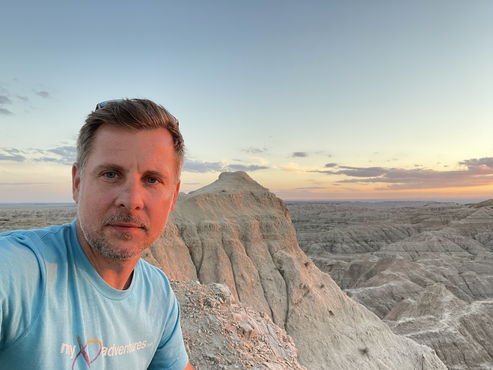
Hi, I’m Daniel Milks, the owner and lead guide behind My XO Adventures. I built this company for travelers who want the Black Hills and Badlands to feel personal, calm, and real, not rushed or scripted. The goal is simple: help you experience the right places at the right time, with the context that makes the landscape mean something.
I spend a lot of time out here watching what actually changes a day: wind, light, wildlife movement, road conditions, and how different the park feels from one hour to the next. If you want the Badlands to be more than a quick drive through, I’ll help you slow it down in the right way and make the day fit your pace.
What you can expect from my approach
Calm pacing and fewer “hurry up” moments
Better photo windows by timing the light
Real time adjustments when weather, crowds, or construction shift the plan