

Understanding Light In The Black Hills And Badlands
Light is the most critical factor in Black Hills and Badlands photography tips. The Black Hills and Badlands sit in open country where skies are wide and weather shifts quickly. This produces significant changes in brightness, color, and shadow throughout the day that directly affect how photographs appear.
In the Black Hills, forested ridges and narrow valleys filter light unevenly. Morning and late afternoon tend to produce softer tones and gentle contrast, while midday light often flattens detail beneath the tree canopy. Paying attention to where light falls helps photographers choose angles that reveal texture rather than wash it out.
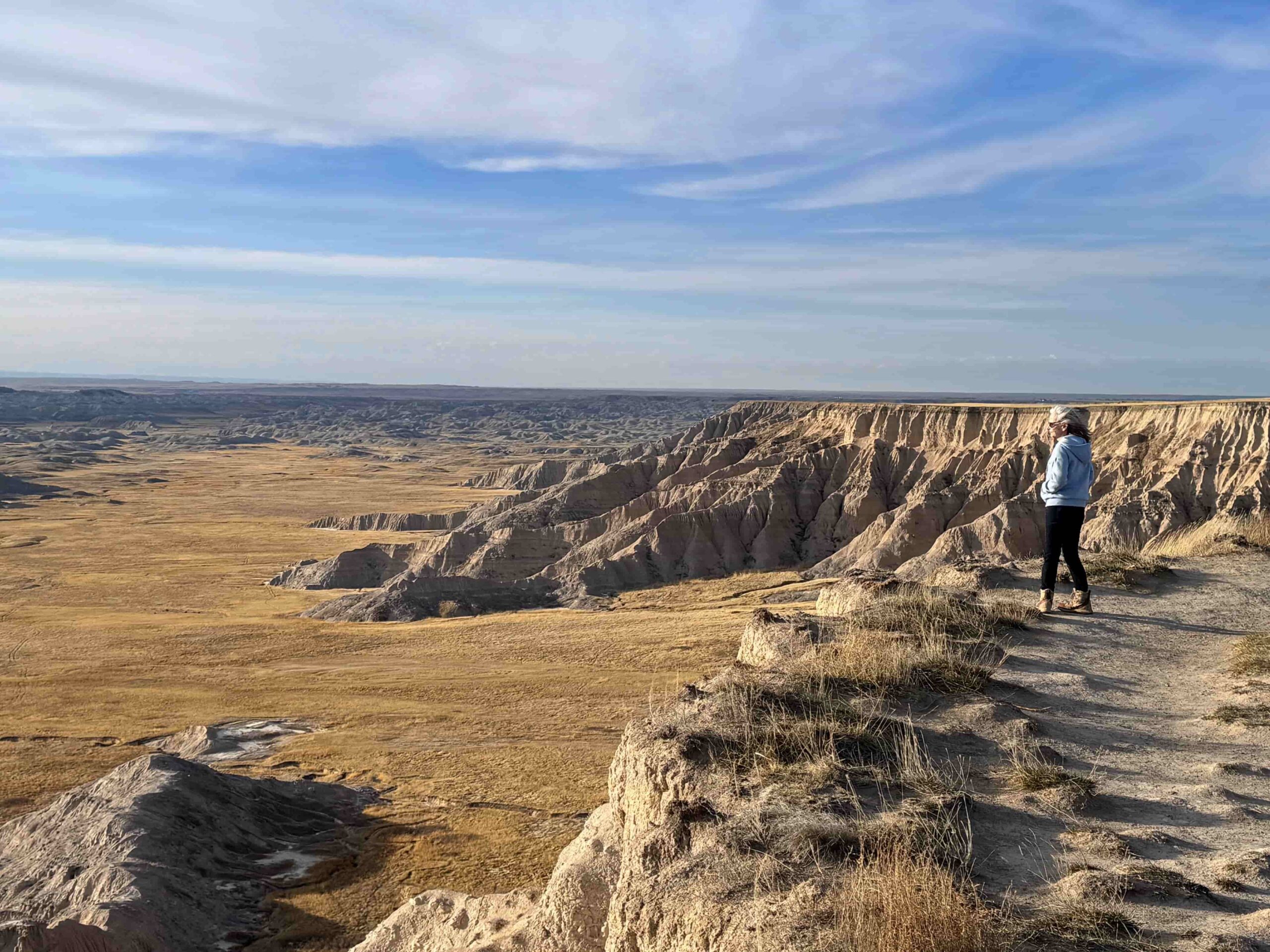
In the Badlands, light behaves more dramatically. Open formations reflect and absorb sunlight differently across layered surfaces, creating sharp edges and deep shadows. Early and late light defines ridges and spires clearly, while midday sun can feel harsh and overpower detail. Visitors who plan around these shifts often find that timing matters more than camera settings.
Learning to read light in both landscapes helps photographers work with conditions instead of fighting them.

Timing often matters more than location when photographing the Black Hills and Badlands. The same overlook or trail can feel completely different depending on when you arrive, not because the land has changed, but because light and shadow have shifted.
Early morning tends to offer the calmest conditions. Light is softer, colors are more subtle, and wildlife is often more active. In the Badlands, sunrise brings out layered textures and long shadows that help define ridges and formations. In the Black Hills, morning light filters through forested terrain in a way that feels balanced and gentle.
Late afternoon and early evening provide another strong window. As the sun lowers, contrast increases and depth becomes more visible across open spaces and rocky surfaces. This is when the landscape often feels most dramatic without becoming overwhelming.
Midday can still work, especially for wide scenes or details, but it requires different expectations. Bright overhead light reduces shadow and texture, so it helps to look for patterns, color contrasts, or moments of movement rather than sweeping scenes.
Choosing when to photograph is often the simplest way to improve results.

One of the biggest challenges in photographing the Black Hills and Badlands is scale. Wide open spaces, layered terrain, and distant horizons can make photos feel flatter than the experience itself. Understanding how scale works in this landscape helps images feel more grounded and true.
In the Badlands, formations often appear closer than they actually are. Long sightlines compress distance, which can make ridges and spires blend together in photos. Including a foreground element, such as a trail, ridge line, or patch of textured ground, helps give the image depth and context.
In the Black Hills, scale works differently. Forested terrain limits long views, so scenes often feel more intimate. Here, framing smaller sections of the landscape can be more effective than trying to capture everything at once. Details like rock textures, curves in the land, or light filtering through trees often communicate place better than wide shots.
Learning to work with scale encourages patience. Instead of trying to capture the entire scene, it helps to look for relationships between near and far elements that tell a clearer visual story.
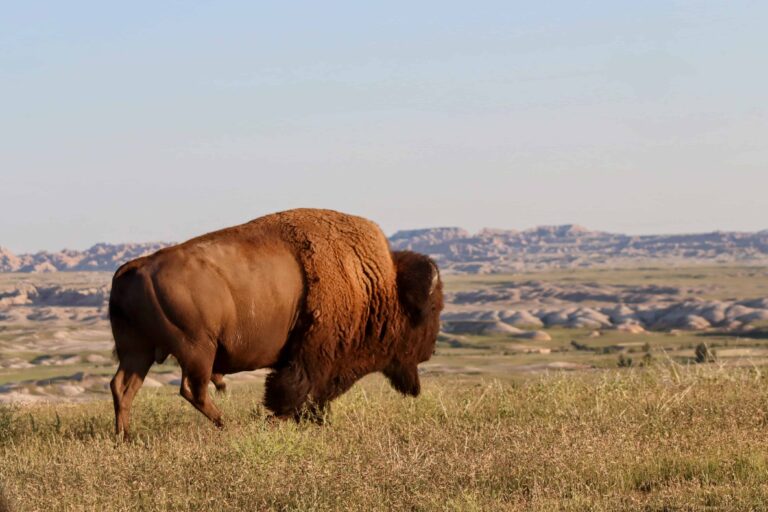
Wildlife photography in the Black Hills and Badlands is as much about patience and distance as it is about timing. Animals here move according to weather, terrain, and seasonal patterns, not visitor schedules. Understanding that helps photographers approach wildlife moments with respect rather than urgency.
Maintaining distance is essential. Wildlife often appears calm until a threshold is crossed, and photographs taken too close can disrupt natural behavior. Using the landscape as part of the image, rather than filling the frame with the animal, often results in photographs that feel more honest and meaningful.
Light and background matter more than proximity. In open terrain, animals are often silhouetted against sky or landforms, which can create powerful images without intrusion. In forested areas, watching how light moves through the environment can reveal moments when animals briefly stand out from their surroundings.
Photographing wildlife responsibly supports both safety and conservation. It also tends to produce images that feel quieter, more grounded, and more connected to the place itself.
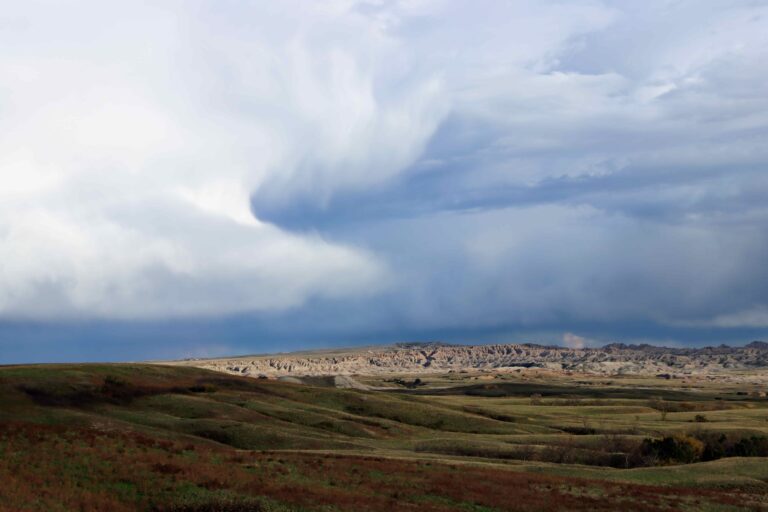
Weather plays a quiet but powerful role in photography across the Black Hills and Badlands. Skies, wind, temperature, and visibility can change quickly, and understanding how those changes affect photos helps visitors stay flexible rather than frustrated.
Cloud cover often becomes an advantage. Overcast conditions soften contrast, reduce harsh shadows, and bring out subtle color and texture in rock, grass, and forest. In open Badlands terrain, clouds can add depth and scale to wide scenes. In the Black Hills, they help balance light under the tree canopy.
Wind is common, especially in exposed areas. It can affect wildlife movement, blur grasses, and make long pauses uncomfortable. Paying attention to sheltered areas, ridgelines, or moments when wind eases can make a noticeable difference.
After storms or shifting weather, conditions often improve quickly. Clear air enhances visibility, colors deepen, and light becomes more dynamic. Visitors who remain patient during weather changes are often rewarded with quieter landscapes and more compelling moments.
Understanding conditions helps photographers work with the day as it unfolds rather than trying to force a plan.
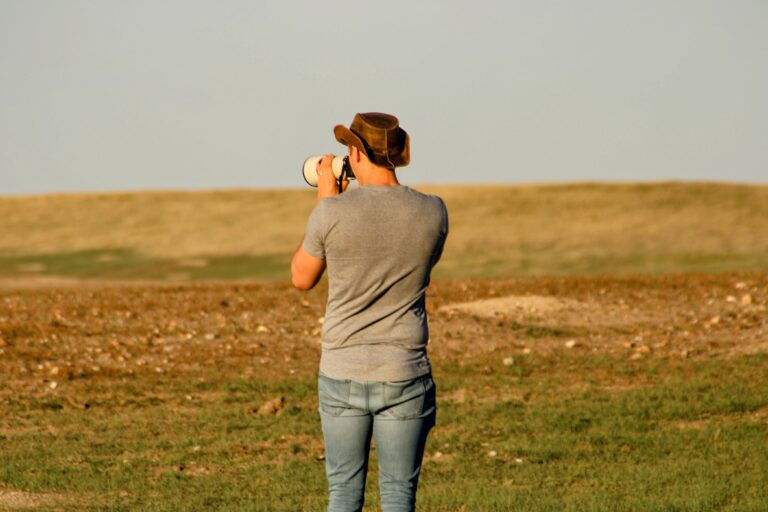
Photography in the Black Hills and Badlands rewards awareness more than preparation. Small choices often have a bigger impact than settings or equipment, especially for visitors who want to stay present rather than focused on adjustments.
Taking a moment before lifting the camera helps. Notice where light is coming from, how shadows fall, and what draws your eye naturally. Often, shifting a few steps to one side or waiting a minute changes the image more than changing lenses or modes.
Staying flexible matters. Conditions rarely match expectations exactly, and some of the strongest images come from moments that were not planned. Allowing time for pauses rather than moving quickly from stop to stop creates space for those moments to appear.
Finally, remember that photographs are part of the experience, not the goal itself. When attention stays on the landscape first, images tend to reflect the feeling of being there rather than just the view.
These small habits help photography feel less like a task and more like a way of noticing.
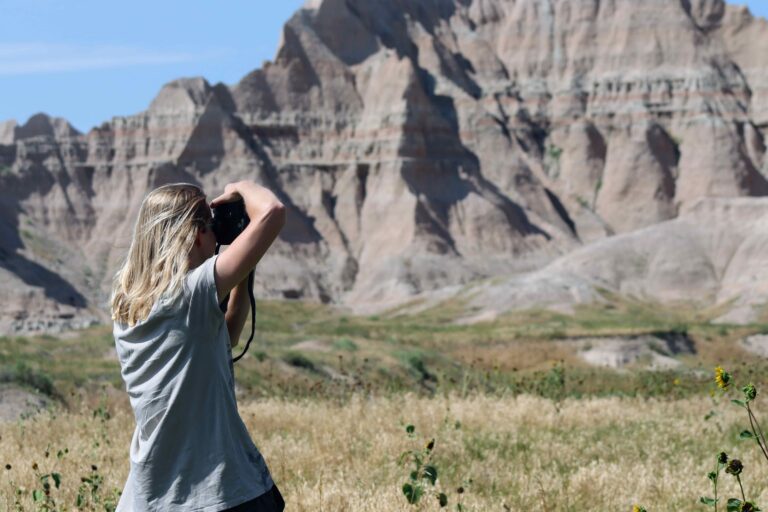
Photography becomes more rewarding when it is informed by an understanding of the land itself. The Visitor Learning Center was created to help visitors build that understanding gradually, offering focused guides that work together rather than standing in isolation.
If you want to deepen what you’re seeing through the lens, the Unique Landforms section explains how terrain shapes light, scale, and perspective. Weather explores how changing conditions influence visibility and comfort throughout the day. Wildlife provides insight into animal movement and seasonal behavior, which can help photographers anticipate moments without disturbing natural patterns.
For practical planning, Travel Tips, Safety, and Preparation help visitors choose timing, pacing, and locations that support a calmer and more intentional experience. Each page adds context, helping photography feel like part of the journey rather than a separate task.
Together, these resources help visitors arrive more aware, flexible, and ready to notice the moments that often go unseen.
Photographing the Black Hills and Badlands isn’t about having the most expensive gear. It’s about understanding light, scale, and timing. These tips help you make stronger images whether you’re carrying a DSLR or just your phone.
Light direction matters more than equipment. Early and late light creates depth and texture across ridges, granite peaks, and grasslands.
Include a foreground element to anchor the scene, or step back and use a slightly longer focal length to compress distance and emphasize scale.
Lower ISO, a narrower aperture for depth, and careful exposure control to avoid blown highlights. Midday works well for capturing detail rather than dramatic contrast.
Use distance instead of proximity. A zoom lens or cropping later is safer and more respectful than approaching animals.
Stabilize your stance, brace against your vehicle if needed, and increase shutter speed. Wind is common in open prairie areas.
Not at all. Cloud cover softens light and can create dramatic skies. Overcast conditions are excellent for waterfall and forest photography.
Tap to adjust exposure, avoid digital zoom, use gridlines to straighten horizons, and focus on composition rather than filters.
Rushing from one overlook to another. Spending more time at fewer locations usually results in better, more intentional images.
If you want to plan photography with fewer surprises, these resources help with the parts that matter most in the field: access, road conditions, permits, and the rules that protect wildlife and landscapes.
Badlands National Park Visitor Info And Conditions (National Park Service)
Use this to check current conditions, closures, and safety alerts before you plan sunrise, sunset, or long scenic loops in open terrain.
Commercial Filming And Still Photography Rules In National Parks (National Park Service)
If you shoot professionally, use models, or plan anything beyond personal travel photos, this page clarifies when permits apply and what to expect.
Black Hills National Forest Maps And Guides (U.S. Forest Service)
The best practical planning resource for photographers in the Hills. Use it for route planning, trail access, and knowing what roads connect to what landscapes.
Black Hills National Forest Scenic Drives (U.S. Forest Service)
Useful for photo planning because it gives official scenic drive options that naturally align with overlooks, changing light, and easy access points.
South Dakota State Park Rules Including Drone Guidance (South Dakota Game, Fish, and Parks)
If you ever bring a drone, this is the state-level reference for what is allowed on or above state park lands, as well as general regulations that affect visitor use.
Black Hills Badlands Regional Photography Planning Guide
This resource focuses on where and when to photograph in the region, including sunrise and sunset ideas. Use it as inspiration and for trip planning.
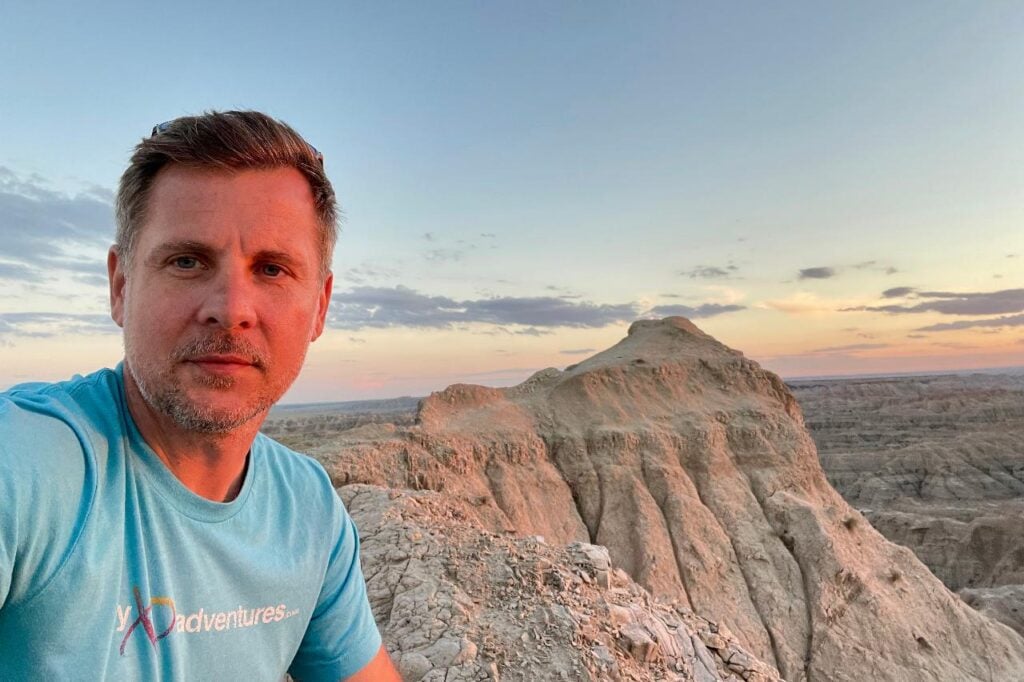
Owner and lead guide at My XO Adventures in Rapid City, South Dakota
Daniel Milks is the owner and lead guide of My XO Adventures, based in Rapid City, South Dakota. He leads private days through the Black Hills and Badlands built around wildlife behavior, geology, local history, and photo worthy stops, with a calm pace that leaves room for real discovery. Each route is shaped around your interests, current conditions, and simple, practical planning so your day feels easy, personal, and genuinely local. My XO Adventures tours include admission fees for the parks, monuments, and memorials on your itinerary. Learn more about Daniel on his bio page.