The Northern Lights in South Dakota: A Night to Remember
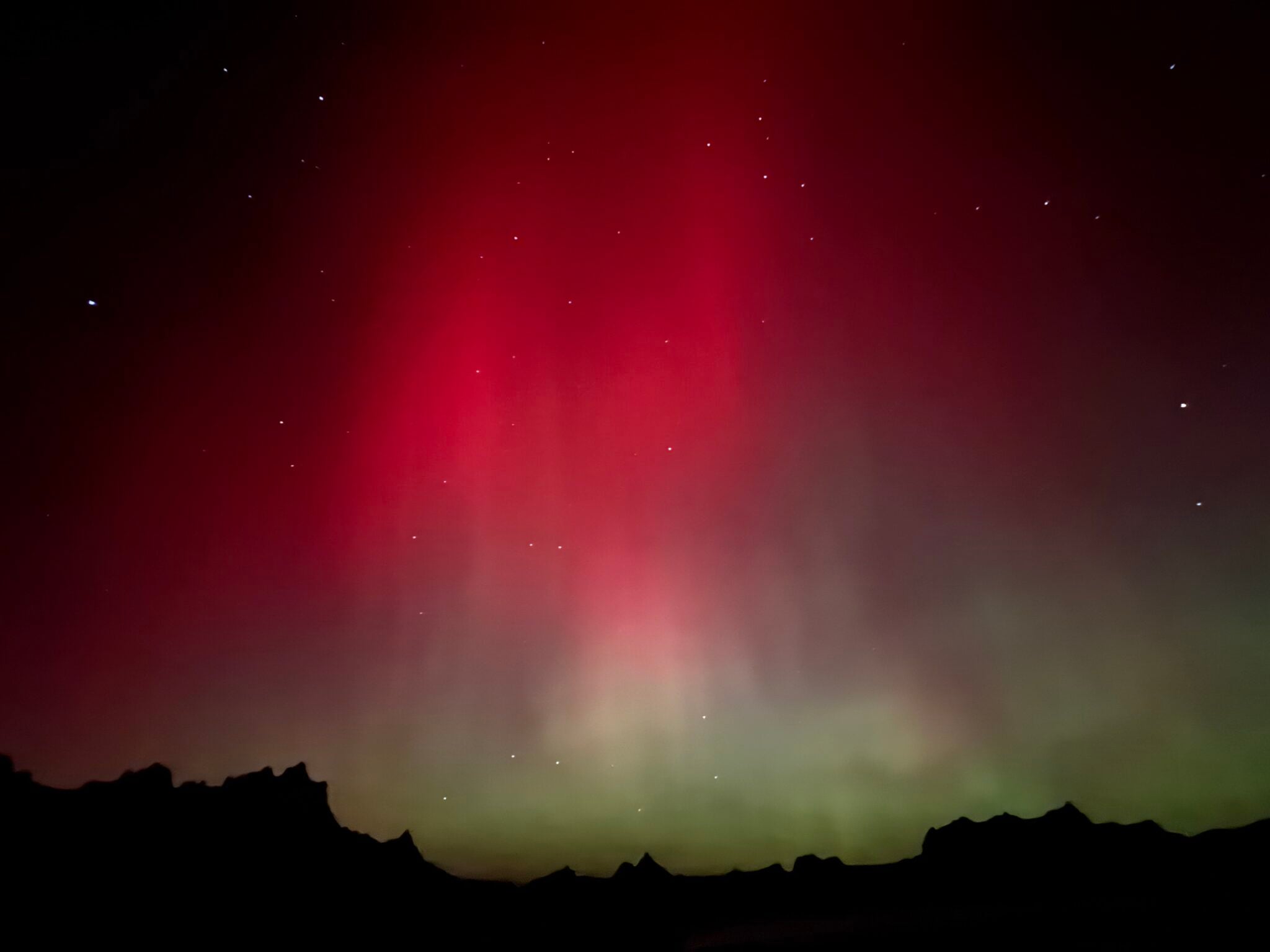
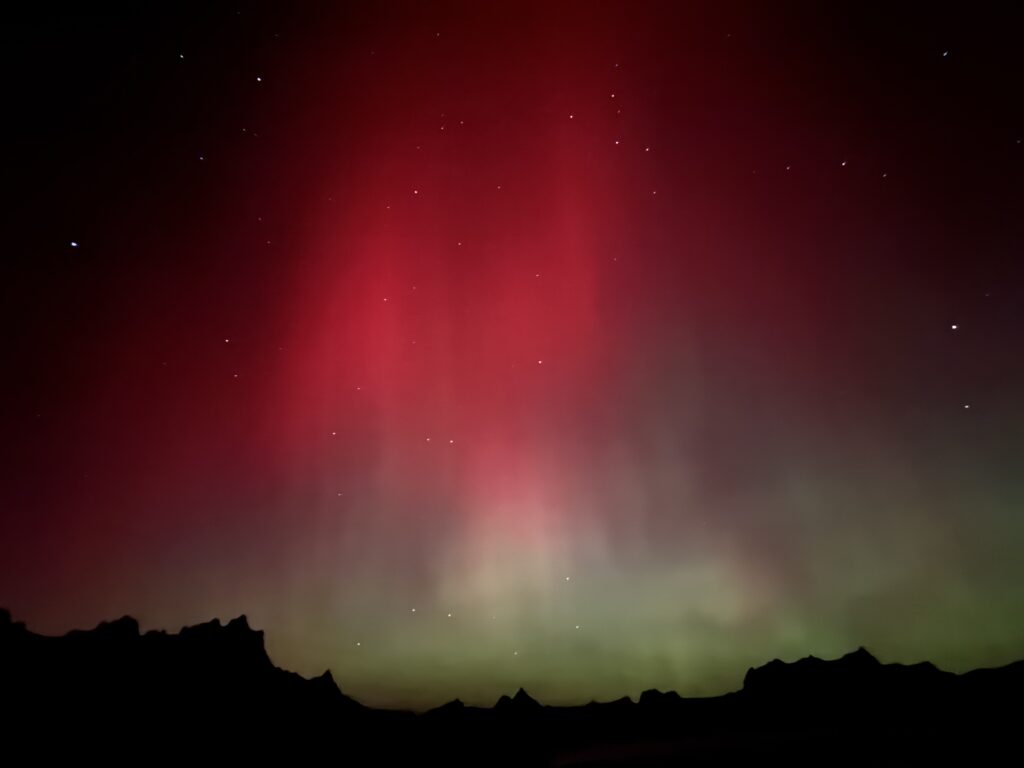
On the evening of November 12, 2025, our small group of travelers stepped into the cool desert air of Badlands National Park and tilted their heads skyward. None of us expected to witness such a spectacle this far south, but there it was: The Northern Lights in South Dakota with curtains of crimson and emerald light dancing above jagged rock formations. High above, countless pinpricks of stars glimmered as if cheering the auroral ballet. In that moment, time seemed to pause. We felt a profound connection to the cosmos and to each other, standing side by side under an ethereal glow.
A Personal Encounter with the Cosmic Ballet
I invited the group to settle onto the insulated mats I had brought along, and as everyone settled in, I noticed the first faint curl of red light rising above Sage Creek Ridge. The air carried the scent of cold earth and distant prairie. A guest near me took a slow breath, amazed, and for a moment the entire group fell into a quiet sense of wonder. I poured hot cocoa from the small stove I pack for evenings like this, and we watched the sky grow brighter, then wider, then almost unreal in color. One guest wrapped in a wool blanket said it looked as if the night was pulling time across the horizon.
The Badlands Aurora grew stronger, stretching from the northern edge of the sky into a sweep that seemed to hover above the ancient formations. As the colors shifted, I pointed out Orion rising in the east and the Pleiades nestled high above the rocky silhouettes. Moments like this remind me how the Northern Lights in South Dakota are part of a much larger story that reaches far beyond our own lifetimes. People have looked to this sky for thousands of years, wondering what these lights meant and how they carried so much power.
The Badlands as a Silent Witness
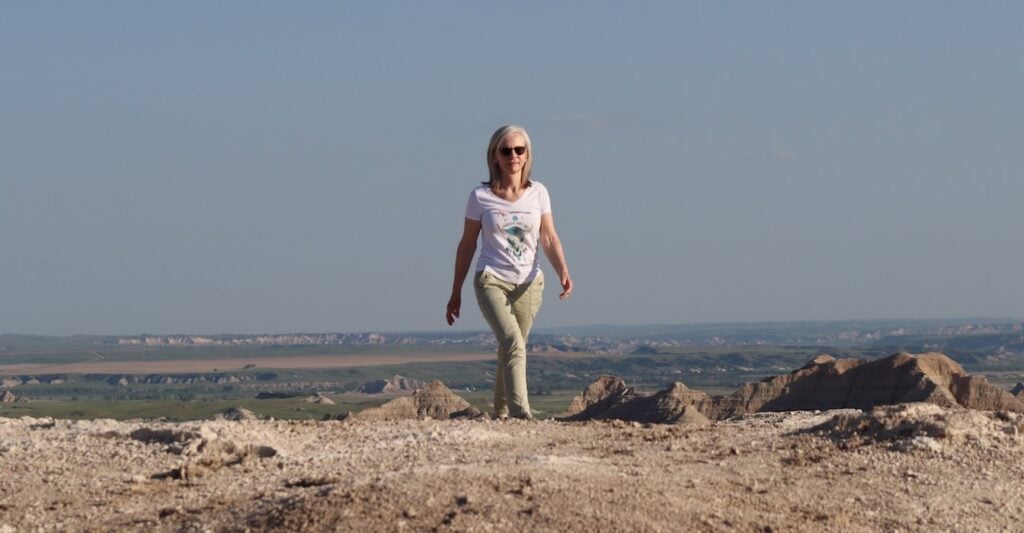
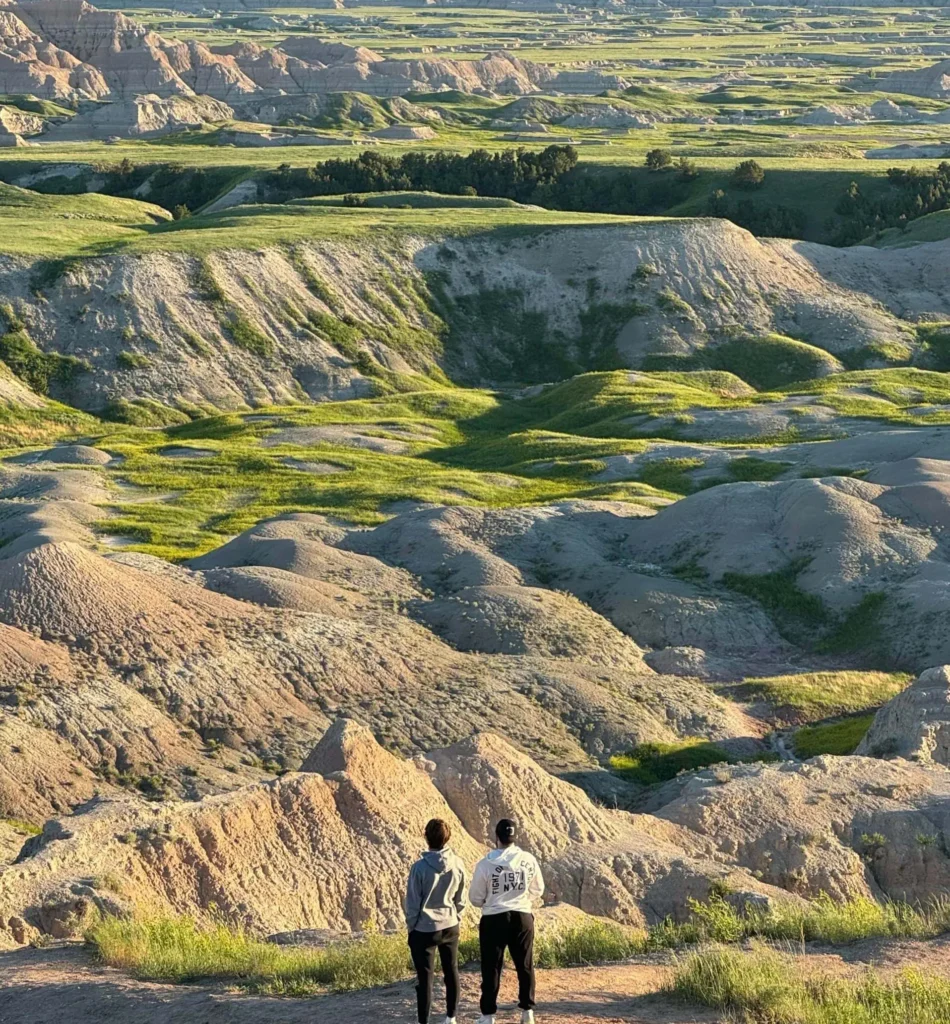
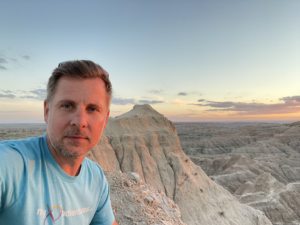
Badlands National Park is a place shaped by time in visible layers. Rock bands of soft gray, ochre, and rust dip and rise through deep ravines and sharp pinnacles. These formations have faced storms, heat, wind, and water for millions of years, and they seem to watch everything that moves above them. On this night, they stood in complete stillness while the Aurora rippled behind them, their silhouettes forming a dark and beautiful frame for the show overhead.
The quiet in that moment felt like part of the landscape itself. The park always gives a sense of stepping into something ancient, but an aurora night adds another layer of depth. It feels as if the land remembers every sky it has ever seen and holds the memory without a word.
The Badlands as a Silent Witness
Badlands National Park is a landscape of otherworldly shapes and layered rock bands colored in ochre, gray, and rust. Over millions of years, wind and water etched deep ravines and towering pinnacles. On that night, these ancient forms stood in silhouette against the sky’s fiery ribbons. The geology of this place feels primeval, as if it holds the memory of every sunrise and sunset, every cosmic event that has brushed our planet’s face.
Why the Aurora Borealis Shone Over the Badlands
The Solar Cycle and Our Southern View
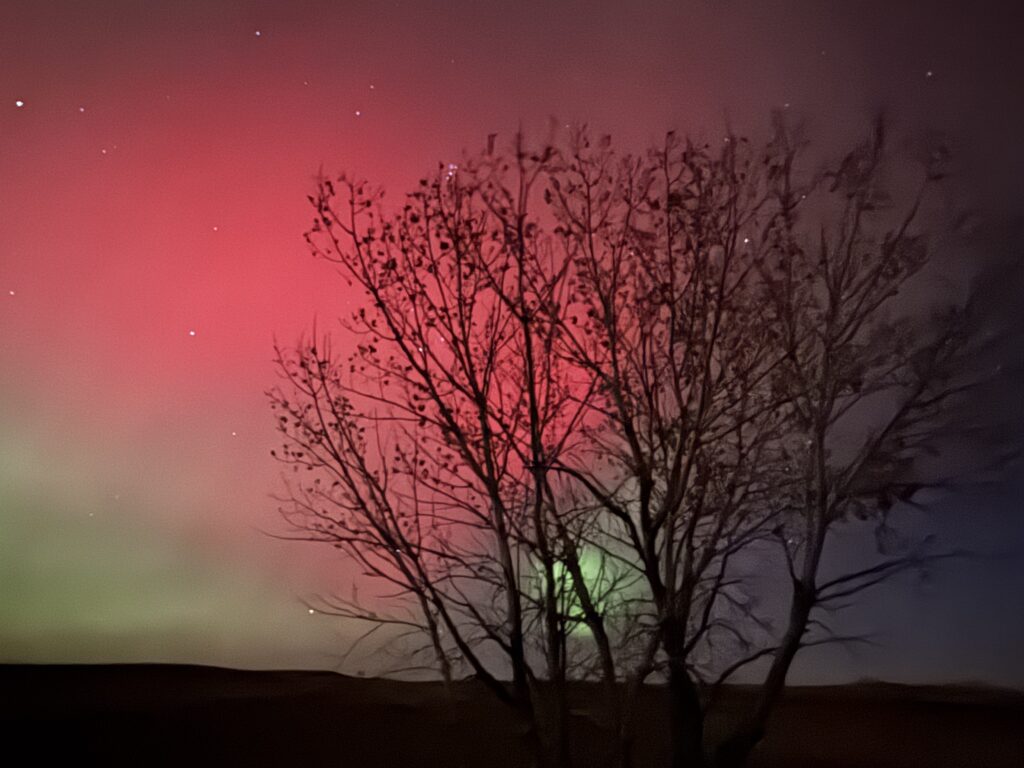
The sun cycles through periods of high and low activity roughly every 11 years. During a solar maximum, more sunspots, solar flares, and coronal mass ejections launch charged particles toward Earth. In recent years, our sun has awakened from a deep slumber, and those energized particles have collided with Earth’s magnetic field more frequently. When conditions align, the auroral oval expands, and places far from the Arctic Circle can enjoy the shimmering display. On November 12, 2026, a series of intense solar flares propelled charged particles our way, igniting vivid waves of light over South Dakota’s undulating badlands.
Reading the KP Index and Geomagnetic Storm Forecasts
To gauge your chances of seeing an aurora, pay attention to the KP index. This scale runs from 0 to 9 and measures global geomagnetic activity. A KP of 5 or above signals a geomagnetic storm strong enough to push the auroral zone well into mid-latitudes. For the Badlands, watching for KP 5 or higher is key. We rely on trusted resources like SpaceWeatherLive.com and the NOAA email notifications for geomagnetic storm forecasts. My Aurora Forecast and Aurora Alerts apps send friendly pings when conditions improve. Staying informed and patient rewards you with unforgettable nights beneath glowing skies.
Planning Your Badlands Aurora Adventure
Chasing the Northern Lights requires a blend of timing, location, and serenity. Here are our top tips for planning your own excursion:
- Choose a New Moon Night: Dark skies help the aurora stand out against a backdrop of stars and the national park’s dramatic silhouettes.
- Use Aurora Alert Apps: My Aurora Forecast, Aurora Alerts, and NOAA notifications help you know when to step outside your tent or pull over on the side of the road.
- Scout Your Location: We recommend the Pinnacles Overlook and the Yellow Mounds Overlook for unobstructed horizons and minimal light pollution.
- Pack Warm Layers: Even in early November, temperatures can drop significantly after sunset. Insulated jackets, gloves, and hats are essential.
- Remain Patient: The aurora can appear and vanish in minutes. Keep your eyes on the horizon and stay ready for sudden bursts of color.
- Bring Snacks and Hot Drinks: A thermos of tea or cocoa and energy bites keep you comfortable during long waits.
Photography Tips for Capturing the Light
You don’t need fancy gear to frame the aurora over the Badlands. Here are simple steps that worked for our group:
- Use a Sturdy Tripod: A steady base prevents blur during long exposures.
- Select a Wide-Angle Lens: A focal length between 14 and 24 millimeters captures both sky and landscape.
- Shoot in Manual Mode: Set your ISO between 800 and 1600, aperture as wide as your lens allows, and a shutter speed of 10 to 25 seconds. Adjust these settings as the aurora brightens or fades.
- Manual Focus to Infinity: Before darkness falls, focus on a distant point like a lone tree or rock formation, then switch to manual focus.
- Review and Adjust: Check your exposures every few shots and adjust settings to changing light conditions.
Embracing Responsible and Sustainable Stargazing
At My XO Adventures, we honor the land and the night sky. When you join us:
- We practice Leave No Trace principles, preserving the Badlands’ raw beauty.
- We use low-impact lighting and respect wildlife that awakens after dark.
- We support local communities by partnering with indigenous guides and sharing stories of Lakota heritage linked to the night sky.
Every small action helps maintain these dark sky sanctuaries for future travelers and generations to come.
Join Us for Your Own Cosmic Journey
The Northern Lights over the Badlands are a rare gift. Whether you’re a seasoned sky watcher or a curious traveler, we invite you to share in the wonder. Explore our Badlands Sunset and Night Sky Tour to experience private, intimate stargazing beneath some of America’s clearest skies. Sign up for our newsletter to receive real-time aurora alerts, travel tips, and stories from the trail. Follow us on Instagram, Facebook, and X at @myxoadventures to see the latest night sky magic.
Book your private Black Hills and Badlands tour today and step into a world where earth and sky dance together.