
The Cathedral Spires: Secrets of the Black Hills

The Cathedral Spires rise above Custer State Park like ancient stone towers, carved by time and shaped by the quiet strength of the Black Hills. With their sharp pinnacles, rugged walls, and sunlit ridges, the Cathedral Spires create one of the most dramatic landscapes in the region. Travelers often feel a sense of wonder the first time they see them. The formations look as if the earth reached upward and froze in place, forming a skyline of granite that feels mythic and powerful.
People come here for many reasons. Some arrive in search of great climbing. Others seek the peaceful rhythm of a long hike among Ponderosa pines. Many simply want to stand still and take in the beauty that surrounds the Cathedral Spires. Whatever draws them in, the experience always leaves a lasting impression. These spires are not only a scenic treasure. They are a doorway into the geology, history, wildlife, and spirit of the Black Hills.
The Story Behind the Stone
The Cathedral Spires are part of the Needles, a region of granite formations that stretch across the central Black Hills. They formed millions of years ago as molten rock cooled beneath the surface. Over time, wind, water, and natural erosion stripped away the softer layers above, revealing the granite pillars that now tower over the landscape. When you stand beneath the Cathedral Spires and look upward, you are watching the final result of slow, persistent change.
This unique geology gives the spires their jagged shapes and narrow points. Climbers recognize the texture instantly. The granite is coarse, solid, and reliable, making the Cathedral Spires one of the most celebrated climbing destinations in the country. Even if you never set foot on a wall, you can feel the presence of deep natural history in every ridge and crevice.
A Trail Worth Taking
The Cathedral Spires Trail begins along Needles Highway, which is a scenic journey of its own. Narrow tunnels, rolling hills, and sweeping views lead travelers toward the trailhead. The hike itself is just over a mile each way, although the steady elevation gain makes it feel a bit more adventurous. This trail is one of the most rewarding routes in Custer State Park because it moves through multiple landscapes in such a short distance.
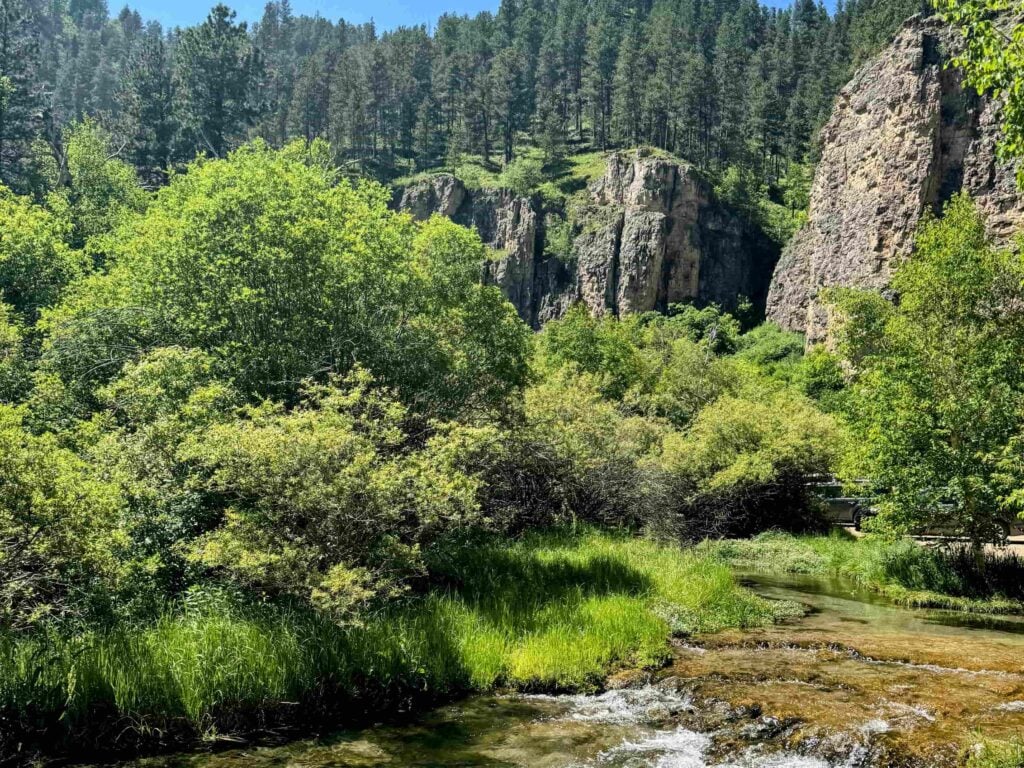
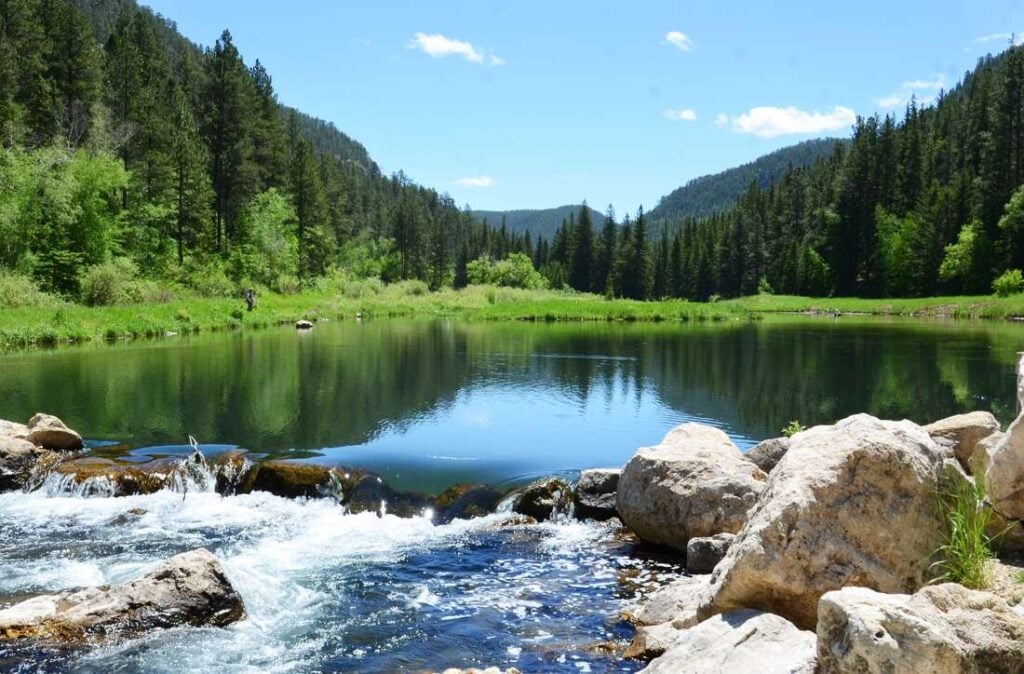
The first part of the hike takes you through a peaceful forest where Ponderosa pine needles soften each step. The scent of pine fills the air, and sunlight filters through branches like stained glass. As you climb, the view begins to open. Granite spires appear in the distance, rising above the canopy. The final stretch brings you into a narrow valley surrounded by the Cathedral Spires themselves. This is where hikers often pause, sit, and look up in quiet appreciation.
The Cathedral Spires and Wildlife
The Cathedral Spires are more than stone. They are part of a living habitat. The forests and meadows surrounding the granite towers host some of the most iconic wildlife in the Black Hills. On quiet mornings, you might spot mule deer stepping through the grass or mountain goats navigating rocky slopes with surprising ease. Birds circle overhead, and chipmunks chatter near fallen logs.
Custer State Park’s bison herd occasionally wanders close to the area, though they prefer the open prairie. Smaller animals like marmots, squirrels, and black-backed woodpeckers thrive here too. For travelers who love wildlife, the Cathedral Spires offer a chance to see animals in a natural setting without disturbing their routines. The area is peaceful, steady, and alive with movement.

A Climber’s Paradise
For climbers, the Cathedral Spires hold deep significance. This region helped shape early American climbing culture. The rugged slabs and sharp angles encouraged climbers to develop new techniques and approaches. Today, routes range from beginner-friendly to highly technical, attracting people from around the world.
Even if climbing isn’t part of your plans, watching climbers work their way up the spires can be inspiring. Their movements echo the stone’s shape, and the connection between human skill and natural formation becomes clear. The Cathedral Spires offer a reminder that adventure can be both challenging and respectful. Climbers often speak of the spiritual quality of the formations, describing the rock as something ancient and honest.
The Beauty of Needles Highway
Located along Needles Highway, one of the most scenic drives in the Black Hills. The roadway winds through rock passages, narrow corridors, and sweeping overlooks that take your breath away. Drivers often stop at pullouts to enjoy views of the spires from different angles. This highway is a destination on its own, and the Cathedral Spires are its crown jewel.
The Spiritual and Cultural Connection
The Black Hills carry deep cultural significance to Indigenous communities, including the Lakota, Cheyenne, and other Tribal Nations. While the Cathedral Spires themselves are often viewed through the lens of recreation and tourism, the entire region is part of a larger landscape that holds ancient stories and spiritual meaning. Visitors are encouraged to approach with respect and an open heart, keeping in mind that these stone towers exist within a place that has been honored for generations.
This cultural awareness enhances the experience. They are not only a scenic wonder but also part of a land rooted in tradition, ceremony, and remembrance.
Exploring Beyond the Spires
Sylvan Lake sits just a short drive away, offering calm waters surrounded by granite walls. Many travelers combine the Cathedral Spires Trail with time spent walking around the lake or paddling on its surface. The area creates a perfect contrast. After the sharp peaks of the spires, the lake feels soft, calm, and restorative.
Farther along the road are more iconic formations like the Needle’s Eye and the Eye of the Needle Tunnel. These landmarks add variety and excitement to a day spent exploring the region. Travelers often describe the experience as moving through a natural stone city where every corner reveals another hidden shape or formation.
When to Visit the Cathedral Spires
The Cathedral Spires offer something special at every time of year. Summer brings warmth, long days, and active wildlife. Fall fills the forest with color as the aspen shimmer in gold. Winter transforms the spires into a snow-covered sanctuary where light glitters across the granite. Spring reawakens the landscape with fresh growth and lively trails.
Most visitors choose late spring through early fall for hiking, but any season can be memorable. The key is preparation, awareness of weather conditions, and a sense of curiosity.
Tips for Travelers
• Wear good hiking shoes. The trail can be rocky in places.
• Bring water. The elevation surprises visitors who are not used to it.
• Arrive early in the day for the most peaceful experience.
• Respect wildlife. Give animals space and take only photos.
• Stay on designated trails to protect the fragile ecosystem.
• Enjoy the journey along Needles Highway, not just the destination.
The Lasting Impression of the Cathedral Spires
Visitors leave the Cathedral Spires with a sense of awe that lingers. The granite towers tell a story older than memory, shaped by the earth and held in place by the Black Hills. Whether you hike the trail, climb the walls, photograph the scenery, or stand quietly beneath the stone, the experience remains long after the moment ends.
They’re more than a beautiful place. They are a reminder of nature’s patience, power, and ability to create something extraordinary.