
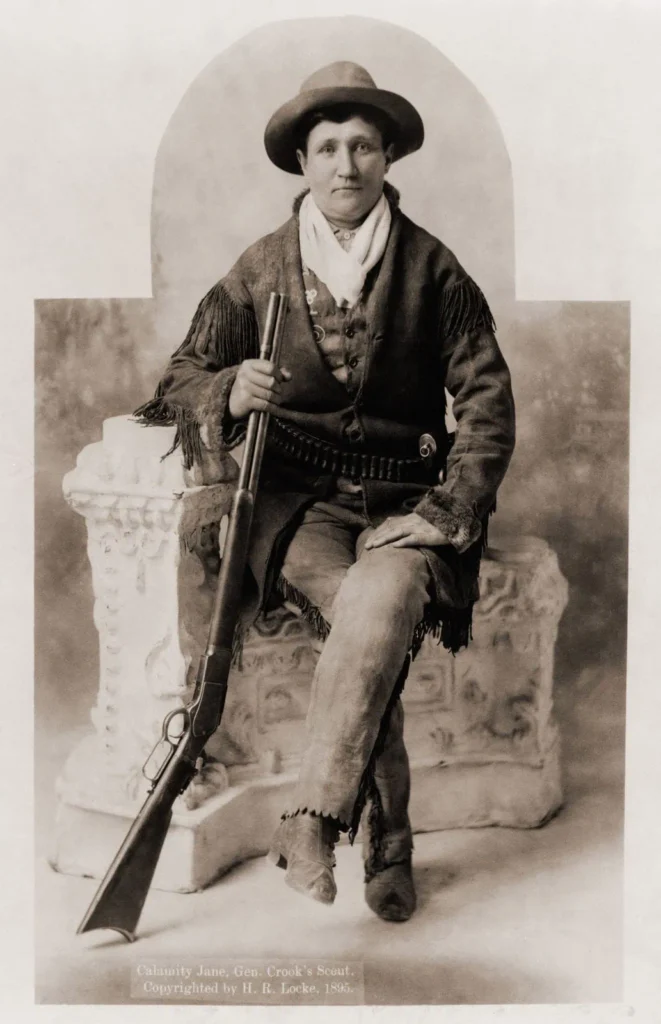
Calamity Jane, born Martha Jane Canary on May 1, 1852, in Princeton, Missouri, entered the world as the oldest of six children. Her early years were shaped by hardship. Her father died when she was nine, and her mother remarried several times before abandoning the children entirely. At fifteen, Calamity Jane was left to survive by her own grit, instinct, and determination. These early struggles forged the bold personality that later turned her into one of the most unforgettable figures in frontier history.
Life pushed her toward self reliance quickly. She found work as a horse wrangler in Salina, Kansas, proving her skill in the saddle and her ability to handle rough conditions. These long days on the plains were where Calamity Jane first began to build the reputation that would follow her throughout the West. Her strength, sense of adventure, and refusal to be underestimated became her trademarks.
Legend says she met Wild Bill Hickok in 1875 while traveling toward Deadwood, South Dakota. The bond between Calamity Jane and Wild Bill has been debated by historians, yet their story remains one of the most talked about relationships in frontier folklore. She followed him through the frontier until his death in 1876. Losing him left a mark on her life, and the two became forever intertwined in Western mythology.
Calamity Jane remained in South Dakota, stepping into the dangerous work of scouting for General George Crook during moments of intense conflict in the region. She rode long distances, delivered messages, and acted as a skilled marksman. Calamity Jane operated in roles typically held by men, earning the respect of soldiers who relied on her steady aim and knowledge of the land.
Her life took many forms beyond scouting. She drove stagecoaches, worked as a cattle drover, nursed the sick during outbreaks in rough frontier camps, and even served as a nurse for the U.S. Army during the Spanish American War. Later, she joined Buffalo Bill Cody’s Wild West Show and entertained audiences who were eager to see real Western personalities. Calamity Jane stepped on stage with the same boldness she carried through the wilderness, adding storytelling and humor to her performances.
Calamity Jane was known for her toughness, but she was equally known for her compassion. Families in Deadwood remembered her for showing up when illness swept through mining camps. She cooked meals for children who had none, raised money for those in need, and cared for the sick long before hospitals existed in the region. Her charitable nature was part of what made her so beloved. Beneath her rugged exterior lived a woman who cared deeply about helping others, especially those society had overlooked.
She also had her flaws, including confrontations with the law and long spells of heavy drinking, yet these struggles added to her complex humanity. Calamity Jane felt real, unpredictable, and larger than life. She did not fit social expectations, which is part of why she became one of the West’s most iconic characters.
Calamity Jane died on August 1, 1903, at age fifty-one from pneumonia and complications related to alcoholism. She was buried next to Wild Bill Hickok in Deadwood’s Mount Moriah Cemetery, a placement that has fed stories and speculation ever since. Today, visitors still make the trip to her gravesite, fascinated by her legend and the truths that shaped it.
The story of Calamity Jane continues to inspire because she defied every limitation placed on her. She carved out a life of courage, humor, and loyalty, becoming one of the most recognizable figures in American frontier history. Her legacy reminds people that strength can come from struggle, kindness can come from chaos, and ordinary lives can become extraordinary through resilience and heart.