Exploring the Art and Heritage of the Oglala Lakota

Pine Ridge Reservation: A Living History Beside the Badlands
Pine Ridge was originally part of the vast Great Sioux Reservation, created after the 1868 Fort Laramie Treaty between the United States and the Lakota and other allied Nations. That treaty recognized Lakota ownership of a huge area that included the Black Hills and much of what is now called western South Dakota, along with portions of Nebraska, Wyoming, and Montana.
As pressure from settlers, railroads, and mining interests increased, the United States steadily broke that promise. In 1889, Congress passed an act that carved the Great Sioux Reservation into smaller pieces and established several separate reservations, including Pine Ridge, as a home base for the Oglala Lakota.
Before Pine Ridge settled into its present location, the Oglala Lakota were tied to a series of federal Indian agencies, including the Red Cloud Agency, named for the famed leader Red Cloud. Those agencies moved multiple times across what is now Wyoming, Nebraska, and South Dakota, as federal policy shifted and new pressures arrived on the plains.
Pine Ridge is closely connected to some of the most painful events in Lakota and United States history. In 1890, near the reservation’s northern edge, U.S. troops killed hundreds of Lakota men, women, and children at Wounded Knee, an event many Lakota and historians remember as a massacre. The loss reverberated through the community and became a symbol of broken treaties and the violent suppression of Native Nations.
During the twentieth century, Pine Ridge saw more land taken for federal projects, including the Badlands Bombing Range during World War II, when tribal citizens and families were forced off their allotments so the military could use the land for training. Many never received fair compensation, and the disruption to home and livelihood was long lasting.
In the early nineteen seventies, Pine Ridge again became a focal point of Native activism. In 1973, long standing frustration with federal policy and local tribal politics led to the occupation of the town of Wounded Knee by members of the Oglala Lakota community and the American Indian Movement. For seventy-one days, the world’s attention turned to Pine Ridge as activists called for the honoring of treaties and the protection of Native rights. The standoff was tense and sometimes violent, but it also sparked a broader conversation across the country about Indigenous sovereignty and justice.
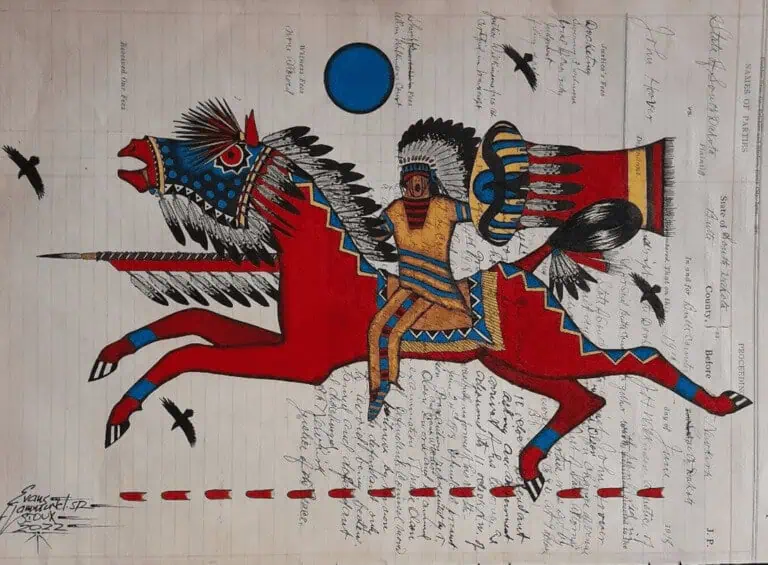
Alongside these struggles, there has always been a quieter story of cultural strength. The Oglala Sioux Tribe established Oglala Lakota College in 1971, a tribally controlled college that offers degrees on the reservation and supports language learning, cultural preservation, and local leadership. Community led schools, cultural centers, and organizations continue to work on behalf of Lakota language, ceremony, and traditional knowledge.
Today, Pine Ridge Reservation covers more than two million acres and is governed by the Oglala Sioux Tribe, a sovereign tribal nation with its own constitution, council, and institutions. Life on the reservation carries real challenges linked to generations of dispossession and federal policy, yet it is also a place of powerful community, creativity, and ongoing cultural renewal.
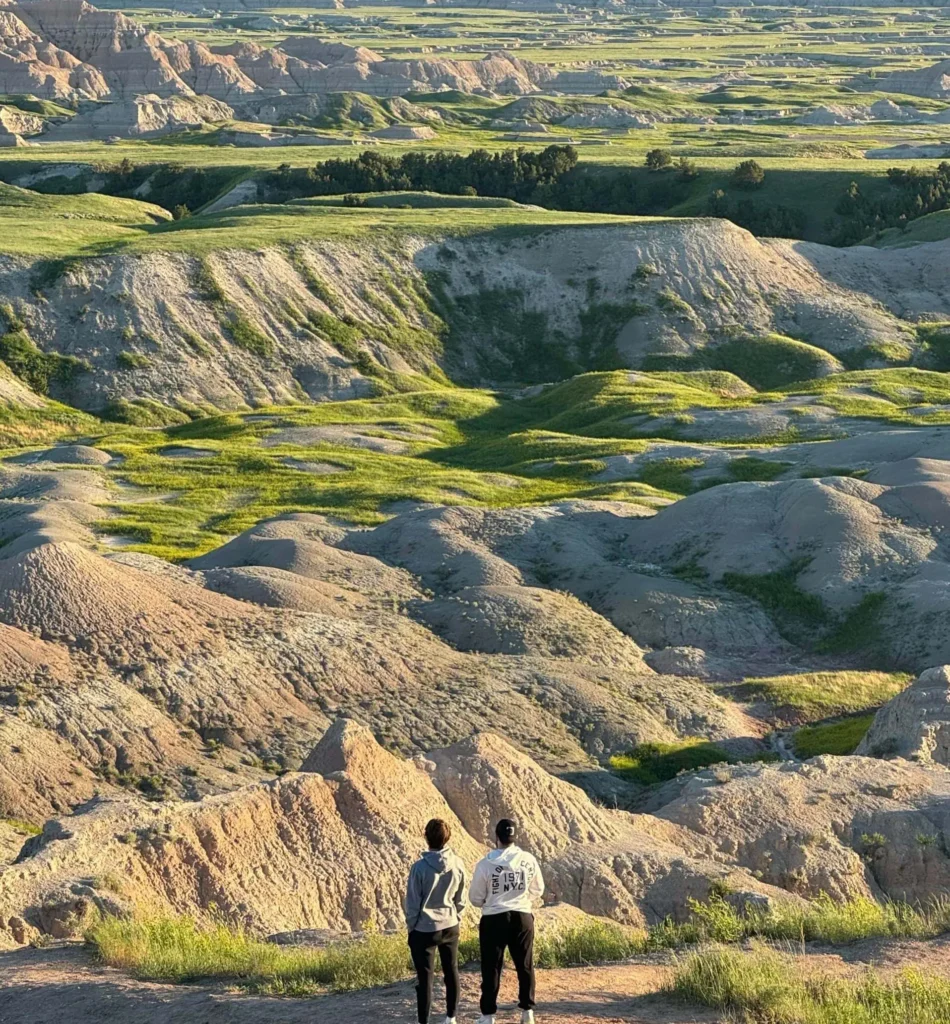
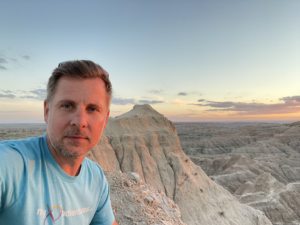
For visitors who explore the Badlands and the greater Black Hills region, understanding a little of Pine Ridge history adds depth and context to the landscape. This is not just scenic country. It is living homeland, where the past and present of the Oglala Lakota are woven into every ridge, butte, and stretch of prairie.