
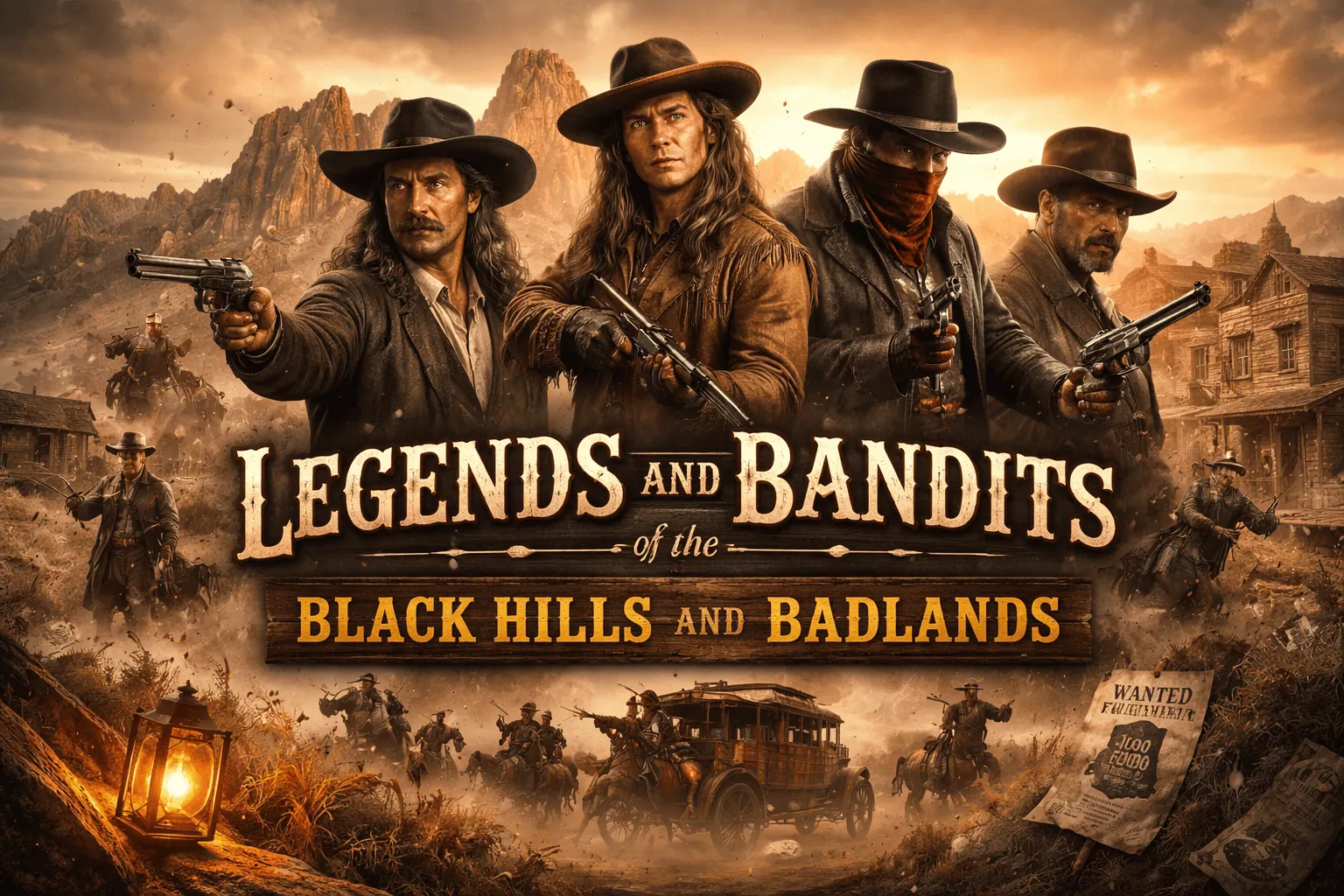
The Black Hills and Badlands of South Dakota are more than rugged landscapes — they are the backdrop for some of the Wild West’s most unforgettable characters. From gold rush fortune seekers to stagecoach robbers and saloon keepers, this region gave rise to stories that blend truth and myth, creating larger-than-life figures that still echo through canyon walls and pine forests.
In this blog, we dig deep into the Legends and Bandits of the Black Hills and Badlands, exploring the real people behind the names carved into history and folklore.
Born Cornelius Donahue in 1850 in Philadelphia, Lame Johnny was dealt a rough hand early on. Orphaned and born with deformed legs, few expected greatness from him. But he graduated from Girard College with top marks and left city life behind to become a cowboy.
In 1872, he moved to Texas to embrace ranch life, where his limp was less noticed among men on horseback. However, discrimination and bullying from fellow cowboys pushed him toward crime. Eventually, Lame Johnny joined a gang robbing Black Hills stagecoaches, including those carrying gold from the Homestake Mine, cementing him as one of the most prominent South Dakota bandits.
His downfall came in 1879 when he was captured and being transported for trial. Somewhere between Custer and Deadwood, vigilantes pulled him from the wagon and lynched him without a trial. His grave remains anonymous, but his legacy as one of the top legends and bandits of the Black Hills and Badlands endures.
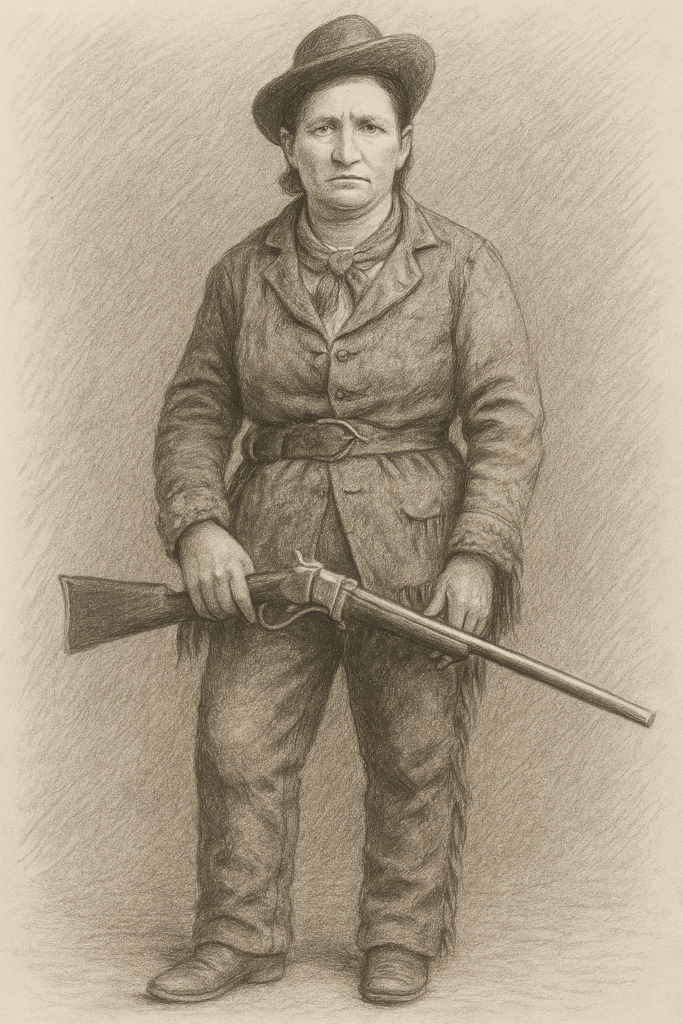
Martha Jane Canary, born in 1852, was no ordinary frontier woman. After losing her parents at a young age, she raised her siblings and supported herself by taking any job she could — from laundress to horse wrangler. Known for her skill with a rifle and her rough, masculine demeanor, she earned the nickname Calamity Jane while allegedly serving as a scout for General Custer.
She arrived in Deadwood in 1876 and quickly attached herself to Wild Bill Hickok, although the nature of their relationship is unclear. Whether they were lovers or just friends remains a matter of debate. Despite struggles with alcoholism, Jane became a folk hero, even starring in dime novels and Wild West shows.
When she died in 1903, she was buried next to Wild Bill in Mount Moriah Cemetery, just as she had requested.
Born around 1850, William “Curley” Grimes was notorious for his two-year crime spree, robbing the Deadwood Stage — a vital route for gold shipments and mail. Armed robberies were frequent, and Grimes became one of the region’s most feared outlaws.
He was eventually captured and sentenced to prison, but while being transported near Sturgis, South Dakota, he attempted to escape. A guard shot him dead on February 3, 1880. Local legend says his body was buried where he fell, and his tombstone reads:
“Buried with his head down / just as he fell / the whispering pines / will never tell.”

James Butler “Wild Bill” Hickok was already a legend before he ever set foot in the Black Hills. A Union scout, lawman, and gunfighter, Hickok’s reputation for speed and deadliness was unmatched.
He came to Deadwood in 1876 during the Gold Rush, seeking fortune at the poker table. But on August 2, just weeks after arriving, he was shot in the back of the head by Jack McCall while playing cards at Saloon No. 10. Hickok was holding a pair of aces and eights, now known as the “Dead Man’s Hand.”
McCall’s name lives in infamy for the cowardly assassination of Wild Bill Hickok. After the murder, McCall was initially acquitted in a hastily organized miners’ court in Deadwood. But justice wasn’t done yet.
He was later rearrested, tried again in Yankton, and hanged in 1877 — marking the first legal execution in Dakota Territory. His motive? Some say it was revenge. Others say it was whiskey and envy. Whatever the reason, his place in Wild West history is sealed.

While not a gunslinger, Al Swearengen was every bit as dangerous. He ran Deadwood’s Gem Theater, a notorious saloon and brothel, where he built a criminal empire through extortion, bribery, and violence. He ruled the town’s underbelly with an iron fist, often manipulating city officials to maintain control.
Despite his criminality, Al was seen by some as a necessary evil in the lawless town. His life inspired the character played by Ian McShane in HBO’s Deadwood series — a portrayal shockingly close to reality.
John Perrett, better known as Potato Creek Johnny, was a Welsh immigrant who wandered into the Black Hills during the Gold Rush Era with a mule, a pan, and a dream. In 1929, he reportedly discovered one of the largest gold nuggets in the region, weighing 7.75 ounces. This makes him one of the most beloved legends of Wild West stories.
He became a symbol of prospectors’ hope, and despite offers, refused to sell the nugget to anyone but a local Deadwood businessman. Today, his legacy as one of the most renowned legends and bandits of the Black Hills and Badlands endures in souvenirs, statues, and stories. He’s buried near Hickok and Calamity Jane at Mount Moriah Cemetery.

The Legends and Bandits of the Black Hills and Badlands continue to fascinate because they represent the raw, unfiltered edge of American history. These were people who lived fast, died young, and helped shape the myth of the Wild West.
Whether you’re walking the streets of Deadwood, hiking the Badlands, or exploring museums in Rapid City, you’re walking through the legacy of these extraordinary characters.
The Black Hills and Badlands aren’t just geological wonders. They’re landscapes layered with frontier stories, outlaw myths, gold rush drama, and larger-than-life personalities. These questions help you separate folklore from fact and understand why these stories still shape the region’s identity.
Yes. During the gold rush era, the region attracted miners, prospectors, lawmen, gamblers, and outlaws. Some used the rugged terrain and remote settlements to avoid capture or regroup between robberies.
Deadwood absolutely earned its rough reputation in the 1870s. It was a booming mining town with minimal early law enforcement, which created space for gambling halls, gunfights, and notorious figures like Wild Bill Hickok and Calamity Jane.
Some stories are well documented, while others grew larger in retelling. The line between history and legend blurred over time, especially in frontier newspapers that thrived on dramatic storytelling.
The rugged terrain and isolation made parts of the Badlands difficult to track through, which could provide temporary cover. However, survival there long-term was challenging due to limited water and exposure.
Frontier life was unpredictable, risky, and dramatic. Stories of rebellion, survival, and lawlessness still capture imagination because they reflect a raw chapter of American expansion.
No. Lawmen, miners, entrepreneurs, and Indigenous leaders all shaped the narrative of the Black Hills. The full story is more complex than a simple good-versus-bad tale.
Museums, historical walking tours, and reputable interpretive centers provide deeper context that separates myth from documented fact.
Yes. Town identity, tourism themes, reenactments, and storytelling events continue to reflect the region’s Wild West chapter, even as the modern Black Hills has evolved far beyond it.
The Legends and Bandits of the Black Hills and Badlands are more than stories — they are echoes of a time when survival meant everything, and reputation could make you a legend or a ghost. These rugged characters shaped the mythos of the American frontier, leaving behind a trail of truth, half-truth, and unforgettable folklore.
Want help planning your trip to the Black Hills? Check out South Dakota Tourism for official guides, maps, and more, or save yourself the trouble of planning and contact My XO Adventures.