
A complete guide to Custer State Park wildlife, including best viewing times, safety tips, conservation insight, and how to experience the Wildlife Loop Road responsibly.
Custer State Park wildlife is one of the greatest wildlife viewing experiences in North America. Along the 18-mile Wildlife Loop Road, visitors regularly encounter free-roaming bison, pronghorn, elk, mule deer, coyotes, and the park’s famous burros in their natural habitat.
What You’ll Learn on This Page:
• What animals live in Custer State Park
• Best time of day to see wildlife
• Wildlife Loop Road driving tips
• Safety guidelines
• Conservation efforts and the Buffalo Roundup
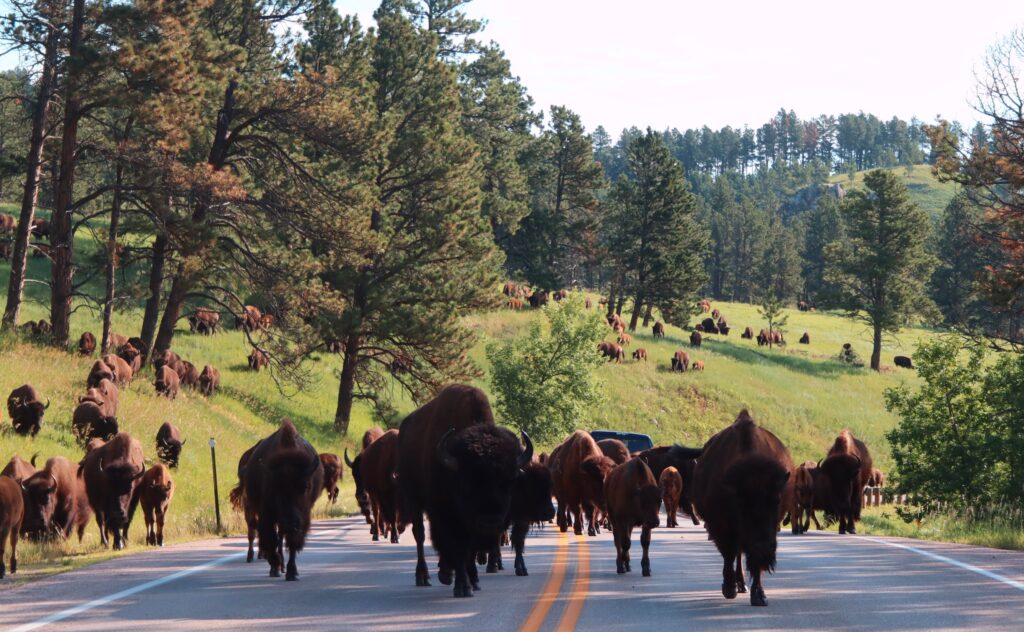
Custer State Park is home to one of the largest publicly owned bison herds in the world, along with pronghorn, elk, mule deer, white-tailed deer, coyotes, foxes, eagles, and burros.
The American bison is the most iconic animal in Custer State Park. With a managed herd of roughly 1,300 to 1,500 animals, this is one of the largest publicly owned bison herds in the world. Adult bulls can weigh up to 2,000 pounds and run up to 35 miles per hour, which is faster than most people realize.
Driving the Wildlife Loop Road, it’s common to encounter “bison jams” when herds slowly cross the road. These moments can be unforgettable, but they require patience and awareness.
For official wildlife safety guidance and herd management information, see the Bison Center of the South Dakota Game, Fish & Parks.
Always stay at least 100 feet away from bison. Even calm animals can charge unexpectedly. Stay inside your vehicle during close encounters and avoid attempting photos at unsafe distances.
If you’d like a deeper understanding of herd behavior, seasonal movement patterns, and how the annual Buffalo Roundup supports long-term conservation, consider exploring Custer State Park with a private guide who knows where and when herds are most active.
Learn more about our Private Custer State Park Wildlife Tour

Pronghorn are one of the most fascinating species in Custer State Park. Often mistakenly called antelope, pronghorn are not true antelope at all. They are the only surviving member of the Antilocapridae family, a lineage unique to North America.
They are the fastest land mammal in North America and the second fastest in the world, capable of reaching speeds up to 55 miles per hour. Unlike animals built for short bursts of speed, pronghorn are endurance runners. They evolved on open prairie landscapes where long sightlines and sustained speed were essential for escaping prehistoric predators.
In Custer State Park, pronghorn prefer wide grassland habitat where they can see for long distances. Their tan and white coloration blends surprisingly well into golden prairie grasses, which is why visitors often miss them at first glance.
Early morning is the best time to spot pronghorn along the Wildlife Loop Road. As temperatures rise, they often move farther into open prairie or bed down in tall grasses. Driving slowly through expansive prairie sections dramatically increases your chances of seeing them.
Pronghorn are alert and visually oriented animals. If you see one, scan the surrounding landscape. They rarely travel alone.

The burros of Custer State Park are among the most recognizable animals along the Wildlife Loop Road. These free-roaming animals are descendants of burros used in the early 1900s for park excursions and transportation before modern vehicles became common.
When those excursions ended, some burros were released into the park and established a self-sustaining population. Today, they roam freely and are especially visible during summer months when traffic increases.
Unlike most wildlife species in the park, burros often approach vehicles. Their curiosity and comfort around humans have earned them the nickname “begging burros.”
It’s important not to feed them.
Human food disrupts their digestive systems, alters natural foraging behavior, and increases aggressive tendencies toward vehicles. Feeding also creates long-term management problems for park officials and can ultimately harm the animals.
Enjoy the interaction, take photographs from inside your vehicle, and allow them to remain truly free-roaming animals.

Beyond bison and pronghorn, Custer State Park supports a diverse mix of large and mid-sized wildlife species across its prairie and forest ecosystems.
Elk are present year-round but are more commonly seen during the fall rut, which typically begins in September. During this time, bulls bugle to attract cows and defend territory. Early mornings and forest edge habitats offer the best chances of seeing them.
Outside of rut season, elk often remain in more wooded or less-trafficked sections of the park.
Both mule deer and white-tailed deer are common throughout the park. Mule deer are often seen in more open, rugged terrain, while white-tailed deer prefer areas with thicker vegetation and creek bottoms.
Dawn and dusk remain the most productive viewing times, particularly near meadow edges and lightly forested corridors.
Coyotes are present across the park but are more elusive. They are most active during early morning and evening hours and are frequently spotted crossing open prairie sections or moving along drainage areas.
Their adaptability allows them to thrive across multiple habitat zones.
Bald eagles, golden eagles, red-tailed hawks, and other raptors can often be seen soaring above prairie thermals or perched in tall pines.
Scanning fence posts, dead trees, and open ridgelines increases your chance of spotting birds of prey. Winter can be an especially good time for eagle sightings due to clearer sightlines and seasonal movement patterns.


Wildlife in Custer State Park can be seen year-round, but animal behavior changes dramatically by season. Knowing what’s happening biologically and environmentally can dramatically improve your experience.
Spring is one of the most dynamic times for Custer State Park wildlife. Bison calves are born from late April through May, and it’s common to see young “red dogs” nursing or staying close to protective mothers. Pronghorn and deer are also active across the grasslands.
The prairie begins turning green as native grasses return, drawing grazing animals into more open areas along the Wildlife Loop Road. Cooler morning temperatures increase movement, making dawn drives especially productive.
Spring also brings more unpredictable weather, which can mean fewer crowds compared to peak summer.
Summer brings the highest visitor traffic, but wildlife is still very active if you adjust your timing.
Temperatures rise quickly, so animals shift movement to early morning and late evening. A 6:30–8:30 AM drive often produces dramatically better wildlife viewing than mid-day.
Burros are especially visible in summer and frequently approach vehicles along the Wildlife Loop Road. Bison herds may cluster in shaded valleys or near water sources during hotter hours.
Traffic increases significantly between 10 AM and 3 PM, so earlier starts help avoid congestion and bison jams caused by heavy vehicle flow.
Fall is arguably the most dramatic season for wildlife behavior.
In late September, the Custer State Park Buffalo Roundup gathers the herd for health checks and population management. This event draws national attention and showcases the park’s active conservation approach.
September also marks the beginning of the elk rut. Bulls can be heard bugling in the early mornings and evenings, particularly in more forested areas of the park.
Temperatures cool, wildlife becomes more active throughout the day, and golden prairie grasses create stunning photographic contrast.
Winter offers a completely different wildlife experience. Visitor numbers drop significantly, creating quieter conditions that can lead to more relaxed animal behavior.
Bison often stand out dramatically against snow-covered prairie landscapes. Mule deer and pronghorn are easier to spot due to reduced foliage.
Road conditions can vary depending on snowfall, so checking weather updates before driving the Wildlife Loop Road is important.
For photographers and visitors seeking fewer crowds, winter can feel like a private wildlife experience.
If you’d like to understand how seasonal timing affects your broader trip planning, see our guide to Best Time to Visit the Black Hills

The Wildlife Loop Road is an 18-mile scenic drive inside Custer State Park designed specifically for wildlife viewing. It winds through open prairie, rolling hills, creek bottoms, and ponderosa pine forest, creating diverse habitat zones within a relatively short distance.
Most visitors underestimate how long it takes to drive the loop. While 18 miles sounds short, wildlife encounters, slow traffic, and photo stops often stretch the drive to 1.5 to 3 hours.
The speed limit is generally 25 mph, and it’s there for a reason. Animals frequently cross without warning. Sections of the loop are paved, while others may include rougher stretches or narrow pull-offs.
Driving slowly dramatically increases your chance of spotting pronghorn in tall grass or catching movement near tree lines.
A “bison jam” happens when herds cross or gather on the roadway, temporarily stopping traffic. These moments can last a few minutes or significantly longer depending on herd size and movement.
Remain in your vehicle, keep windows partially raised, and allow the herd to move naturally. Attempting to maneuver around animals can escalate risk and create unsafe conditions for both wildlife and visitors.
Certain areas of the Wildlife Loop Road consistently produce sightings:
• Open prairie sections often host pronghorn and bison
• Creek bottoms attract deer and coyotes
• Forest edges increase elk sightings during fall
• Rocky outcrops may reveal mountain goats
Wildlife movement shifts throughout the day, so driving the entire loop instead of turning around early increases success rates.
If wildlife viewing is your priority, plan at least two hours for the loop. Add additional time if you intend to photograph animals or visit pull-offs.
Visitors who rush through in 45 minutes often miss the most active wildlife windows.
• Start at dawn or late afternoon
• Bring binoculars
• Keep your fuel tank at least half full
• Pull completely off the road before stopping
• Avoid sudden braking when animals appear
You can also pair this drive with a broader regional experience by exploring our Black Hills Private Tours

Custer State Park wildlife is not left unmanaged. The park uses active conservation strategies to maintain ecological balance across its 71,000 acres of mixed prairie and forest habitat.
Unlike a national park model that emphasizes minimal intervention, Custer State Park operates as a state-managed wildlife system. Herd sizes, habitat conditions, and plant health are continuously monitored to prevent overgrazing, disease spread, and habitat degradation.
This approach ensures that wildlife populations remain healthy while preserving the long-term integrity of the prairie ecosystem.
The most visible conservation event each year is the Custer State Park Buffalo Roundup, held in late September.
During the roundup, riders guide the bison herd into corrals for:
• Health evaluations
• Vaccinations
• Pregnancy checks
• Genetic tracking
• Population management
This process prevents overpopulation, which could otherwise damage grasslands and reduce food availability for other species such as pronghorn and deer.
The event draws visitors from across the country, but its purpose is ecological management, not spectacle.
For official details about herd management and Buffalo Roundup, see South Dakota Game, Fish & Parks website.
Healthy prairie requires disturbance. Without natural fire cycles, invasive species can overtake native grasses, reducing biodiversity.
Custer State Park uses prescribed burns to:
• Rejuvenate native prairie grasses
• Improve forage quality for grazing animals
• Reduce invasive plant species
• Lower wildfire risk
Habitat restoration projects also support pollinators, small mammals, and ground-nesting birds that form the base of the broader ecosystem.
Custer State Park welcomes nearly two million visitors annually. Managing that level of tourism while protecting wildlife requires constant adjustment.
Park officials address challenges such as:
• Human-wildlife interaction
• Road congestion during peak months
• Habitat fragmentation
• Climate variability
Visitors play a direct role in conservation outcomes by following safety guidelines and respecting wildlife boundaries.
Understanding how wildlife is managed changes how you experience the park.
When you see a herd during the Buffalo Roundup season, you’re witnessing a century-old conservation tradition. When you notice fresh grass growth after a burn, you’re seeing ecosystem renewal in action.
Wildlife viewing becomes more than observation. It becomes context.

Wild animals in Custer State Park are not pets, performers, or roadside attractions. They are powerful, unpredictable, and fully wild. Safe wildlife viewing protects both visitors and animals.
Understanding and following park safety guidelines dramatically reduces the risk of injury and helps preserve natural behavior patterns.
The general safety guideline inside Custer State Park is:
• Stay at least 100 feet away from bison
• Stay at least 50 feet away from deer, pronghorn, and elk
Bison may appear calm, but they can run up to 35 miles per hour and pivot quickly. Each year, visitors are injured across the country by approaching large wildlife too closely for photos.
If an animal changes behavior because of your presence, you are too close.
For official wildlife safety guidance, see South Dakota Game, Fish & Parks:
Bison frequently cross or occupy the Wildlife Loop Road. When traffic stops:
• Remain inside your vehicle
• Keep windows partially raised
• Do not attempt to drive around the herd
• Turn off your engine if stopped for extended periods
• Avoid honking or revving
Patience is part of the experience. Herds move at their own pace.
Feeding wildlife is illegal in Custer State Park and harmful to animals.
Human food can:
• Disrupt digestive systems
• Increase aggression
• Alter natural migration patterns
• Lead to euthanasia of animals that become dependent
This applies especially to the park’s burros. While they may approach vehicles, feeding them changes behavior and creates long-term management issues.
Wildlife photography is one of the highlights of visiting Custer State Park. Safe photography requires planning.
• Use zoom lenses instead of approaching animals
• Pull completely off the road before stopping
• Avoid exiting your vehicle near large mammals
• Watch animal body language
Pinned ears, raised tails, snorting, or sudden head movement can signal agitation.
If traveling with children:
• Keep them inside the vehicle during wildlife encounters
• Hold hands near pull-offs
• Explain that animals are not zoo exhibits
Clear expectations reduce risky behavior.
When visitors follow safety guidelines, animals maintain natural behaviors. When boundaries are ignored, wildlife can become stressed, aggressive, or habituated to human presence.
Respecting distance helps ensure that future visitors experience truly wild animals.
Driving the Wildlife Loop Road on your own can be rewarding. Experiencing it with someone who understands animal behavior, seasonal movement patterns, and park timing often transforms it from a scenic drive into a meaningful wildlife encounter.
Wildlife visibility in Custer State Park is not random. It follows patterns shaped by temperature, grazing cycles, herd hierarchy, and traffic flow.
Understanding those patterns changes outcomes.
Many visitors drive the loop mid-day when wildlife activity is lowest and traffic is highest.
An experienced local guide adjusts:
• Start time based on season
• Herd movement trends
• Traffic congestion patterns
• Weather shifts
• Known grazing areas
In summer, that may mean starting before 8:00 AM. In fall, it may mean positioning near forest edges during elk rut hours.
Small timing adjustments can dramatically improve wildlife encounters.
Seeing a bison is one thing. Understanding herd structure, dominance displays, or maternal protection behavior adds context.
A guided wildlife experience helps explain:
• Why herds cluster in certain valleys
• How pronghorn use sightlines for predator awareness
• What elk bugling actually signals during rut
• How prescribed burns influence grazing distribution
Wildlife observation becomes ecological storytelling.
Professional wildlife guiding is as much about restraint as it is about proximity.
Knowing where to park, how long to wait, and when to move ensures:
• Better photography angles
• Safer distances
• Less stress on animals
• Reduced traffic disruption
Responsible positioning protects the experience for everyone.
Guests often want photographs but feel unsure about distance, lighting, or lens choice.
A guided wildlife drive can help with:
• Identifying the best natural light
• Suggesting safe vantage points
• Anticipating movement patterns
• Avoiding backlit or obstructed angles
Wildlife photography improves when patience meets knowledge.
The most commonly seen animals on the Wildlife Loop Road are American bison, pronghorn, mule deer, white-tailed deer, and the park’s free-roaming burros. Bison are visible year-round, while pronghorn are most active in open prairie sections. Elk are also present but are more frequently seen during fall rut season or early mornings.
The best time to see Custer State Park wildlife is at dawn and dusk when temperatures are cooler and animals are actively grazing. Midday viewing is possible but generally less productive, especially in summer when wildlife seeks shade and water sources.
Although the Wildlife Loop Road is 18 miles long, most visitors should plan at least 1.5 to 3 hours. Wildlife crossings, photo stops, and slow traffic often extend the drive beyond what GPS estimates suggest.
Custer State Park offers a more compact and accessible wildlife viewing experience compared to Yellowstone. While Yellowstone has larger predator populations and geothermal features, Custer provides consistent bison sightings within a shorter driving loop and typically fewer crowds.
The Buffalo Roundup is held annually in late September. During this event, park officials guide the bison herd into corrals for health checks, vaccinations, and population management. The roundup supports long-term conservation efforts and draws visitors from across the country.
For official dates and event details, see South Dakota Game, Fish & Parks:
https://gfp.sd.gov/buffalo-roundup/
The burros are free-roaming descendants of pack animals used in the early 1900s for park excursions. While they live independently in the park, they are not native wildlife. Feeding them is prohibited because human food alters their behavior and health.
No. Visitors should remain inside their vehicles when near bison. The recommended distance is at least 100 feet. Bison can run up to 35 miles per hour and may charge if they feel threatened.
A guide is not required, but experienced local knowledge can significantly improve wildlife timing, positioning, and ecological understanding. Seasonal movement patterns and traffic trends influence where and when animals are most visible.
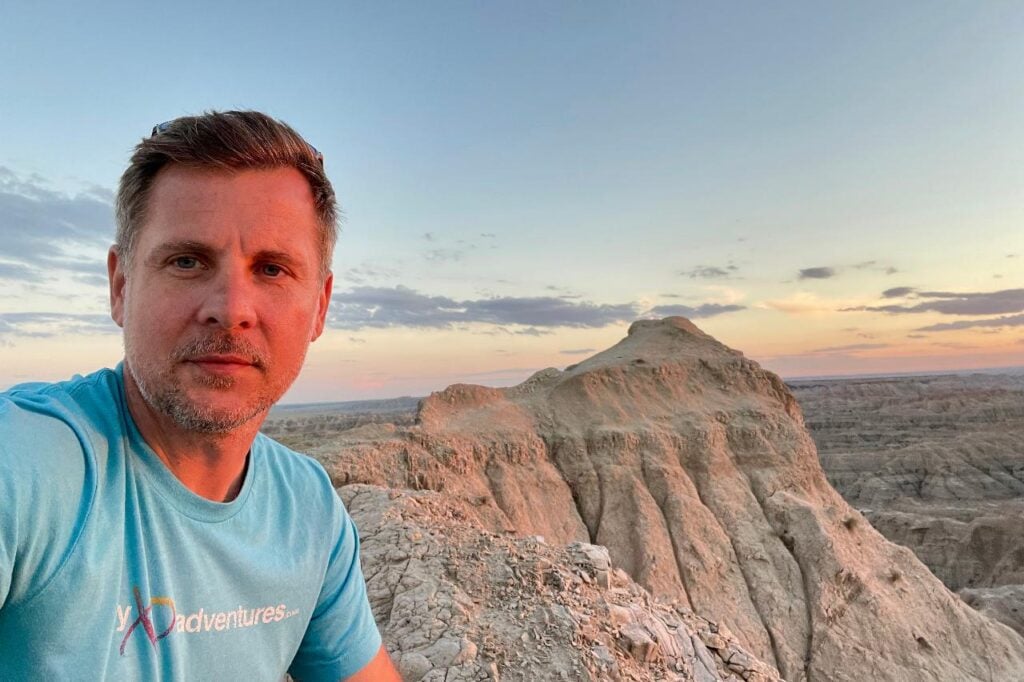
Owner and lead guide at My XO Adventures in Rapid City, South Dakota
Daniel Milks is the owner and lead guide of My XO Adventures, based in Rapid City, South Dakota. He leads private days through the Black Hills and Badlands built around wildlife behavior, geology, local history, and photo worthy stops, with a calm pace that leaves room for real discovery. Each route is shaped around your interests, current conditions, and simple, practical planning so your day feels easy, personal, and genuinely local. My XO Adventures tours include admission fees for the parks, monuments, and memorials on your itinerary. Learn more about Daniel on his bio page.