
What to do on site, how long to plan, museum highlights, and respectful context, all in one place.
If you’re deciding how to fit Crazy Horse into your day, these are the details that help most.
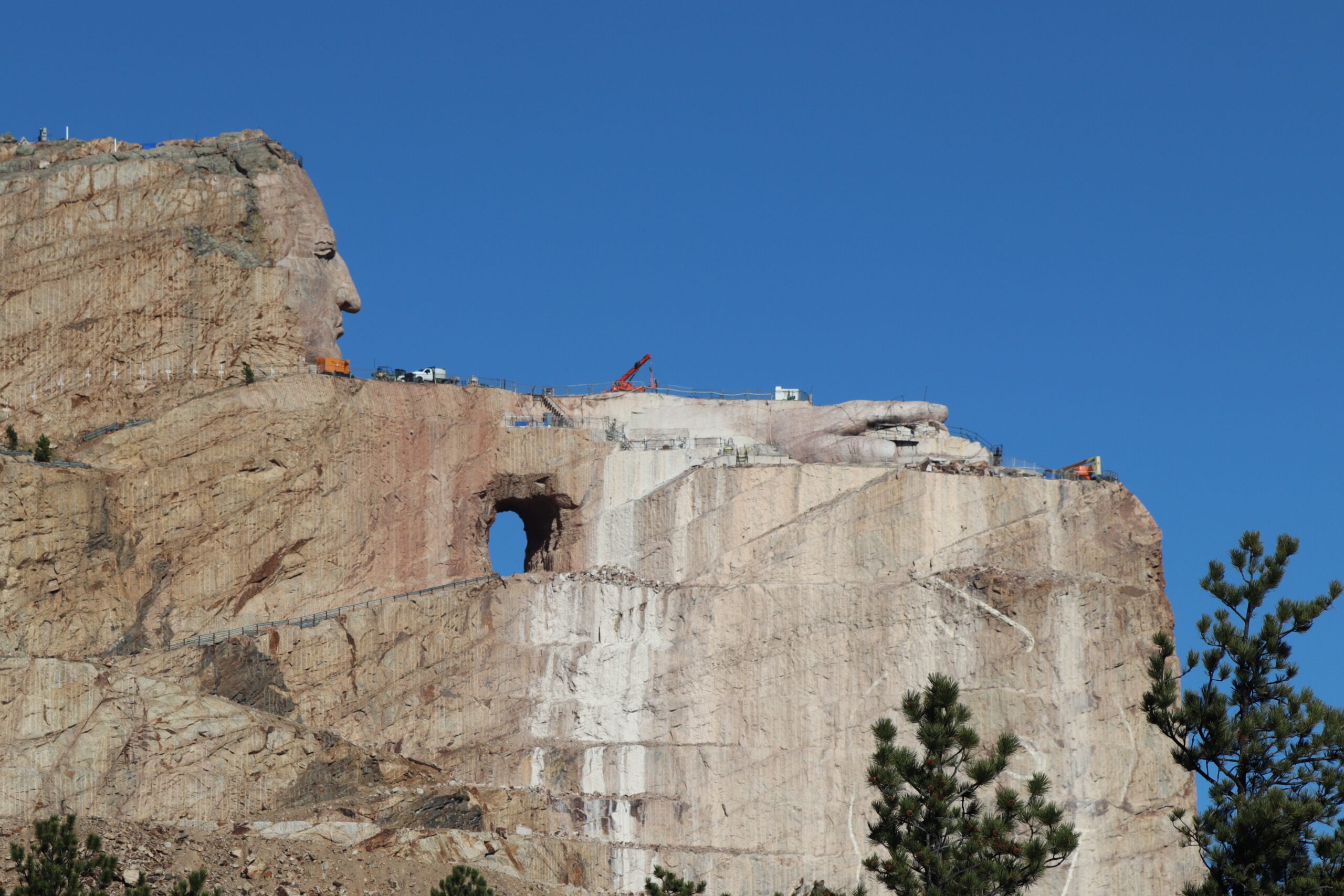
Crazy Horse Memorial is a mountain carving in progress and a cultural campus centered on Native American education, art, and living heritage. The scale is what draws most people in, but the museum spaces and interpretation are what give the visit weight. If you treat it as a quick photo stop, you’ll miss the best part. If you slow down, it becomes one of the most memorable cultural stops in the Black Hills.
You’ll hear people call it the Crazy Horse Monument, and you’ll see that wording online. The official name is Crazy Horse Memorial, and that’s the name most visitors use once they’re familiar with the mission and the on site experience.
A great visit is simple. Start with context indoors, then head outside for the view and photos.
Start here before you do anything else. Daily schedules can include a special program, artist spotlight, or cultural performance, and those moments are easy to miss if you head straight to the film or exhibits. A quick look at what’s happening helps you plan the visit in the right order and catch the most meaningful parts while they’re actually happening.
Once you know the schedule, the film becomes the best foundation. It’s short, easy, and gives you the context that makes everything else on site click. After the film, the exhibits feel more connected, and the view outside feels less like a photo stop and more like a story in progress.
The museum is where the visit gets depth. You’ll find interpretation, artwork, and details that help you understand the memorial’s mission and the scale of the project. It’s also a great place to slow down, reset, and stay comfortable if the weather is windy, hot, or changing fast.
Save this for after you have context. The view lands differently once you understand what you’re looking at and why it matters. Take your time, watch the light shift, and use the landscape for scale in your photos so your images feel like the experience, not just a distant zoom shot.
Some visitors choose paid add ons like bus or van style tours when offered. If this is important to you, check schedules early and build your timing around what’s actually running that day.


Most travelers do best with 2 to 3 hours. That gives you time to see the museum spaces, watch the film, and spend unhurried time at the viewpoint. If you love museums and cultural stops, plan longer. If you’re doing Crazy Horse as part of a packed day, it can be shorter, but it will feel like a quick skim.
If you want meaning, plan at least 2 hours.
If you want a quick look and photos, 45 to 75 minutes can work.
Earlier in the day often offers clearer air and easier photos. Late afternoon can bring warmer light and a calmer feel as some day trippers leave. If your goal is photography, the best time is when the light is angled and soft, not straight overhead.
If your trip is in peak summer, consider going either earlier or later to avoid the busiest middle window. And always plan for wind. Wind is part of the Black Hills experience, and this site can be breezy.


The carving is far away, so zoomed phone photos often look flat. You’ll get better results by telling a bigger story. For better photos, take one of the optional tours to the front of the mountain, or the top!
Try these instead
Include people for scale. It makes the distance feel intentional, not disappointing.
Frame the carving with the Black Hills landscape. Pine edges, sky, and ridgelines help your photo feel like a place.
Shoot wide, then add one tight shot. A wide image plus a closer crop tells a more complete story than ten zoomed photos.
Use the museum and campus details. Signs, artwork, exhibits, and texture shots often become favorite photos because they show the experience, not just the view.
If you want a cleaner photo, look for moments when clouds soften the light. It’s one of the easiest ways to improve the scene.
This site can spark strong opinions, and that’s normal. Many visitors experience it as inspiring and educational. Others have concerns about representation and the idea of carving a mountain. The best way to approach the visit is with curiosity and respect.
If you want the memorial to feel meaningful, spend time in the museum spaces, read the interpretation, and let the story be more than a photo. Listen more than you assume. You’ll get far more out of the stop.
Crazy Horse Memorial works best as part of a well planned Black Hills loop. Here are a few smart ways to combine it.
Pair Crazy Horse with Mount Rushmore and a scenic drive like Iron Mountain Road.
Pair Crazy Horse with Hill City galleries, local studios, and a slower pace.
Want help choosing the best route for your dates and pace? Send a message and we’ll point you to the best fit.
If you’d like more background, this section shares the story of the memorial, what’s happening today, and why people experience it in different ways.
Crazy Horse Memorial is one of the most ambitious carving projects in the world, and it moves at a pace that can surprise visitors. Part of that is the scale, and part of it is how the memorial is funded. The project is supported through admission and private donations, not taxpayer funding, so progress depends on steady support and long term planning rather than a public construction timeline.
There is no official completion date. That uncertainty can be frustrating for some visitors and completely inspiring for others. Either way, it helps to visit with the right expectation. You are not arriving to see a finished monument. You are arriving to experience a living project, a museum campus, and a story that is still unfolding.


Crazy Horse Memorial often hosts programs that bring Native culture into the present tense. Depending on the season, you may find storytelling, performances, demonstrations, special exhibits, and community events. If you care about cultural programming, building your timing around these moments can turn a stop into a real experience.
There is also on site food, including Laughing Water Restaurant, which is a practical way to take a break and keep your day flowing without leaving the campus.
The memorial began with a request from Lakota leader Henry Standing Bear, who wanted the world to know that Native people had heroes too. Sculptor Korczak Ziolkowski took on the project and began work in 1948. He worked on the mountain for decades and continued until his death in 1982. After that, the project was carried forward by his wife Ruth and their family, along with many people who have supported the work over the years.
If you spend time in the visitor center, you will learn a lot about the building of the memorial, the people behind it, and the practical challenges of carving a mountain at this scale. Many visitors find that side of the story fascinating. Others arrive hoping for more focus on Crazy Horse himself. Both reactions are understandable, and it is part of the ongoing conversation around the site.
Crazy Horse Memorial can bring up strong feelings. Some visitors experience the memorial as motivating and meaningful, especially because it supports educational and cultural efforts on site. Others feel uneasy about carving a mountain in a region that holds deep significance, or they question how best to honor a leader known for humility and privacy.
There is no single correct reaction. A respectful visit starts with curiosity, patience, and a willingness to learn. If you want the memorial to feel deeper than a photo stop, spend time with the museum interpretation, listen to the voices featured in programming, and let the experience be more than the view from the terrace.
Crazy Horse was an Oglala Lakota leader who fought to protect his people’s way of life during a time of intense pressure and upheaval. He is often remembered as courageous, private, and deeply committed to his community. Many Native people admire him for his leadership and sacrifice, and many visitors want to understand him beyond the simplified versions of history they learned in school.
Because he was private and because historical records are complicated, details about his life are sometimes debated or presented differently across sources. That reality can be frustrating, but it also invites a better kind of learning. Less certainty, more listening.
Nature and human creations both shape the Black Hills, and this site is one of the places where that tension is easiest to feel. If you arrive expecting a single, simple takeaway, you might leave unsettled. If you arrive ready to learn, you can leave with a richer understanding of the memorial, the surrounding conversations, and the living cultures represented in the museum and programs.
Crazy Horse Monument is a unique cultural and artistic site unlike typical roadside attractions. It honors Indigenous heritage and commemorates Lakota warrior Crazy Horse. This FAQ helps you understand what to expect, how to plan your visit, and how to approach the experience respectfully and practically.
Crazy Horse Monument honors the legacy of the Lakota leader Crazy Horse and celebrates Native American culture. It’s not just a sculpture — it’s intended as a living tribute that reflects history, heritage, and community values.
Most visitors spend 1.5–3 hours exploring the visitor center, museum galleries, and grounds. If you plan to dine, browse the gift shop, and take photos, allow extra time.
Yes, the monument area has an admission fee collected at the entrance. Fees contribute to preservation, operations, and educational programming.
Guided programs and presentations are often offered, especially during peak seasons. Check hours and offerings before you go so you can plan around them.
Yes — photography is welcome. When other guests are present or during cultural events, be respectful and mindful of those around you.
The site includes a visitor center with museum exhibits, restrooms, dining options, and a gift store. Facilities may vary by season, so check current hours.
Yes. Many families enjoy the cultural exhibitions and scale of the sculpture. Interactive displays and outdoor spaces make it engaging for a range of ages.
There are designated walkways and viewpoints that offer scenic perspectives of the monument and surrounding landscape, but plans for expanded trails or lookout points are evolving over time.