


The Black Hills Fall Season arrives softly at first, with just a hint of coolness in the early hours and a shift in the angle of light across the prairies. The heat of summer begins to fade, leaving behind a landscape that slowly folds itself into warm golds, soft browns, and delicate flashes of crimson. The prairies take on a gentle glow, and the hills seem to breathe differently as the season settles in. It is a time of change, reflection, and quiet beauty in a place that carries countless stories.
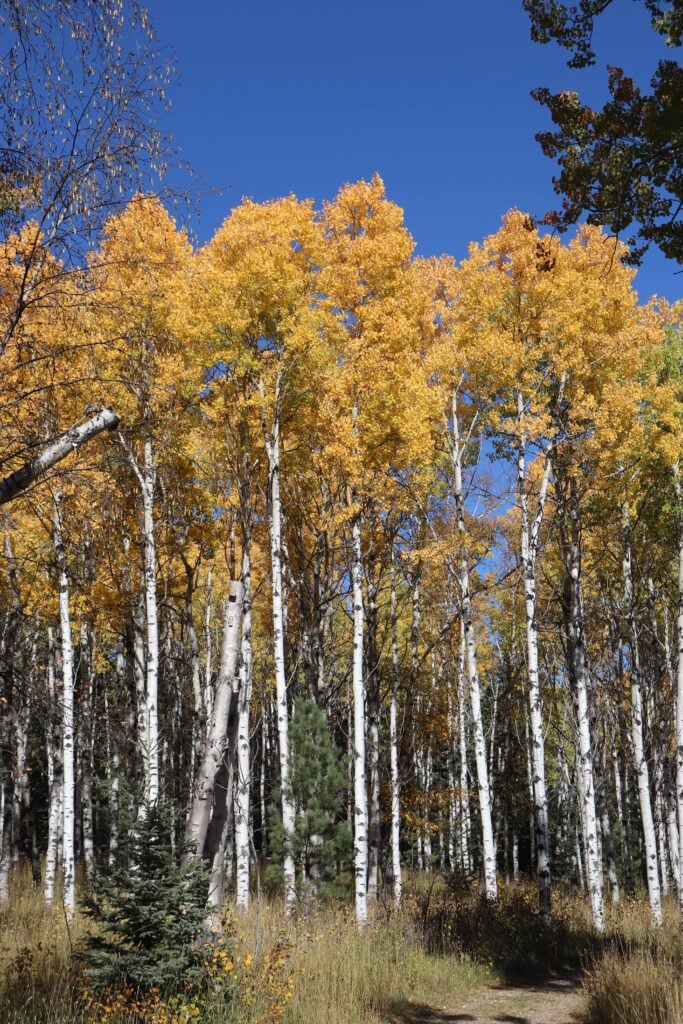
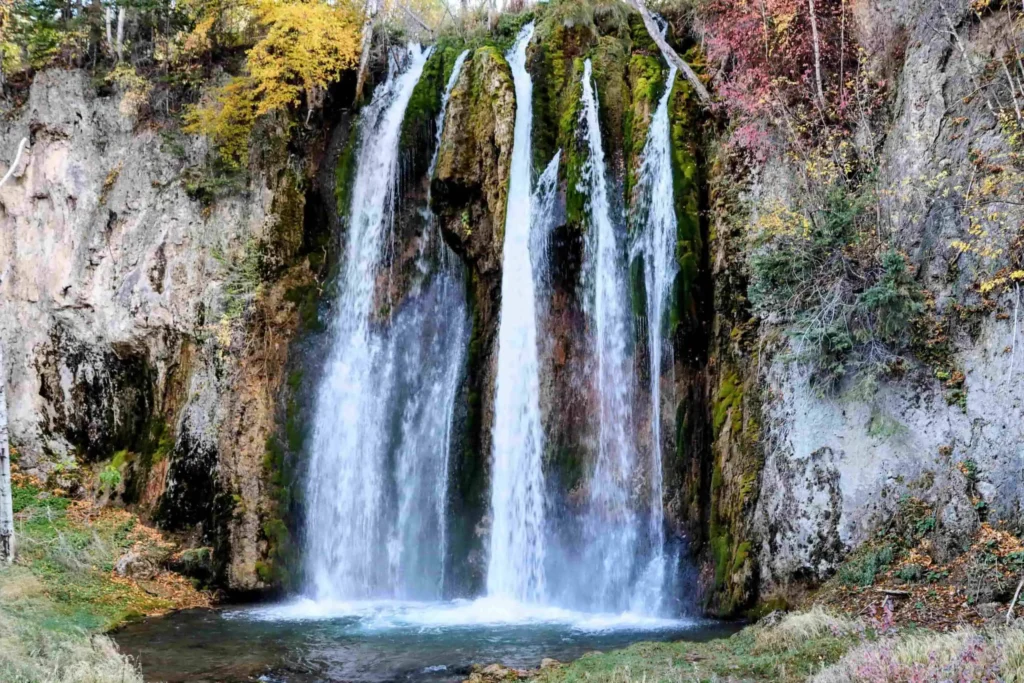
In the Black Hills Fall Season, color becomes a language all its own. Grasses turn golden and sway together across the open spaces. Sunflowers bow their heads, their seeds feeding birds who are preparing for colder days. Wildflowers take their final stand before frost tucks them in. Quaking aspens begin their transformation in pockets of the forest, sparkling with yellow leaves that flutter like small coins catching the light. Watching them turn always brings a mix of awe and nostalgia. They remind us that change is constant and that each season is part of a larger rhythm that never stops moving.
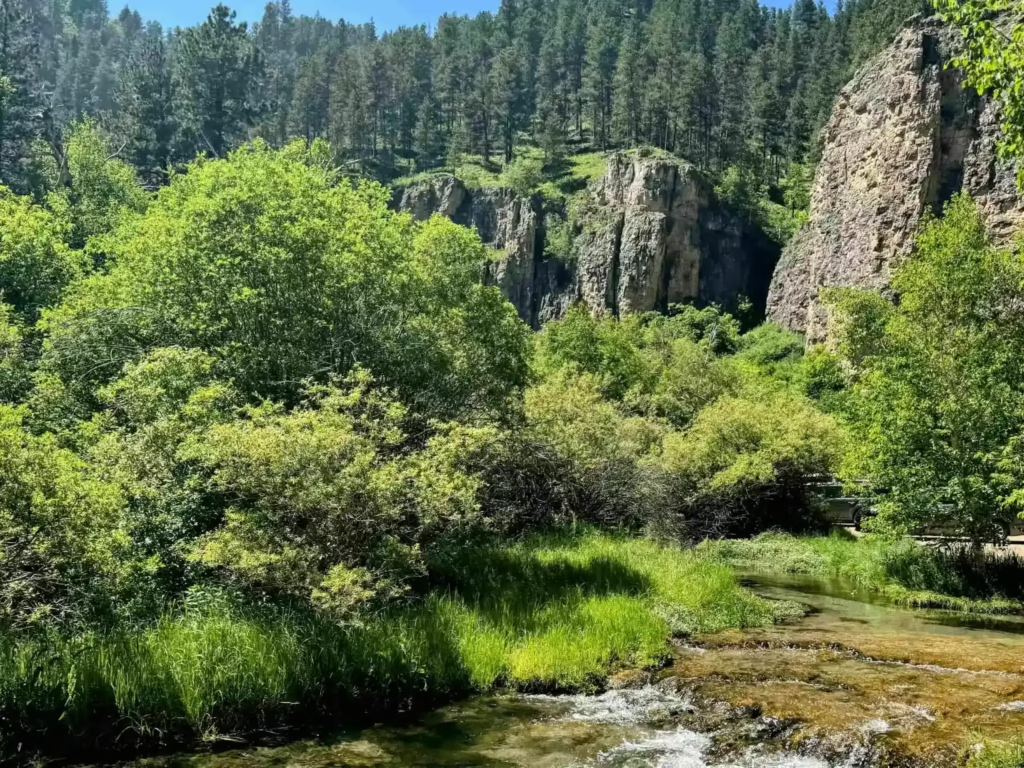
This morning, I headed toward the southern portion of the Black Hills National Forest and into Custer State Park. These areas feel especially alive right now. The air carries a crispness that hints at the coming winter season, yet the warmth of autumn afternoons still lingers long enough to make each walk or drive a pleasure. Throughout the summer, I have had the privilege of guiding guests through these lands, sharing bits of geology, natural history, wildlife behavior, Indigenous knowledge, and the rich human stories connected to this region. The Black Hills Fall Season brings all of those layers into sharper focus. It is a time when the hills feel both grounded and renewed.
The summer months were full of long days, warm nights, and the steady pace of visitors eager to learn about these landscapes. Standing in the Black Hills Fall Season now, the pace shifts. The land quiets. The animals begin to move differently. Elk bugle across meadows as the rut starts. Turkeys gather in flocks. Bison move in slow, thoughtful lines. Chipmunks scurry with intensity, storing seeds for the cold months ahead. The forest sounds different, too. The wind carries a deeper tone as it moves through thinning leaves. Small details that are easy to miss in summer become much more visible in autumn.
People often think of fall foliage in places like New England, but the Black Hills Fall Season is its own kind of masterpiece. The hillsides mix evergreens with splashes of yellow from aspen, gold from birch, and soft orange from chokecherry shrubs. The contrast between dark Ponderosa pines and bright autumn color creates a patchwork that feels natural, ancient, and comforting. Watching sunlight move across these changing tones throughout the day is one of the true pleasures of autumn here.
As I walked this morning, I noticed how the small things often hold the most beauty. A single fallen leaf with veins like a painted map. A patch of frost melting into droplets that cling to blades of grass. The sound of a distant creek that stayed hidden all summer behind thick vegetation but now sings freely as plants thin out. The Black Hills Fall Season encourages a slower gaze. It invites travelers and locals alike to pause and look more closely.
October 15 has always marked a turning point for me. It signals the close of a busy season of guiding and the beginning of a quieter period that brings time for planning and dreaming. Each year, as the Black Hills Fall Season settles in, I find myself reflecting on the months behind me and imagining the months ahead. Wishes that felt far off in summer start to take shape in autumn. Plans simmer, possibilities grow, and new chapters begin to form in the back of my mind. Something about the shift in the land encourages a change inside the heart as well.
I think this is why so many people love visiting during the Black Hills Fall Season. The weather is pleasant. Crowds thin out. Wildlife is active. The landscape feels both settled and alive. The sense of transition carries a quiet energy that makes even a simple walk feel meaningful. You can stand at the edge of a meadow and feel connected to everything around you. You can breathe in the cool air and sense how many stories the hills continue to hold.
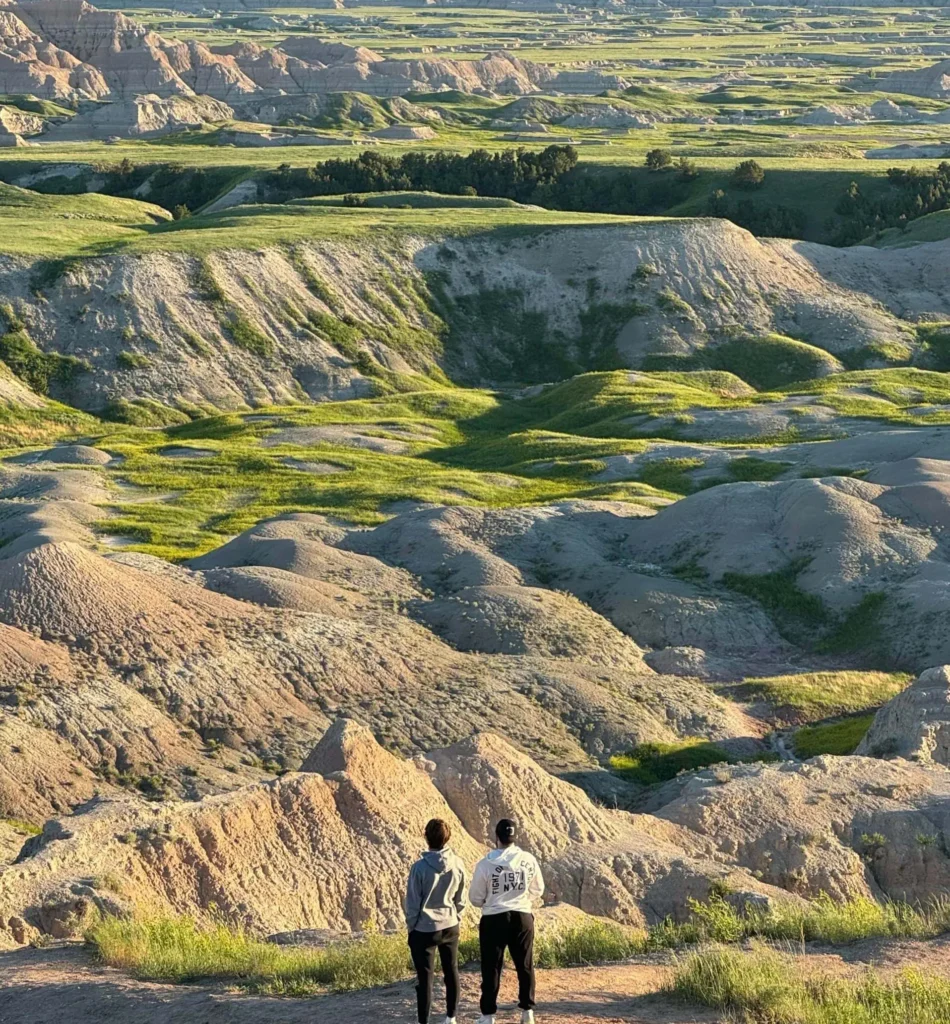
The Badlands, just east of the Black Hills, add another layer to this seasonal story. While they are harsher and more exposed, the Black Hills Fall Season transforms that rugged terrain too. Shadows deepen in the canyons. Colors shift with the low sun. Animals move in search of food. The two regions, though very different, share a rhythm that ties them together in autumn. Visiting both on the same day gives you a remarkable contrast. One is soft with forest and meadow, the other carved and dramatic, yet the same golden light unites them.
This is also the time of year when many people plan journeys for the upcoming spring and summer. I always encourage visitors to come during the Black Hills Fall Season if they can, because the land reveals its personality in a gentler, more intimate way. If you have wished for a quieter time to reconnect with nature or to explore the hills at a slower pace, this is the season for it. You might find that the wishes you make in autumn, surrounded by golden light, have a way of coming true.
A few years ago, I began studying the plants of the region more closely, using seasonal cycles as my guide. Autumn in the Black Hills is an ideal time for this, because the plant world shifts in ways that invite understanding. Seedheads form intricate patterns. Leaves display their final colors. Berries ripen fully. The ecological story of each plant becomes clear as the year draws toward winter. I often carry “Plants of the Black Hills and Bear Lodge Mountains,” a book I recommend. If you enjoy learning about nature in depth, it is worth picking up, either online or from Prairie Edge in downtown Rapid City.
Every season in the Black Hills has something memorable to offer, but the Black Hills Fall Season carries a kind of wisdom. It reminds us that change is natural, that growth continues even as plants fade, and that beauty can be found in quiet transitions. The land teaches patience. It teaches awareness. It teaches gratitude. When you travel through these hills in autumn, you feel those lessons almost instantly.
If you have been considering a visit, now is the time to put those thoughts into motion. Plan a walk through Custer State Park. Visit the southern Black Hills. Stand among the aspens. Listen to the wind. Feel the gentle cooling of the air. The Black Hills Fall Season is waiting, and it has a way of leaving lasting impressions on everyone who steps into it.