
Table of Contents
Maximizing Your Sunset Experience at Badlands National Park
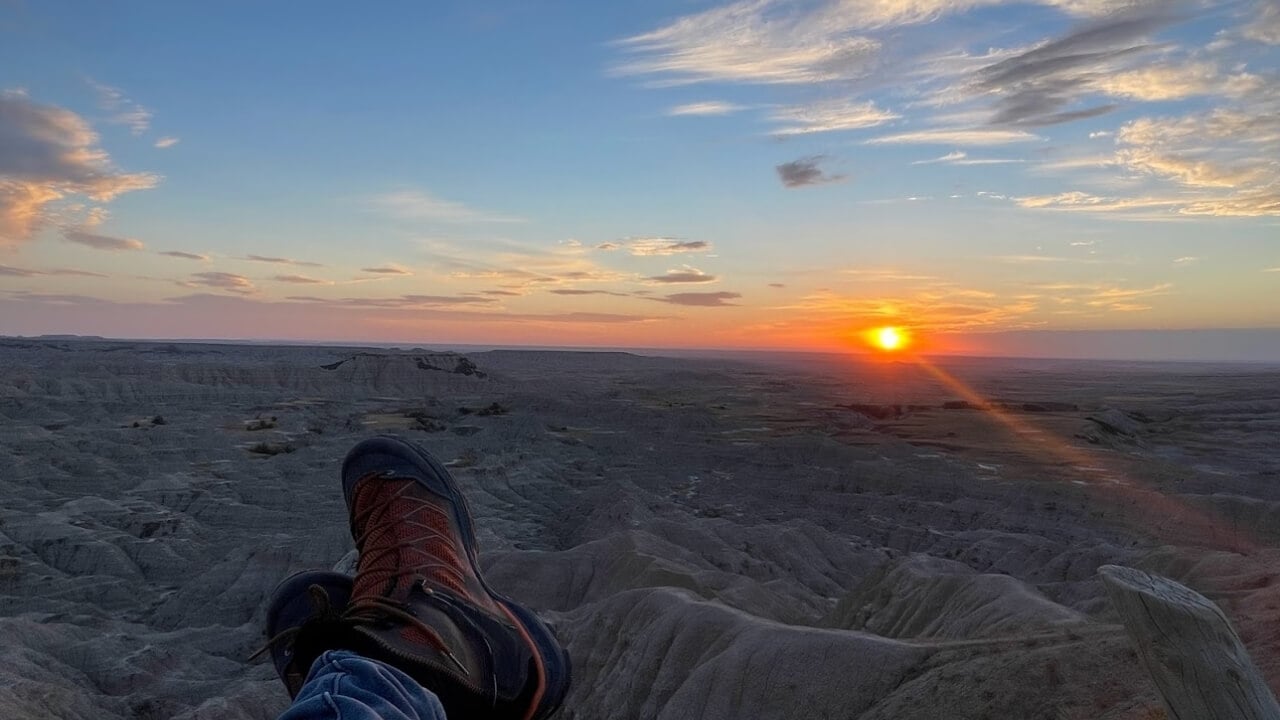
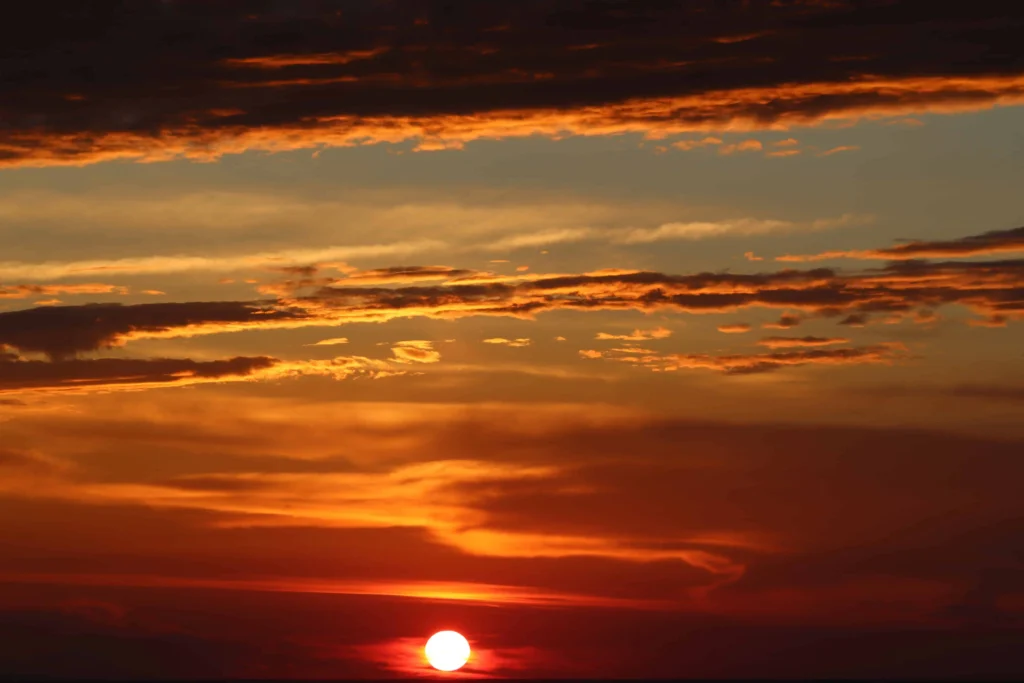
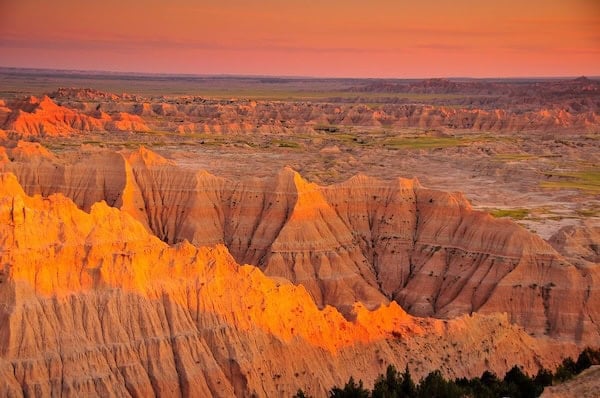
Sunset is one of the most memorable times to experience Badlands National Park. As the sun lowers toward the horizon, the rugged ridges and layered formations begin to glow with warm tones that shift from gold to deep orange and soft purple. Shadows stretch across the valleys, creating dramatic contrast that makes the landscape feel even more sculpted and alive.
Timing plays a major role in this experience. Many visitors arrive right as the sun reaches the horizon, but the best part of sunset often begins well before that moment. The hour leading up to sunset is known as the golden hour, when the sunlight becomes softer and warmer. During this time the formations begin to reveal their textures and colors in ways that are difficult to see during the middle of the day.
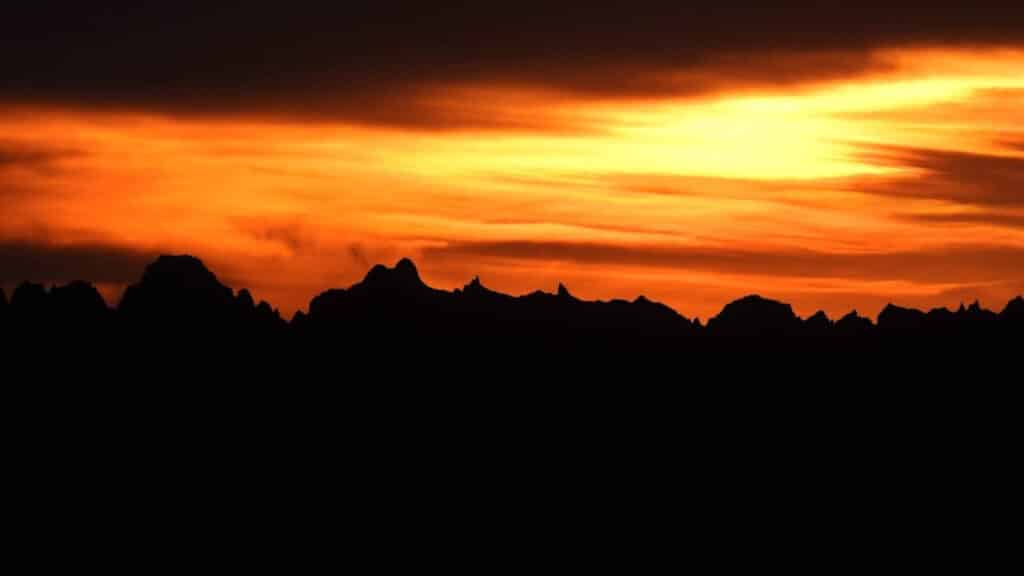
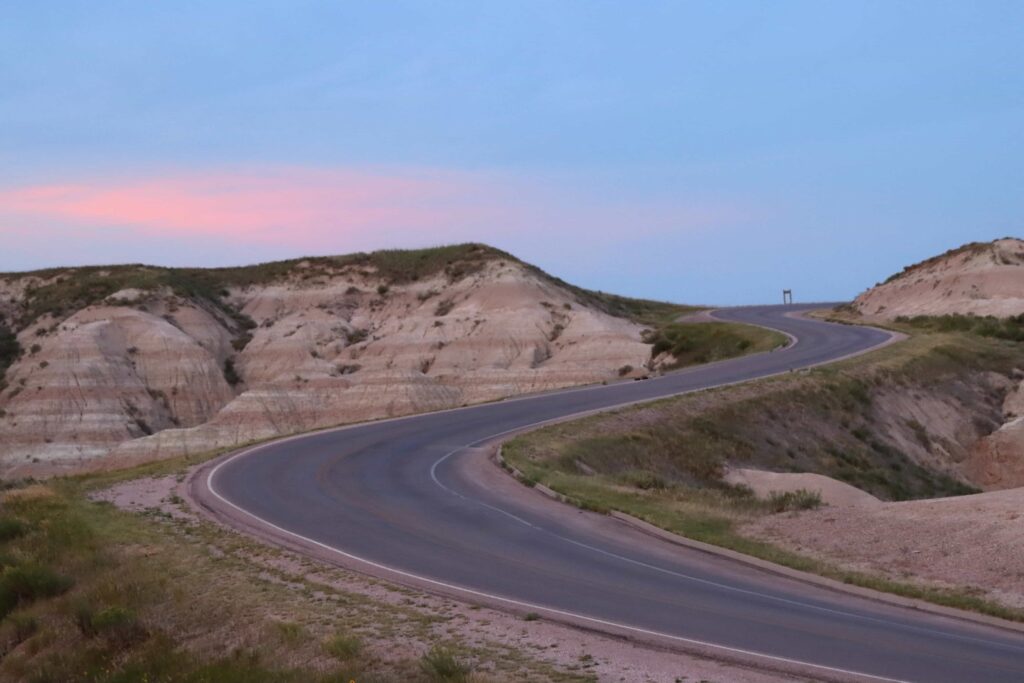
The period just after sunset can be just as beautiful. As the sun dips below the horizon, the sky often fills with subtle colors and fading light that create a calm, peaceful atmosphere across the Badlands. Visitors who stay a little longer often discover that some of the most memorable moments happen after the sun disappears.
Choosing the right location also makes a difference. Many overlooks along the Badlands Loop Road offer wide views of the western horizon, allowing visitors to watch the light spread across miles of ridges and valleys.
Best Places to Watch Sunset in Badlands National Park
Not every viewpoint in the park faces the right direction for sunset. Some overlooks look east across the formations, which makes them excellent for sunrise but less ideal in the evening. Choosing an overlook that faces west or southwest will usually provide the best sunset views.
Pinnacles Overlook is widely considered one of the best places to watch sunset in Badlands National Park. Located near the western end of the Badlands Loop Road, it offers expansive views across the Sage Creek Wilderness. The overlook sits at a higher elevation and provides a sweeping perspective of the surrounding prairie and rock formations.
Conata Basin Overlook is another excellent location. From here visitors can watch the evening light move across the broad basin and illuminate the ridges in the distance. The open view makes it a peaceful place to sit quietly and watch the sky change color.
Other good sunset viewpoints include areas near Bigfoot Pass Picnic Area and portions of the Castle Trail, where visitors can step away from the roadside overlooks and experience the landscape on foot.
Arriving early is always helpful, especially during summer travel months when many visitors gather at the most popular overlooks.
Why Badlands Sunsets Look So Dramatic
The dramatic colors seen during sunset in the Badlands are closely tied to the park’s geology.
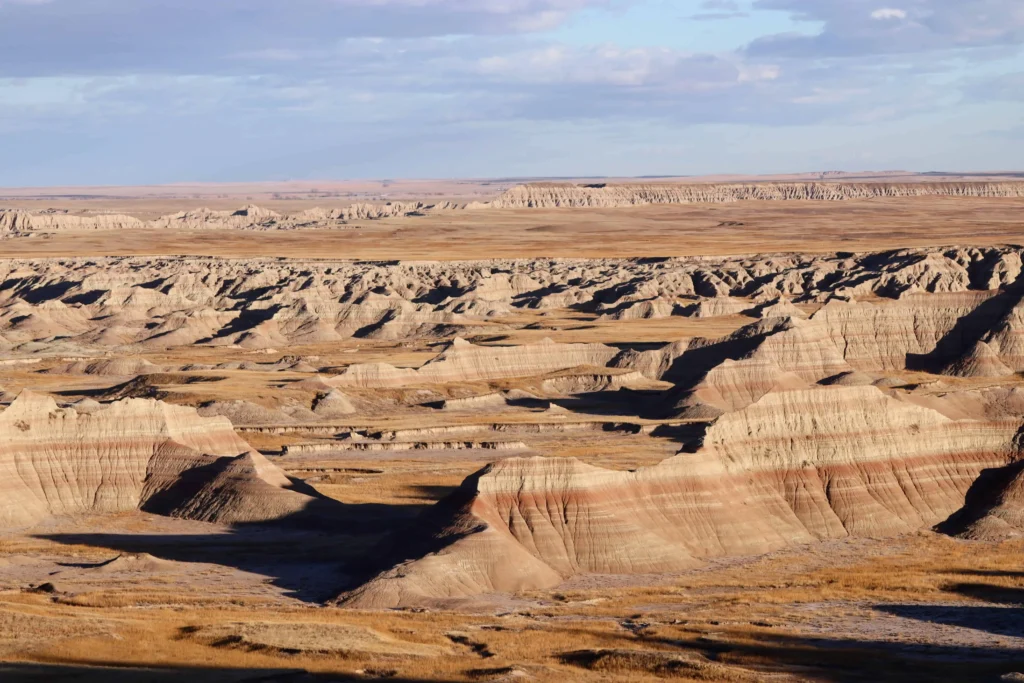
The formations that make up the Badlands were created from layers of sediment deposited millions of years ago by ancient rivers, seas, and wind carried sediments. Over time erosion carved these layers into the buttes, ridges, and pinnacles that define the landscape today.
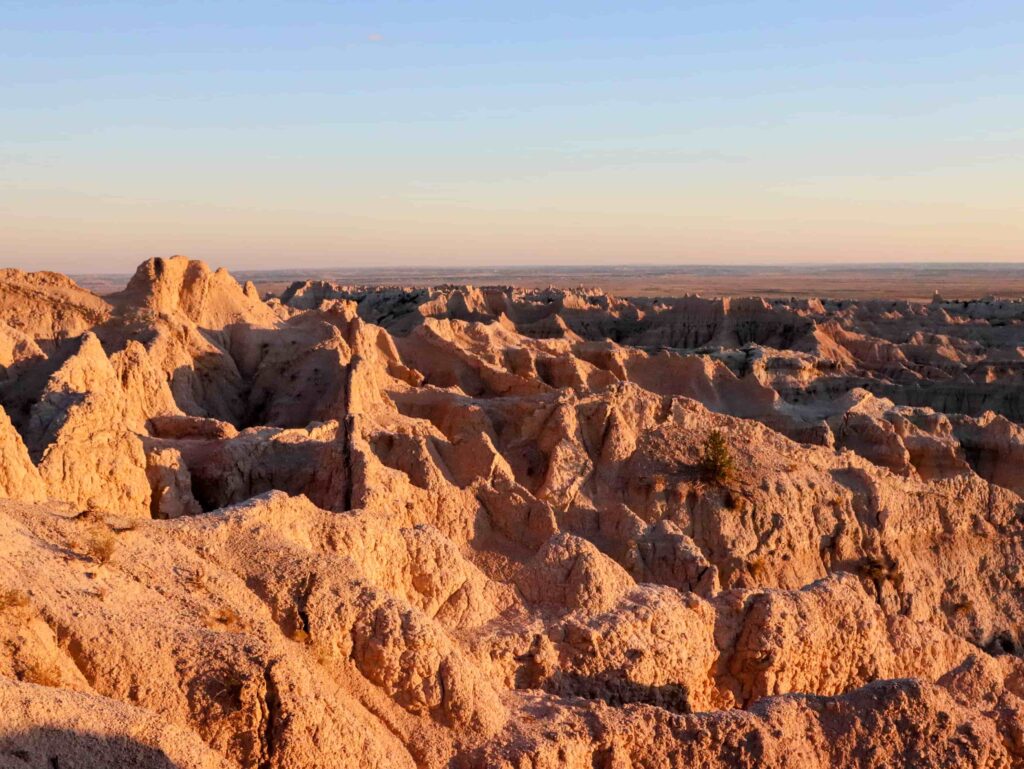
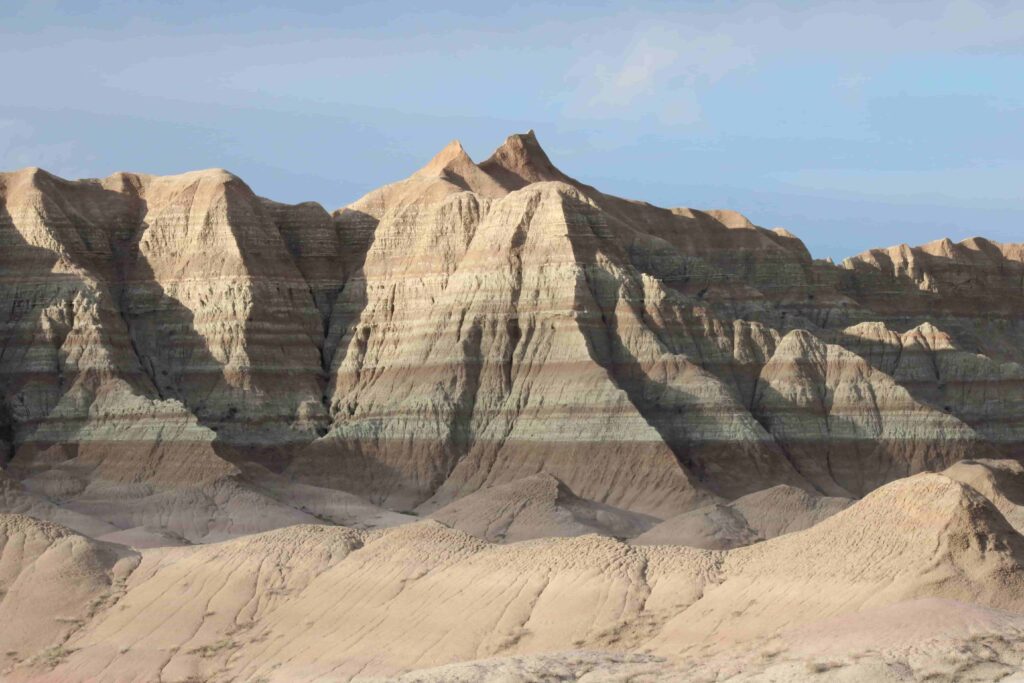
Each layer contains different minerals and sediments, which create variations in color throughout the formations. Some layers appear pale yellow or tan, while others show deeper reds and browns. When the low angle of sunset light strikes these formations, the colors become more pronounced and shadows emphasize the shapes of the ridges and valleys.
Because the terrain is so textured, even small changes in the angle of the sun can dramatically alter the appearance of the landscape from one minute to the next.
How the Light Changes Across the Landscape
One of the most fascinating parts of watching sunset in the Badlands is seeing how quickly the landscape changes.
As the sun lowers toward the horizon, the ridges begin to cast longer shadows across the valleys. These shadows highlight the textures and patterns carved into the formations by millions of years of erosion.
The sedimentary layers within the formations reflect different tones of light, which is why visitors often see shades of gold, red, and soft purple appear across the landscape during sunset.
Because the Badlands are made up of repeating ridges and valleys, the light seems to move across the formations in waves. One ridge glows while another falls into shadow, creating a constantly changing scene.
This shifting light is one reason many visitors stay well past sunset. Some of the most beautiful moments happen during the quiet transition from daylight into twilight.
Wildlife Activity During Sunset
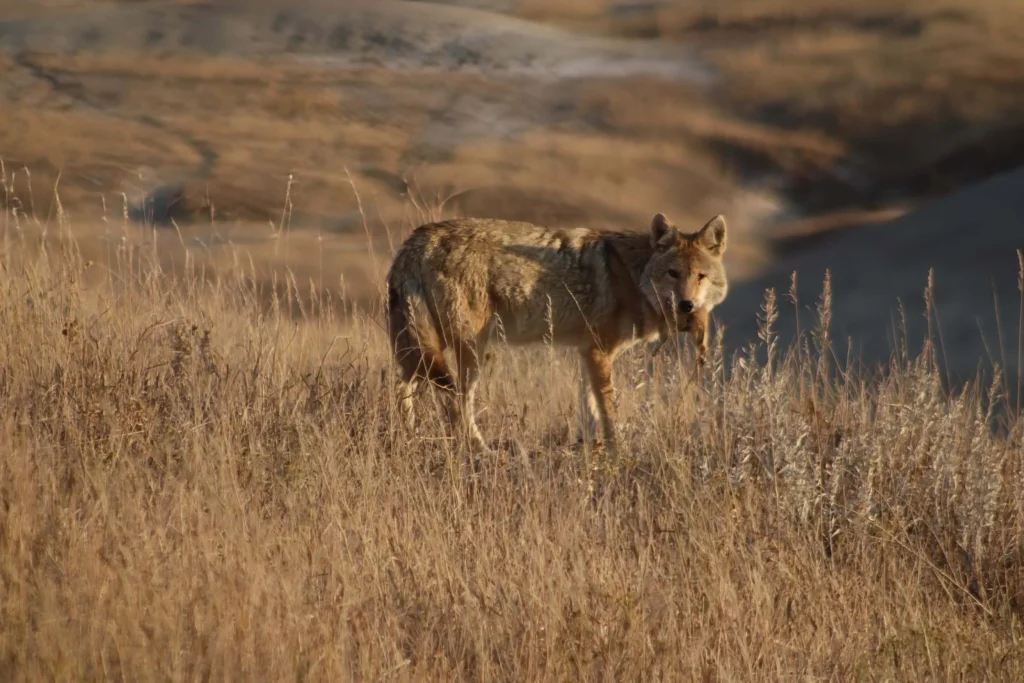
Sunset is also one of the best times of day to see wildlife in Badlands National Park.
During the hotter hours of the day many animals rest or remain less active. As the temperature begins to cool in the evening, wildlife often becomes more active again.
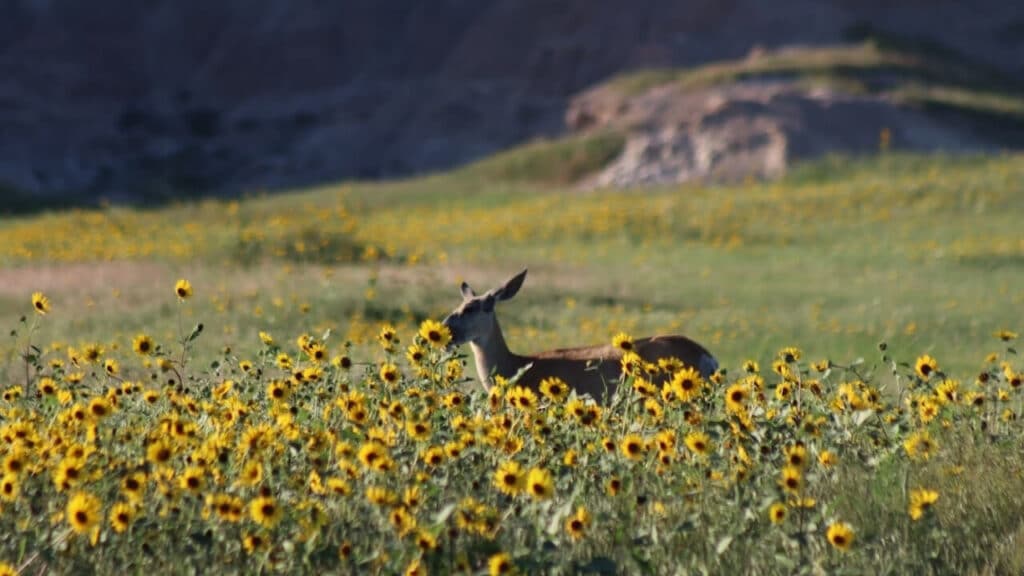
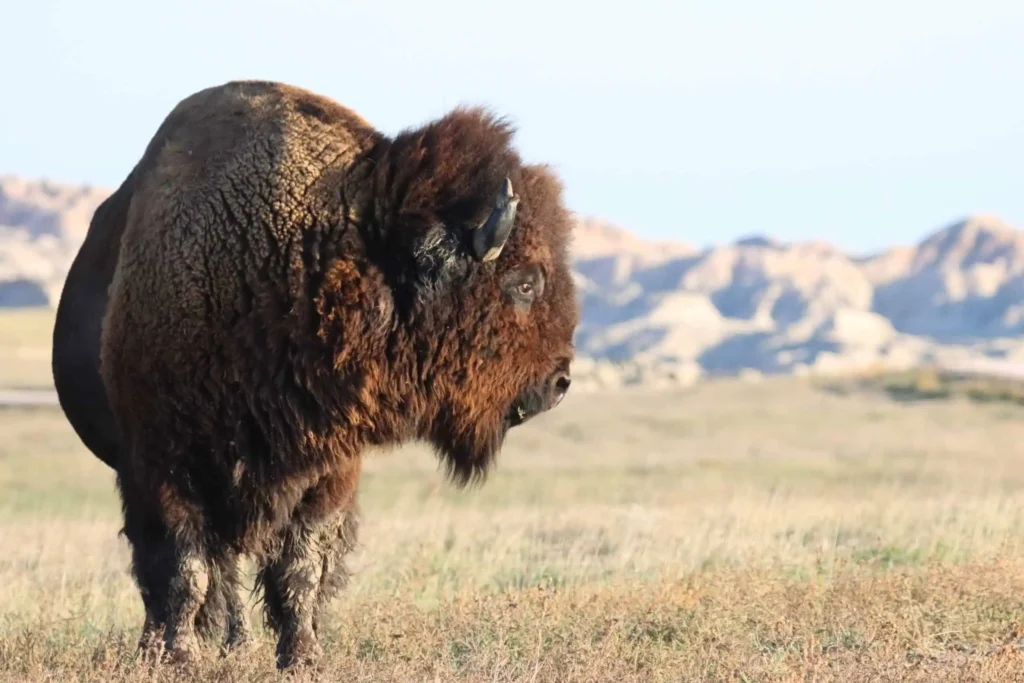
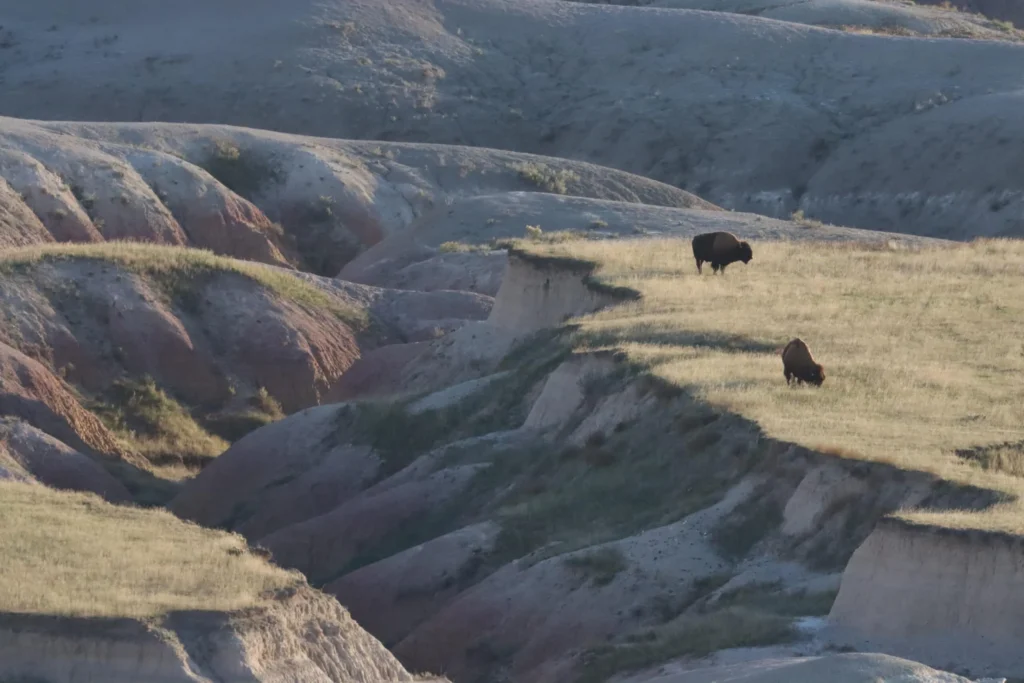
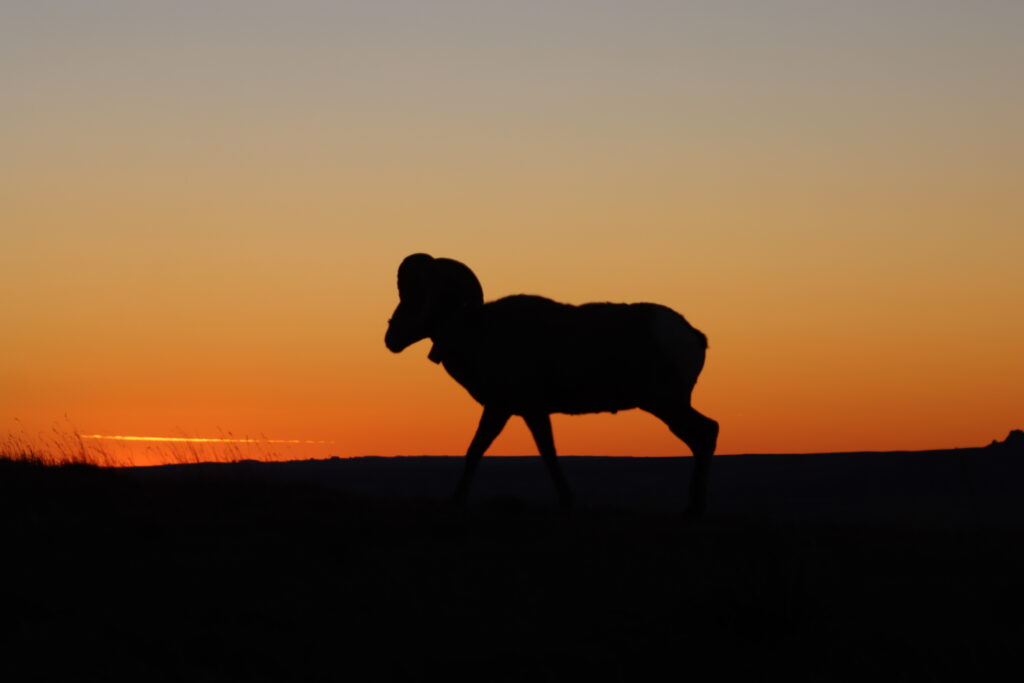
Visitors frequently spot bison grazing on the prairie, bighorn sheep moving along the rocky slopes, and pronghorn antelope crossing the open grasslands in the late afternoon and evening. The Sage Creek area and the western sections of the park are especially well known for wildlife sightings during this time of day.
Bird activity can increase as well. Raptors may be seen gliding above the formations while smaller birds become more active in the cooler evening air.
These moments often create memorable wildlife encounters for visitors who spend time quietly observing the landscape as sunset approaches.
Best Time of Year for a Badlands Sunset
Badlands sunsets can be beautiful throughout the year, but each season offers a slightly different experience.
Spring and early summer often bring dramatic skies as weather systems move across the northern Great Plains. Clouds can reflect the colors of the setting sun, creating vibrant displays across the horizon.
Summer sunsets arrive later in the evening and can last longer as the sky slowly darkens. Thunderstorms that pass through the region sometimes produce especially vivid sunsets once the clouds begin to break apart.
Autumn sunsets tend to feel quieter and more peaceful. Cooler temperatures and fewer visitors make it easier to enjoy the overlooks without large crowds.
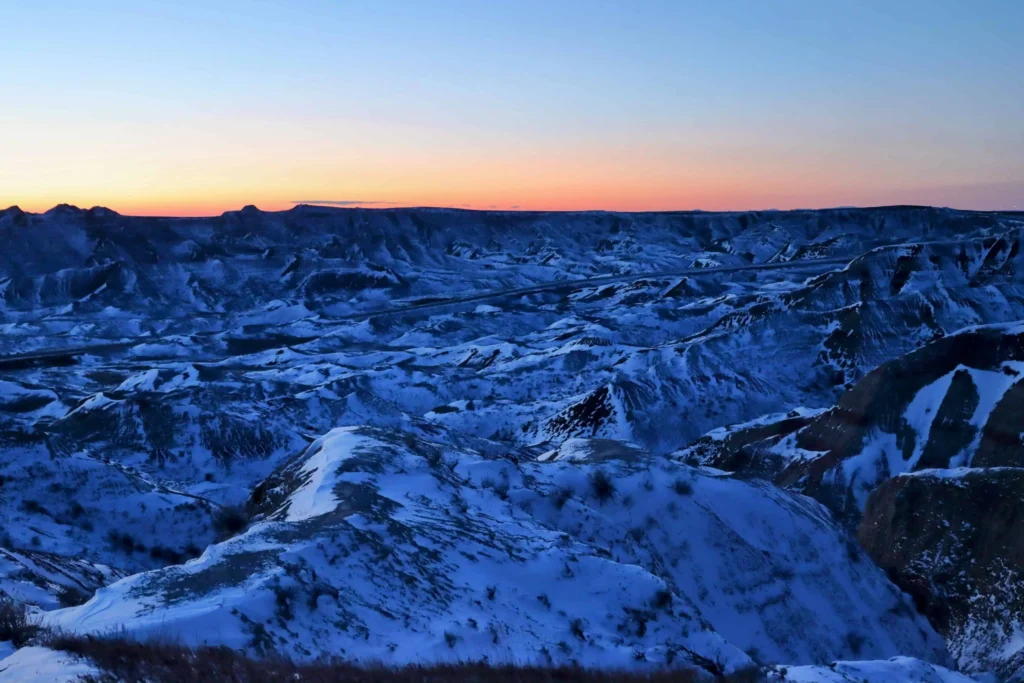
Winter sunsets arrive earlier in the day and can create striking contrasts between snow covered prairie and the colorful rock formations of the Badlands.
Photography Tips for Capturing a Badlands Sunset
Photographers often find sunset to be the best time of day to capture the colors and textures of the Badlands.
Arriving early allows you to watch how the light moves across the formations and choose the best composition before the most dramatic moments begin. The light during the golden hour is softer and more directional, which helps reveal the depth of the landscape.
Including multiple ridgelines in a photograph can create a strong sense of scale and distance. The repeating layers of the Badlands formations naturally lend themselves to this type of composition.
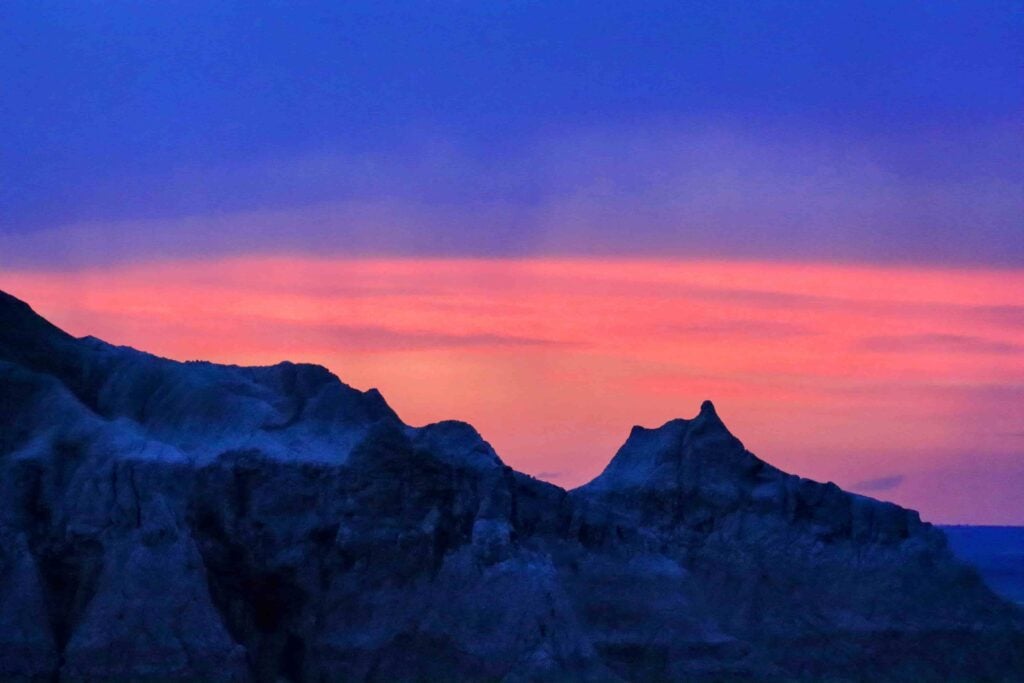
Many photographers also stay after the sun sets. The soft fading light of twilight often produces gentle color tones across the sky and landscape.
While photography is rewarding, it is equally important to take a moment to simply enjoy the view. Watching the colors shift across the horizon can be one of the most peaceful experiences in the park. You might find our Visitor Learning Center on Photography Tips useful for planning your adventure.
Golden Hour and Blue Hour in the Badlands
Photographers often talk about the golden hour and blue hour when describing the best lighting conditions of the day.
The golden hour occurs during the period leading up to sunset, when the sun sits lower in the sky and produces softer, warmer light. This light enhances the colors of the Badlands formations and reveals the textures of the ridges and valleys.
Wildlife activity often increases during this time as temperatures begin to cool. Visitors may see bison grazing on the prairie or bighorn sheep moving along the slopes.
After the sun dips below the horizon, the blue hour begins. The sky takes on cooler tones while the landscape gradually darkens. The quiet atmosphere during this time often becomes one of the most peaceful moments in the park.
Visitors who stay through both of these periods experience the full transition from daylight into evening.
What to Bring for a Badlands Sunset
Sunset in the Badlands can feel peaceful and quiet, but a little preparation can make the experience much more comfortable.
Bring water and light snacks, especially during the warmer months when the dry prairie air can dehydrate visitors quickly. Comfortable footwear is helpful if you plan to walk along trails or explore areas away from the roadside overlooks.
A camera or smartphone is useful for capturing the changing light across the formations. Photographers often bring a tripod if they plan to stay after sunset and experiment with longer exposures during twilight.
Many visitors also bring binoculars, which can make wildlife sightings even more rewarding during the evening hours.
Even in summer, temperatures can cool quickly after sunset, so having an extra layer available is always a good idea.
Common Mistakes Visitors Make When Watching Sunset
One of the most common mistakes visitors make is arriving too late.
Sunset is not a single moment when the sun touches the horizon. It is a gradual experience that unfolds over the course of an hour or more. Arriving early allows visitors to see how the light slowly transforms the landscape.
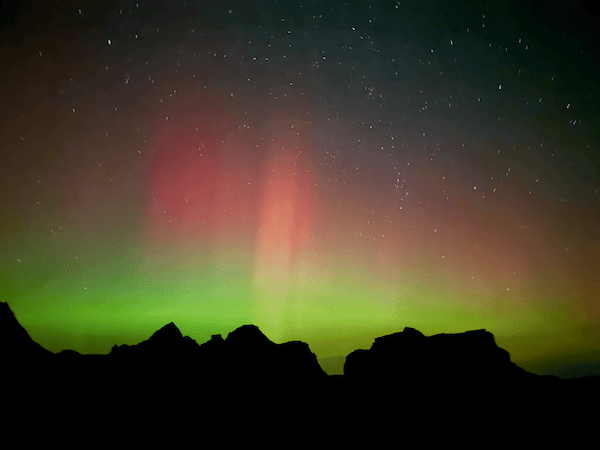
Another mistake is leaving immediately after the sun sets. Some of the most beautiful colors often appear during the twilight period that follows. Even better, the night sky in the Badlands is one of the darkest in the United States. It’s a little trickier for photographers, but well worth the wait.
Crowding can also affect the experience. Popular overlooks may fill quickly during peak travel months. Arriving earlier in the evening allows visitors to choose a comfortable viewing spot and enjoy the scenery without feeling rushed.
With a little patience and preparation, sunset in the Badlands becomes far more than a quick photo opportunity.
Quick Sunset Planning Checklist
Planning to watch sunset in Badlands National Park? Keep these tips in mind:
-
Check the daily sunset time before entering the park.
-
Arrive at your chosen overlook 90 minutes before sunset.
-
Consider viewpoints like Pinnacles Overlook or Conata Basin Overlook for wide western views.
-
Stay 60 minutes after sunset to see the colors deepen during twilight.
-
Bring layers, as temperatures often drop quickly after sunset.
-
Watch for wildlife movement, which often increases in the evening hours.
-
Bring a camera or binoculars, but also take time to simply enjoy the view.
What Makes a Guided Sunset Tour Different
Many visitors explore the Badlands on their own, but experiencing sunset with a knowledgeable guide can reveal details that are easy to miss.
A local guide can help identify wildlife, explain the geology that created the landscape, and position you at the right viewpoint as the light changes across the formations. Because the scenery evolves quickly during sunset, timing and location often make the difference between an average view and a truly memorable experience.
My XO Adventures introduced several guided experiences that were designed specifically around these moments. The Badlands Wildlife Expedition, Badlands Sunset and Golden Hour Tour, and Badlands Sunset and Night Sky Tour focus on the hours when wildlife becomes active and the landscape is at its most dramatic.
Many visitors find that exploring the park with a guide allows them to slow down, learn more about the land, and experience the Badlands in a more meaningful way.
Badlands Sunset FAQ
What time is sunset in Badlands National Park?
Sunset times vary throughout the year. In summer the sun may set after 8:30 PM, while winter sunsets can occur before 5 PM.
Where is the best place to watch sunset in Badlands National Park?
Pinnacles Overlook is widely considered one of the best sunset viewpoints because it offers wide views across the Sage Creek Wilderness and western horizon.
Is sunset or sunrise better in the Badlands?
Both are beautiful, but sunset tends to be more popular because of wildlife activity and the warm light illuminating the park’s western facing formations.